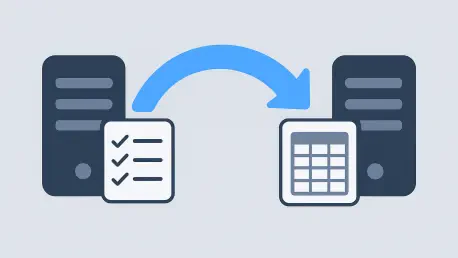

The manual effort involved in transferring test documentation from ticket-based descriptions to dedicated management systems remains one of the most significant bottlenecks in modern software delivery pipelines. This friction often results in stale documentation, where the actual testing procedures diverge from the original requirements captured during the development phase. Automated migration protocols must preserve the historical context of test cases by mapping source issue keys and related task links into the external references section of the new system. By establishing a direct link between the execution platform and the original requirement source, engineering teams ensure that traceability is not lost during the transition. Current advancements in AI-driven agents have transformed this once tedious task into a streamlined process that requires minimal human intervention. Instead of spending hours copy-pasting tables and formatting steps, quality assurance professionals now utilize sophisticated models that understand the semantic structure of documentation. These agents act as a bridge between disparate platforms, ensuring that every edge case and acceptance criterion is accurately reflected in the final repository without the risk of human error or oversight. In 2026, the industry has shifted toward these autonomous workflows to maintain high velocity without sacrificing the integrity of the quality assurance process.
1. The Migration Strategy
The core approach involves setting up an AI-driven workflow that connects various tools and automates the complex data transformation required for modern testing standards. The first step in this technical journey is to launch the Cursor editor, which serves as the primary environment where the AI agent will operate. This environment is not merely a text editor but a sophisticated orchestration hub that leverages the Model Context Protocol to interact with external data sources. Once the editor is active, the next critical phase is to link the issue tracking server. This connection allows the agent to access tasks stored in systems like Jira or Yandex Tracker, providing the raw material for the migration. By establishing this bridge, the AI can programmatically query ticket descriptions, comments, and attachments, which often contain the foundational logic for the test cases that need to be migrated into a more structured environment.
Following the initial setup of the data source, the focus shifts toward linking the test management server, such as Allure TestOps or TestRail. This is where the destination for the test cases is defined, ensuring that the AI agent knows exactly where to push the transformed data. To make this process intelligent rather than just a mechanical copy, a project-specific rule must be defined. This rule acts as a set of logic-based instructions that tells the AI how to interpret the tables found in the tracker and convert them into the correct format for the test management system. The strategy culminates in the execution of the migration via a single prompt. This custom command triggers the entire automated transfer, where the agent fetches the ticket data, applies the predefined logic, and populates the new system with structured test cases. This method eliminates the need for manual data entry, allowing engineers to focus on higher-level strategy rather than clerical work.
2. Developing the Project Rule
The AI needs specific instructions to parse the source data correctly, especially when dealing with complex formatting like merged cells or markdown structures that are common in legacy documentation. The process begins with the retrieval of the ticket data, where the tracker tool pulls the issue description and any related task links. Within this raw text, the agent must locate the specific documentation table, typically found under a “Testing” or “Acceptance Criteria” block. This identification is crucial because it isolates the relevant information from general discussion or development notes. Once the table is identified, the agent pulls data from the rows, mapping specific columns like “Acceptance Criteria” to the new system’s fields such as “Test Title.” A significant challenge in this phase is fixing empty cells resulting from merged data. If a cell was visually merged in the original tracker, the AI is instructed to carry the header value down to every related row, ensuring that each step is correctly associated with its parent criterion.
Once the data is extracted and the gaps are filled, the agent begins organizing the information by grouping all related steps under their respective test titles. This ensures that the hierarchical structure of the test case is maintained in the destination system. To maintain a professional and clean repository, the agent must standardize the text format by removing extra spaces and line breaks that may have been introduced during manual entry in the tracker. Furthermore, the content must be converted to simple text, stripping out any markdown or HTML tags to ensure full compatibility with the test management system’s API. The rule also includes a filtering step to ignore irrelevant details, such as old “Pass/Fail” markers or historical comments that do not belong in a clean test case. Leading list numbers are stripped away so the new system can handle its own numbering. Finally, the agent adds necessary references back to the source ticket and formats the entire output into a strict JSON structure that the target system can process immediately.
3. Setting Up the Migration Command
Once the foundational rules and logic are established, the next logical step is to define a command that initiates the migration process for one or many tickets. This is achieved through a custom command, such as /move, which the quality engineer inputs directly into the agent’s chat interface. The engineer provides the source identifiers, which can be individual ticket keys or direct URLs. The agent is designed to handle batch processing, meaning it can ingest a long list of identifiers and process them sequentially without further human input. To ensure the input is clean, the agent first isolates the ticket keys from the provided text, removing any duplicates or irrelevant characters that might interfere with the API calls. This pre-processing step is vital for maintaining the efficiency of the migration, as it prevents the system from attempting to process redundant or malformed data points.
For every identified ticket, the agent fetches the necessary data from the tracker, applies the complex project rules discussed previously, and prepares the result for the test management system. Managing technical errors is a critical component of this automated command. Instead of stopping entirely when a single ticket fails due to a network error or a formatting anomaly, the agent is instructed to record the failure for that specific entry and continue with the rest of the batch. This ensures that a single problematic ticket does not stall the entire migration workflow. At the end of the process, the agent presents the final data, usually in the form of a JSON object or a clear status update for each item. This output serves as a confirmation that the migration was successful and provides a record of the information that was pushed to the test management system, allowing for quick audits if necessary.
4. Final Execution and Validation
For a quality assurance engineer working in 2026, the daily workflow has become remarkably simple due to the integration of these AI agents into the standard toolkit. The process begins with identifying the tickets that contain the test cases ready for migration, which usually happens at the end of a sprint or a development cycle. Once the IDs are collected, the engineer runs the move command, typing a single line like /move PROJ-101 PROJ-102 into the environment. The AI agent then takes over, performing the data retrieval, transformation, and uploading tasks in the background. This allows the engineer to attend to other critical activities, such as exploratory testing or performance analysis, while the mechanical work of documentation management is handled by the automated system. The time saved by this single-command approach represents a significant leap in productivity compared to the manual methods used in previous years.
The implementation of these AI-driven workflows transformed the landscape of quality assurance by removing the friction between planning and execution systems. Engineering departments successfully reduced the time spent on documentation maintenance by over seventy percent, allowing for a more rapid response to changing project requirements. By automating the mapping of historical context and technical steps, teams ensured that their test management systems remained accurate reflections of the current codebase. The transition to a single-command migration model proved that AI agents could handle the nuances of structured data without the traditional risks of human error. Moving forward, the industry considered the expansion of these agents into automated test generation and self-healing scripts, further solidifying the role of intelligent automation in the software development lifecycle. These steps demonstrated that a well-defined set of rules and a robust communication protocol were the keys to unlocking a truly efficient testing environment.