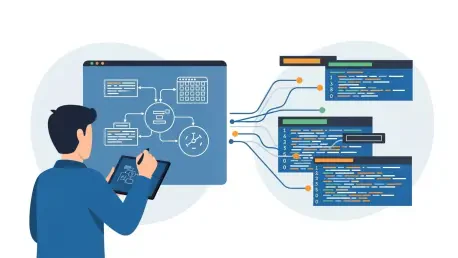

The software development landscape is undergoing a seismic shift, driven not by a new programming language or framework, but by an entirely new class of collaborator that promises to redefine productivity and innovation. The emergence of AI Coding Agents represents a significant advancement in the sector. This review will explore the evolution of this technology, its key features, performance metrics, and the impact it has had on the development lifecycle. The purpose of this review is to provide a thorough understanding of these agents, their current capabilities, and their potential future development.
The Dawn of a New Development Era
AI coding agents have arrived as powerful assistants, designed to augment the capabilities of human developers rather than replace them. Born from the rapid advancements in large language models, these tools address a persistent industry demand for accelerated development cycles and a higher capacity for innovation. They function as sophisticated partners that can understand natural language prompts, generate complex code, and even engage in a dialogue to refine requirements, fundamentally altering the traditional coding workflow.
Their relevance extends beyond simple code completion. These agents are becoming integral to the entire software development lifecycle, from initial design to final deployment and maintenance. By shouldering the more repetitive and formulaic aspects of programming, they empower developers to dedicate more of their cognitive energy to creative problem-solving, architectural design, and strategic thinking. This shift marks the beginning of a new era where the primary measure of a developer’s value is not their typing speed but their ability to conceptualize and direct complex software projects.
Redefining Productivity: Key Attributes of AI Coding Agents
Tireless Automation of Monotonous Work
One of the most immediate benefits of AI coding agents is their capacity for handling large-scale, repetitive tasks without fatigue. Unlike human developers who can experience burnout or a decline in focus when faced with monotonous work like refactoring hundreds of files or cleaning up codebase warnings, an AI agent executes these commands with consistent precision and speed. This tireless diligence makes them perfectly suited for the essential but often unglamorous maintenance that underpins a healthy software project.
By offloading this drudgery, agents free human developers to engage with more complex and intellectually stimulating challenges. The time once spent on tedious code cleanup can now be invested in designing new features, architecting more robust systems, or experimenting with novel solutions. This reallocation of human talent is a critical driver of increased productivity and job satisfaction within development teams.
The Power and Peril of Literal Obedience
AI coding agents are characterized by their “slavishly devoted” nature, following instructions with a literal precision that can be both a powerful asset and a significant challenge. This attribute ensures that the agent will attempt to build exactly what is requested, without the injection of personal interpretation or bias. It follows the specification to the letter, which can be invaluable for ensuring that complex requirements are met without deviation.
However, this literal obedience places a new and critical responsibility on the developer: the art of high-fidelity prompting. The quality of the AI-generated output is directly proportional to the clarity and detail of the instructions provided. Vague or incomplete prompts can lead to functionally correct but contextually flawed code. Consequently, developers must cultivate a new skill set centered on articulating requirements with an exacting level of detail, transforming the primary technical challenge from writing code to defining problems with unparalleled precision.
A Socratic Partner for Deeper Problem Analysis
A more nuanced capability of advanced coding agents is their ability to act as an interactive partner during the design phase. By prompting the agent to ask clarifying questions before implementation, developers can uncover blind spots and unstated assumptions in their own thinking. The agent may inquire about edge cases, potential error states, or ambiguous requirements that were initially overlooked, forcing a more rigorous and comprehensive planning process.
This interactive dialogue transforms the agent from a simple code generator into a Socratic tool that promotes deeper critical thinking. It encourages developers to refine their specifications and consider the problem from multiple angles before a single line of code is written. The result is a more robust and well-considered design, which ultimately leads to higher-quality software and reduces the need for costly revisions later in the development cycle.
Removing Implementation: Bottlenecks to Foster Innovation
Perhaps the most transformative impact of AI coding agents is their ability to drastically reduce the time required for technical execution. Tasks that once took weeks or months of manual coding can now be completed in a fraction of the time, effectively removing implementation as the primary bottleneck to innovation. This acceleration fundamentally changes the economics of experimentation in software development.
With the cost and time of building a prototype plummeting, developers are empowered to pursue a higher volume of creative ideas. The focus shifts from the feasibility of implementation to the merit of the concept itself. This paradigm shift fosters a culture of rapid innovation, where teams can quickly test and iterate on new features or even entirely new products. The limiting factor is no longer technical capacity but the ability to generate valuable ideas.
A New Paradigm for Mentoring Junior Developers
The rise of AI coding agents is set to reshape the training and mentorship of new developers. Traditionally, junior roles involved a significant amount of time spent learning basic syntax and writing boilerplate code. With agents capable of handling these tasks, the focus of mentorship will evolve toward cultivating higher-level engineering skills from day one.
Senior developers will guide juniors not on how to code a specific function, but on how to decompose a complex problem, define its requirements with precision, and use an AI agent to implement the solution effectively. This approach allows junior developers to bypass some of the early-career grind and immediately begin honing their skills in system design, critical analysis, and strategic thinking, accelerating their growth into well-rounded, high-impact engineers.
Evolving the Developer’s Role from Coder to Architect
Contrary to fears of job displacement, AI coding agents are poised to elevate the role of the software developer rather than eliminate it. Much like power tools did not replace carpenters but instead made them more efficient and capable, AI agents are augmenting human developers. The core responsibilities are shifting away from the manual craft of writing code line-by-line.
The developer of today and tomorrow is becoming more of an architect and a director. Their primary tasks involve conceptualizing solutions, providing precise specifications to the AI, overseeing the implementation process, and rigorously validating the final output. The value of a developer is increasingly measured by their ability to think strategically, solve complex problems at a high level, and ensure the quality and integrity of AI-generated work.
Current Developments and Industry Adoption
The integration of AI coding agents into the software development ecosystem is accelerating rapidly. These tools are no longer niche products but are becoming standard features within mainstream Integrated Development Environments (IDEs), placing powerful generative capabilities directly into the developer’s workflow. This widespread accessibility is normalizing their use and encouraging a fundamental shift in how code is created.
Alongside this integration, a trend toward specialization is emerging. Agents are being fine-tuned for specific programming languages, frameworks, or complex domains like data science and embedded systems. This specialization enhances their accuracy and utility for particular tasks. Concurrently, a “prompt-first” development mindset is gaining traction, where engineers are trained to articulate problems and design solutions through detailed natural language prompts before writing or generating code.
Real-World Impact and Applications
Across the industry, AI coding agents are already demonstrating tangible value. Startups are leveraging them to accelerate product development, enabling them to build and launch minimum viable products in record time. In large enterprises, development teams are deploying agents to modernize legacy systems, a traditionally slow and resource-intensive process. The agents can analyze old codebases and assist in refactoring them into modern languages and architectural patterns.
Other practical applications include the automated generation of comprehensive unit tests, which significantly improves code quality and reduces the burden of manual testing. Agents are also used for rapid feature prototyping, allowing product teams to quickly visualize and test new ideas with functional code. These real-world use cases illustrate that AI agents are not just a theoretical advancement but a practical tool delivering measurable improvements in efficiency and quality.
Challenges and Practical Limitations
Despite their impressive capabilities, AI coding agents are not without significant challenges. A primary technical hurdle is ensuring the quality and security of the code they generate. Agents can sometimes produce code that is functional but inefficient, insecure, or contains subtle, hard-to-detect bugs. This necessitates a rigorous human-led validation and testing process, underscoring the developer’s role as a final arbiter of quality.
Furthermore, a key market obstacle is overcoming developer skepticism and fostering trust in these new tools. Many experienced engineers are wary of relinquishing control over the coding process and are concerned about the potential for AI-generated code to introduce unforeseen problems. Ongoing development efforts are focused on creating more reliable and context-aware agents that can better understand project-wide context, adhere to coding standards, and produce more dependable output.
The Future of Software Creation
Looking ahead, the trajectory of AI coding agents points toward even greater autonomy and capability. It is conceivable that future iterations will be able to handle entire projects from a single high-level brief, managing everything from architectural design and coding to testing and deployment with minimal human intervention. Such advancements would represent a complete paradigm shift in how software is created.
This evolution will likely have a profound long-term impact on the structure of technology companies and the very nature of product development. Roles may become more specialized around ideation, product management, and high-level AI oversight. The process of building software could become radically democratized, allowing individuals with great ideas but limited coding knowledge to bring their visions to life, heralding a new wave of innovation across all sectors.
Conclusion and Final Assessment
This review examined the multifaceted impact of AI coding agents on the software development industry. The analysis highlighted their core attributes, from the tireless automation of repetitive work to their function as Socratic partners that enhance problem analysis. The discussion also covered their real-world applications, the current challenges they face, and their potential future trajectory toward greater autonomy.
Ultimately, the assessment revealed that AI coding agents stand as a transformative technology. Their primary value was found not in replacing human developers, but in profoundly augmenting their capabilities. By automating implementation and fostering a more rigorous design process, these agents have reshaped the software engineering profession, steering it away from manual coding and toward a future defined by higher-level strategic thinking, creativity, and architectural oversight.