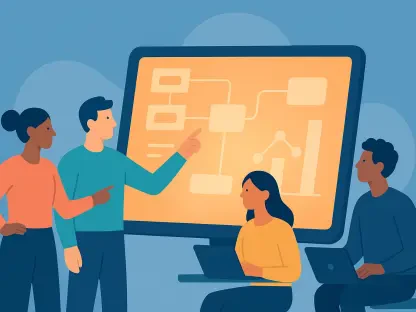

Anand Naidu has spent years at the intersection of frontend and backend development, witnessing firsthand how the tools we use to communicate logic have evolved from messy whiteboard sketches to streamlined code. Today, we are seeing a massive shift in technical documentation as text-based diagramming moves from a niche developer preference to a global standard for human-AI collaboration. With major platforms now offering native support for formats like Mermaid, the way we visualize complex systems is fundamentally changing, making it easier than ever for teams to align on technical architecture in real-time.
How do you interpret the sudden, massive spike in global search interest for Mermaid diagrams we’ve seen over the last few months?
It is a truly remarkable trend that reflects a deep-seated need for clarity in an increasingly automated world. When you see a peak search score of 100 in early June and more than 200,000 queries logged between May 10 and June 6, you realize this isn’t just a passing fad among a small group of enthusiasts. The fact that search interest has remained 50% higher over the last three months compared to the same period last year suggests that developers are looking for a universal language to bridge the gap between their ideas and the code being generated. We are seeing a hunger for tools that allow for the rapid, visual validation of logic without the friction of manual drawing.
With heavy hitters like GitHub and OpenAI now offering native Mermaid support, how is the daily workflow of a developer actually changing?
The momentum we’ve seen since May, when GitHub started rendering these diagrams in the Copilot Markdown preview, has been a total game-changer for productivity. By the time OpenAI and Anthropic introduced native rendering in July, followed by the notes app Bear, the process of visualizing code became almost instantaneous. You could feel the excitement in the community as the search for “mermaid diagrams” surged by 330% in mid-July compared to the previous year. This integration means we no longer have to context-switch between a coding environment and a separate design tool, which removes a huge mental hurdle and allows for a much smoother creative flow.
The internal data from Miro shows a staggering 96% weekly growth in active users for their Mermaid tool; what does that tell us about the types of professionals driving this movement?
Those numbers are quite explosive and indicate that this isn’t just a trend restricted to a few isolated teams. The data points specifically to Engineering, Product, and Operations groups as the primary users, which makes perfect sense given how much they rely on clear communication. These teams are moving away from the old-fashioned idea that a diagram is a final, polished “destination” created at the very end of a project. Instead, they are embracing a new reality where the diagram is a living “starting point” that evolves as the project grows.
How does this shift toward text-based diagramming improve the way humans and AI agents work together on complex systems?
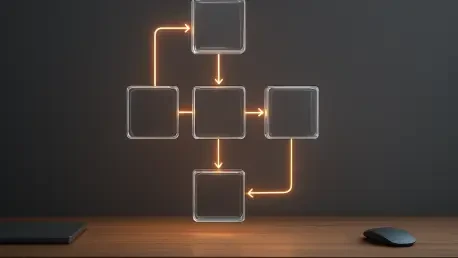
As our AI coding agents become more powerful and prolific, we desperately need a way to see and validate the complex systems they are building in a matter of seconds. Mermaid has emerged as the natural format for this because it allows us to turn an AI’s text-based logic into a visual map that a human can understand and critique immediately. This creates a powerful feedback loop where the AI generates the visual, and the human provides the context and makes the final decisions. It effectively moves the visual part of collaboration from a manual chore to an automated service that helps us shape the AI’s work more effectively.
What is your forecast for Mermaid diagrams?
I expect that we will see these text-based formats become the absolute standard for all technical communication, eventually replacing static images in documentation entirely. As search interest continues to stay at these elevated levels, more non-technical roles in Product and Operations will adopt Mermaid to communicate their own workflows and logic maps. We are moving toward a future where every piece of documentation is interactive and machine-readable, allowing for a seamless transition between human thought and automated execution. This trend will likely solidify Mermaid as the essential bridge between human intuition and artificial intelligence for years to come.