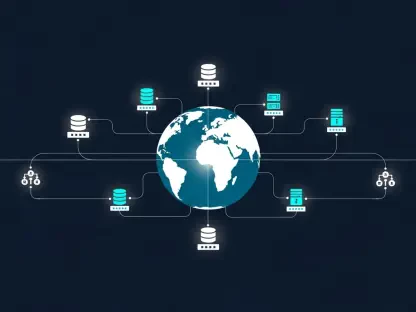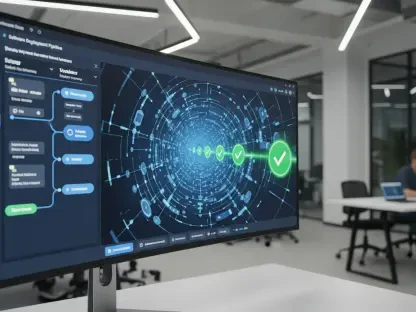

The successful integration of autonomous intelligence into global networking requires more than just raw processing power; it demands a standardized language that allows machines to talk to infrastructure without human intervention. Mplify’s Kylie SDK release stands as a pivotal milestone in this journey, signaling a shift from manual configuration toward a self-sustaining digital economy. By merging Lifecycle Service Orchestration (LSO) with sophisticated AI frameworks, this release provides the blueprint for how modern telecommunications can finally scale beyond the limits of human-driven management.
The Foundation of AI-Native Service Automation
This technology functions as a critical bridge between the rigid, legacy protocols of traditional networking and the fluid, predictive nature of modern artificial intelligence. At its core, the system utilizes LSO principles to create a unified management layer that oversees the entire service journey, from the initial order to long-term maintenance. Unlike previous iterations that required manual oversight for every adjustment, this framework treats the network as a programmable entity capable of responding to real-time demands.
The relevance of such a system in today’s landscape cannot be overstated, as it creates a common ground for diverse service providers. By embedding AI directly into the orchestration layer, the technology moves away from reactive troubleshooting and toward proactive optimization. This integration ensures that as network complexity grows, the operational burden does not increase proportionally, allowing for a more agile and responsive digital infrastructure.
Technical Framework and Architectural Pillars
The Model Context Protocol (MCP) Integration
The inclusion of the Model Context Protocol is perhaps the most transformative aspect of this release, as it provides a direct interface for large language models to interact with physical hardware. This protocol allows AI agents to “understand” the state of the network, enabling them to make informed decisions about routing, security, and resource allocation without waiting for human approval. By streamlining this interaction, the system drastically reduces latency in decision-making cycles.
LSO Business and Operational API Enhancements
Refinements to the Sonata, Cantata, Allegro, and Legato APIs provide the technical muscle needed for complex inter-provider transactions. Sonata and Cantata focus on the commercial side, automating the messy processes of quoting and billing across different corporate boundaries. Meanwhile, Allegro and Legato handle the operational heavy lifting, ensuring that once a deal is struck, the actual service provisioning and fault management occur with surgical precision and minimal data friction.
Unified Product Schemas and Payload Standardization
Data consistency is often the silent killer of automation, but this release addresses the issue through standardized schemas for IP and Carrier Ethernet. By ensuring that every provider uses the same data format for their payloads, the Kylie SDK eliminates the need for expensive “translation” layers between different network domains. This standardization is the bedrock upon which multi-domain ecosystems are built, allowing for a truly global, interconnected fabric of digital services.
Industry Shifts and the Rise of Autonomous Operations
The industry is currently witnessing a massive migration toward self-managing infrastructure, where the boundaries between cloud computing, networking, and cybersecurity are increasingly blurred. This convergence is driven by the need for near-instantaneous service delivery that traditional, siloed operations simply cannot provide. As organizations adopt these autonomous frameworks, the role of the network engineer is evolving from a hands-on troubleshooter to a high-level architect of intent-based policies.
Real-World Implementations in the Digital Economy
Practical applications of this technology are already surfacing in complex environments like SD-WAN management and automated inter-provider quoting. For instance, the ability to automate cross-connects for data center AI exchanges allows for the rapid scaling of compute power needed for modern workloads. Additionally, implementations involving CAMARA Quality on Demand show how mobile networks can dynamically adjust performance based on the specific needs of an application in real-time.
Implementation Hurdles and Technical Limitations
Despite the clear benefits, the complexity of multi-domain integration remains a significant hurdle, particularly when navigating the regulatory maze of cross-border data exchange. Smaller service providers may also find the initial barrier to entry high, as transitioning to an AI-native model requires significant technical debt retirement. Ongoing development is currently focused on simplifying API blending to ensure that even niche players can participate in this new automated ecosystem without a total overhaul of their existing stacks.
The Future Trajectory of Intelligent Orchestration
Looking ahead, the path leads toward a reality defined by fully autonomous, intent-based networking where the system anticipates needs before they manifest. We can expect AI agent capabilities to expand, allowing for more nuanced negotiations between providers and even more granular control over global service scalability. This trajectory suggests that the “network” will eventually become a transparent, self-healing utility that adapts perfectly to the ebb and flow of global data demand.
Final Assessment of the Kylie SDK Release
The Kylie SDK release proved to be a decisive step in redefining how service providers operate within an increasingly interconnected world. By successfully marrying AI agents with standardized LSO APIs, it effectively lowered the technical hurdles for autonomous service delivery. While challenges regarding global regulation and adoption costs persisted, the framework established a robust foundation for a future where digital services are as fluid and scalable as the cloud itself. Move forward by auditing existing API maturity and exploring how the Blending Tool can unify disparate service catalogs into a single, AI-ready interface.