
The emergence of AI-driven organizational intelligence systems represents a significant advancement in enterprise knowledge management, promising to transform the vast, unstructured sea of internal company data from an obstacle into a tangible asset. This review will explore the evolution of this technology through the lens of the new Starling AI Systems (AIX) product suite, analyzing its key features, operational workflow, and the impact it has on business applications. The purpose of this review is to provide a thorough understanding of this approach to structuring internal knowledge, its current capabilities, and its potential for future development.
An Introduction to the AI Organizational Brain
Starling AIX’s core principle is to structure a company’s internal knowledge into a cohesive “organizational brain.” This conceptual framework moves beyond simple data storage, aiming instead to build a dynamic, interconnected knowledge entity that can reason and operate based on a company’s unique context. The system is designed to provide artificial intelligence with accurate operational continuity and clear, policy-aligned rules, ensuring its outputs are both relevant and compliant.
This approach directly addresses the critical enterprise challenge of bridging the gap between unstructured human language and machine-readable systems. By creating a structured layer of information that AI can understand consistently, it mitigates the risk of misinterpretation and “hallucinations” that often plague large language models operating on raw data. It effectively translates the nuances of human communication and implicit knowledge into a formal system that machines can reliably reference.
Key Features and Architecture
The Single Source of Truth SSOT
At the heart of the Starling AIX suite is the creation of a definitive Single Source of Truth (SSOT) from a company’s selected business data. This centralized knowledge base serves as the undisputed repository of organizational information, from high-level corporate values to granular process details. By establishing a single, authoritative canon, the system eliminates data silos and conflicting information, ensuring consistency across all AI-driven operations.
This structured foundation is built using guided “memory design programs.” These tools are instrumental in translating complex, often ambiguous, human conversations, documents, and workflows into a well-organized and machine-readable format. This meticulous process ensures that the AI’s foundational understanding is not just comprehensive but also accurately reflects the company’s intended operational model and strategic goals.
The Universal Cognitive Architecture UCA and System Library SSL
The Universal Cognitive Architecture (UCA) and Starling System Library (SSL) are the core components that enable the AI to operate with a clear and consistent understanding of the data it references. The UCA acts as the AI’s cognitive framework, defining how it processes information and maintains context over time. In tandem, the SSL serves as a curated library of the organization’s core concepts, terminology, and relationships, providing a stable reference point for all AI interactions.
These features work together to ensure contextual continuity in AI operations. By referencing the SSL within the UCA framework, the AI can understand not just what a piece of data says, but what it means within the broader organizational context. This architecture prevents the common issue of context drift in long or complex tasks, allowing the AI to function as a truly integrated and aware component of the business ecosystem.
Zero Code Drag and Drop Integration
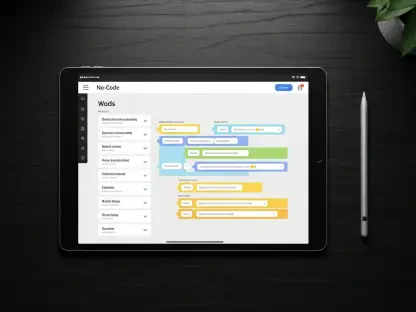
A significant advantage of the Starling AIX suite is its seamless deployment within existing large language model workspaces without the need for custom programming. This zero-code, drag-and-drop functionality dramatically lowers the barrier to entry for businesses, allowing non-technical users to build, manage, and deploy sophisticated AI systems. This accessibility is crucial for democratizing the technology across different departments.
The significance of this user-friendly approach extends beyond mere convenience; it accelerates adoption and empowers business units to take direct ownership of their knowledge assets. Instead of relying on lengthy and resource-intensive IT projects, teams can rapidly prototype and implement AI solutions tailored to their specific needs. This agility enables organizations to respond more quickly to changing market conditions and internal requirements.
The Three Mode Operational Workflow
Design Build Mode for Knowledge Extraction
The operational workflow begins with the Design-Build Mode, an initial process dedicated to defining and structuring a company’s core knowledge. During this phase, subject matter experts work with the system to extract and codify essential information, establishing the foundational “constitutional memories” of the organization. This involves mapping out business models, core values, operational processes, and key terminology.
This foundational mode is not a one-time setup but an ongoing process of refinement. As the organization evolves, its constitutional memories must be updated to reflect new strategies, products, or policies. This deliberate and structured approach ensures that the AI’s core understanding remains aligned with the company’s current state, forming a resilient and adaptable knowledge base.
Intelligence Mode for Project Application
Once the foundational knowledge is established, the system shifts into Intelligence Mode, where the curated knowledge library is applied to specific tasks and projects. In this mode, the AI leverages its structured understanding to assist teams with everything from drafting compliant communications to generating strategic analyses. It acts as a cognitive partner, ensuring that all work is grounded in the organization’s official playbook.
This mode is particularly effective at ensuring cross-functional teams operate from a unified and consistent set of information. By drawing from the same SSOT, departments like sales, marketing, and engineering can align their efforts seamlessly, reducing miscommunication and rework. The AI serves as a constant, reliable source of truth that bridges departmental divides and fosters cohesive collaboration.
Enterprise Mode for Deep System Integration
The final stage is Enterprise Mode, which involves the deep integration of the knowledge library with a company’s internal systems and private datasets. This mode allows the AI to connect to databases, CRMs, and other enterprise software, enabling it to function with comprehensive and real-time organizational context. By accessing and interpreting this live data, the AI can provide more dynamic and accurate insights.
This deep integration transforms the AI from a knowledgeable assistant into a fully embedded operational intelligence system. It can automate complex workflows, monitor key performance indicators against strategic goals, and identify emerging trends within private datasets. This comprehensive view allows the AI to support high-stakes decision-making with a level of insight that would be impossible to achieve through manual analysis alone.
Real World Business Impact and Applications
Boosting Operational Efficiency
The implementation of an AI organizational brain yields tangible benefits in operational efficiency. By providing instant access to a unified knowledge base, it significantly reduces the need for employees to re-explain processes or search for scattered information. This streamlined access to information shortens the ramp-up time for new hires, allowing them to become productive contributors more quickly.
Moreover, the system improves alignment across cross-functional teams. When all departments work from the same playbook, projects proceed with fewer misunderstandings and delays. This shared context minimizes friction and fosters a more collaborative environment, ultimately leading to faster project completion and higher-quality outcomes.
The Emergence of New Organizational Roles
This technology also catalyzes the emergence of new organizational roles dedicated to knowledge governance. Positions such as “system librarian” or “dataset curator” are becoming essential for managing and maintaining the central canon of knowledge. These roles are not purely technical; they require a deep understanding of the business and a commitment to information integrity.
The responsibilities of these new positions include overseeing the data curation process, validating the accuracy of the “constitutional memories,” and ensuring the knowledge base evolves in lockstep with the organization. These knowledge stewards play a crucial part in maximizing the value of the AI system, acting as the human guardians of the organizational brain’s long-term health and relevance.
Challenges and Implementation Hurdles
Data Curation and Ongoing Maintenance
Despite its potential, implementing an AI organizational brain is not without challenges. One of the primary hurdles is the technical and logistical complexity of continuously curating and updating the Single Source of Truth. Ensuring the “organizational brain” remains accurate and relevant requires a dedicated and sustained effort to vet new information and retire outdated data.
This ongoing maintenance demands significant resources, both in terms of technology and human capital. Organizations must invest in processes for regular knowledge audits and updates. Failure to do so can lead to the degradation of the knowledge base, where the AI begins to operate on stale or incorrect information, thereby undermining its reliability and value.
Organizational Adoption and Change Management
Another significant hurdle is organizational adoption and the cultural shift required to support it. Employees may exhibit resistance to new workflows that demand a more structured approach to knowledge sharing. The transition requires treating institutional knowledge not as an informal, tribal asset but as a formal, managed one, which can be a difficult mindset to cultivate across an enterprise.
Overcoming this resistance requires robust change management strategies. Leadership must champion the initiative and clearly communicate its benefits to encourage buy-in from all levels of the organization. Effective training and support systems are also critical to help employees adapt to new tools and processes, ensuring the system is utilized to its full potential.
The Future of Organizational Intelligence
Knowledge as a Non Depreciating Asset
The long-term vision for this technology is to reframe organizational intelligence as a new class of business asset. Unlike traditional assets like machinery or buildings that depreciate over time, a well-maintained knowledge base becomes more valuable with every interaction. Each query, update, and integration enriches the system, deepening its understanding and expanding its utility.
This perspective shifts the treatment of knowledge from an operational expense to a strategic investment that compounds in value. As the organizational brain learns and grows, it becomes an increasingly powerful source of competitive advantage, capturing and retaining institutional wisdom that might otherwise be lost to employee turnover or the passage of time.
Enabling Business Scalability and Agility
Ultimately, this technology provides a powerful outlook for enabling businesses to scale faster and with greater agility. A centralized AI brain allows a company to replicate its core operational logic and best practices consistently across new teams, markets, and product lines. This ensures that as the organization grows, its foundational excellence is not diluted.
In the long term, this capability could have a profound impact on competitive advantage and industry innovation. Businesses equipped with a mature organizational intelligence system will be able to adapt more quickly to market shifts, make more informed strategic decisions, and innovate at a faster pace. They will be better positioned to not only navigate but also shape the future of their industries.
Summary and Overall Assessment
Key Takeaways from the Starling AIX Suite
The Starling AIX suite provides a compelling blueprint for the future of enterprise AI. Its primary innovation lies in its methodical approach to structuring knowledge through a Single Source of Truth, governed by a coherent cognitive architecture. The emphasis on zero-code deployment and a phased operational workflow makes this powerful technology accessible, while its vision for knowledge as a core business asset highlights its strategic importance. It directly confronts critical challenges in enterprise AI, offering a structured solution for ensuring context, consistency, and governance.
Final Verdict on AI Organizational Intelligence
The development of AI organizational intelligence, as exemplified by this suite, represented a pivotal step forward in enterprise knowledge management. The technology demonstrated a sophisticated and practical method for transforming chaotic internal data into a structured, intelligent asset. The overall assessment was that this approach provided a credible and powerful solution for bridging the persistent communication gap between human expertise and machine systems, unlocking significant potential for operational efficiency and strategic agility within organizations.