
The New Frontier of Software Development in the AI Era
Imagine a world where a developer’s primary task isn’t hammering out lines of code, but rather orchestrating complex systems with the help of an intelligent assistant that anticipates needs and streamlines workflows. This isn’t a distant dream but the reality of enterprise software development today. The integration of Artificial Intelligence (AI) has emerged as a transformative force, reshaping how software is conceptualized, built, and maintained across industries. Major financial institutions, known for their stringent requirements and sprawling tech ecosystems, are already leveraging AI to drive efficiency and innovation, signaling a profound shift in the development landscape.
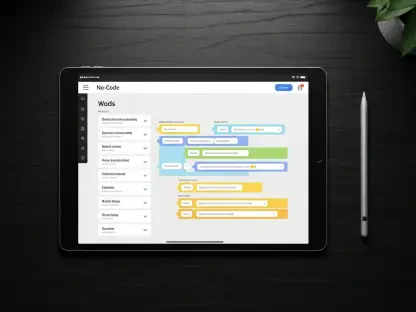
This transformation extends beyond mere automation. Generative AI tools and low-code/no-code platforms are empowering developers to focus on higher-level strategic tasks while delegating repetitive coding to machines. However, this isn’t about replacing human talent; it’s about augmenting it. Developers are evolving from traditional coders into architects of systems, tasked with ensuring scalability and alignment with business goals. The scope of this AI-driven change is vast, touching every phase of the Software Development Life Cycle (SDLC) and challenging conventional notions of what it means to be a developer in this dynamic era.
Moreover, the technological influences at play are diverse. From context-aware code generation to platforms that simplify application creation for non-technical users, the tools available today are redefining productivity. As a result, the role of developers is shifting toward oversight, integration, and innovation. This new frontier demands a balance of technical expertise and creative problem-solving, positioning AI as a game-changer that amplifies human potential rather than diminishing it.
Trends and Market Dynamics Shaping AI-Driven Development
Emerging Innovations and Behavioral Shifts
The rise of AI as a co-pilot in software development marks a pivotal trend that’s altering the very fabric of the SDLC. No longer confined to isolated tasks, AI is now embedded in processes from requirement analysis to deployment, assisting in breaking down complex projects into modular, manageable components. This hybrid human-AI workflow fosters collaboration, where machines handle the grunt work of code generation while humans focus on refining intent and ensuring contextual relevance. Such a shift is not just technical but cultural, as teams adapt to working alongside intelligent tools.
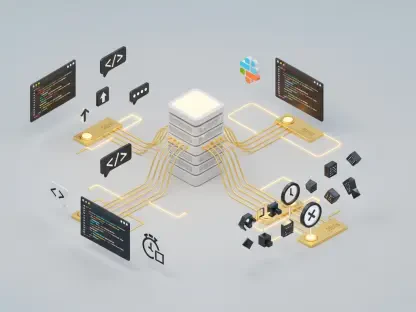
Beyond collaboration, emerging technologies like context-aware code generation are gaining traction. These systems don’t just produce code; they understand the broader application environment, dependencies, and enterprise goals, leading to outputs that are more aligned with specific needs. This capability opens doors to scalability and efficiency, allowing developers to tackle larger, more intricate projects with confidence. Additionally, the behavioral shift among developers—from hands-on coding to strategic architecture—creates opportunities for innovation, as time once spent on syntax is now dedicated to designing robust, future-proof systems.
Market Growth and Future Forecasts
Looking at the market dynamics, the adoption of AI in software development is experiencing significant growth. Performance indicators from real-world applications, particularly in large enterprises, show impressive gains in productivity and error reduction. Data suggests that over the next few years, from this year to 2027, the reliance on AI tools could increase by a substantial margin, as more organizations recognize the value of integrating intelligent automation into their workflows. This isn’t mere speculation but a reflection of tangible outcomes already observed in leading sectors.
Furthermore, forecasts point toward a future where AI-native workflows become the norm rather than the exception. Enterprises are expected to increasingly adopt hybrid governance models that balance the autonomy of AI systems with human oversight. Such models promise not only efficiency but also resilience, ensuring that as systems scale, they remain secure and compliant with evolving standards. This forward-looking perspective underscores the momentum behind AI-driven development, painting a picture of an industry poised for continuous evolution.
Navigating the Challenges of AI Integration in Development
The journey toward AI integration in development is not without hurdles. One of the most pressing challenges is managing the complexity that arises when disparate systems, tools, and data sources collide. Fragmented data and integration nightmares can derail even the most promising initiatives, leading to inefficiencies and potential security risks. As enterprises scale their AI implementations, the risk of chaos looms large, demanding careful navigation to avoid pitfalls that could undermine progress.
Additionally, operational and technological barriers complicate the landscape. Governance in a multi-LLM (large language model) world, where teams may use different AI models, poses a unique challenge. Without unified standards, inconsistencies can creep in, threatening system integrity. Solutions like hybrid guardrails, which combine central policies with localized rules, offer a way forward by maintaining order without stifling experimentation. Similarly, a knowledge-first approach—prioritizing contextual data over raw information—helps streamline processes and mitigate risks.
Addressing these challenges requires a proactive mindset. Enterprises must invest in frameworks that anticipate integration issues and embed compliance from the outset. By focusing on robust systems that adapt to complexity, rather than buckling under it, the industry can harness AI’s potential without succumbing to its inherent difficulties. This balance of innovation and caution is critical to ensuring that AI serves as a reliable partner in development.
Regulatory Guardrails and Compliance in an AI-Native World
As AI becomes deeply embedded in software development, the regulatory landscape is gaining prominence. The need for stringent security measures and role-based access controls cannot be overstated, especially in industries handling sensitive data. Without proper oversight, the rapid adoption of AI tools risks exposing vulnerabilities that could compromise entire systems. Regulators are increasingly stepping in to establish boundaries, ensuring that innovation doesn’t come at the cost of safety or ethics.
Hybrid governance frameworks offer a compelling solution to this tension. These frameworks blend dynamic policies with enterprise standards, allowing for flexibility while maintaining strict compliance. Such an approach ensures that AI-driven processes, even when experimental, adhere to guidelines that protect both the organization and its stakeholders. The emphasis here is on balance—permitting rapid iteration without sacrificing the rigor required for production-ready systems.
The influence of these regulations is already shaping industry practices in meaningful ways. Companies are finding ways to integrate compliance into their development pipelines, embedding checks and balances that align with both legal requirements and operational goals. This evolving regulatory environment, while challenging, serves as a catalyst for creating more secure, trustworthy AI applications, ultimately benefiting the broader ecosystem by fostering confidence in these technologies.
Envisioning the Future of Development with AI and Hybrid Models
Peering into the horizon of enterprise software development reveals a landscape rich with potential, driven by emerging technologies like the Enterprise Knowledge Garden. This concept—a dynamic repository of enterprise logic and intent—promises to redefine how data is managed, turning raw information into actionable, context-driven insights. Coupled with scenario-driven runtime intelligence, where systems explain their decisions, the future of development looks not just automated but deeply intuitive.
Market disruptors are also on the rise, with consumer preferences shifting toward personalized, adaptable solutions. This demand fuels growth areas where AI-human collaboration shines, enabling tailored applications that meet specific needs. Developer tools are expected to evolve as well, becoming more intuitive and integrated, further bridging the gap between technical complexity and user accessibility. These advancements signal a shift toward systems that prioritize both efficiency and customization.
Several factors will shape this trajectory, including ongoing innovation, regulatory evolution, and global economic conditions. As enterprises navigate these influences, the focus remains on sustainability—building software solutions that endure through changing tides. The interplay of AI and hybrid models offers a pathway to achieving this, ensuring that development practices not only keep pace with current demands but also anticipate future challenges with agility and foresight.
Crafting a Smarter Tomorrow for Developers and Enterprises
Reflecting on the transformative journey of AI in software development, it became evident that this technology had fundamentally altered the essence of developer roles. No longer mere coders, developers had emerged as strategic overseers, guiding systems with a focus on architecture over syntax. The impact of AI as a co-pilot had proven profound, enabling cleaner, more adaptable systems through the synergy of hybrid workflows that blended human insight with machine efficiency.
Looking back, the industry had witnessed remarkable strides, yet the path ahead demanded actionable steps to sustain this momentum. Enterprises needed to prioritize investments in context-aware systems that understood nuanced requirements, alongside robust governance structures to manage complexity. Platforms fostering human-AI collaboration stood out as essential tools, ensuring that both elements worked in harmony to deliver long-term value.
Ultimately, the story of AI in development had been one of partnership, not replacement. The next chapter called for a commitment to evolving these relationships, refining tools, and embedding adaptability into every layer of enterprise systems. By embracing this collaborative spirit, the industry could build on past successes to create a future where technology and human ingenuity together crafted solutions that were not just smart, but enduring.