
The digital heartbeat of modern enterprise software development skipped a dangerous number of beats this month, revealing that even the most sophisticated intelligence is ultimately beholden to the physical limits of the silicon and cables that house it across global data centers. Generative AI has rapidly evolved from a collection of experimental novelties into the foundational bedrock of corporate infrastructure. Large Language Models are no longer merely answering queries; they are now orchestrating complex workflows and managing sensitive data pipelines for the world’s largest organizations. This transition has placed immense pressure on providers to treat their platforms with the same level of rigorous stability expected of electrical grids or telecommunications networks.
The current competitive landscape is defined by a fierce rivalry between the primary leaders of the industry, often referred to as the Big Three: Anthropic, OpenAI, and Google. As these firms race for reasoning supremacy, the focus has shifted from simple token generation toward deep logical synthesis and autonomous agent capabilities. Claude, ChatGPT, and Gemini are locked in a cycle of constant iteration, where each new release raises the stakes for the others. However, this aggressive development cycle often prioritizes feature expansion over the hardening of the underlying delivery systems, leading to a precarious balance between capability and accessibility.
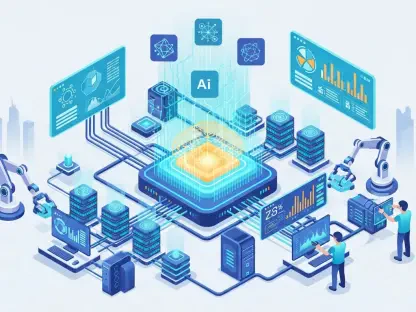
As the adoption of these tools reaches a fever pitch, the industry is grappling with a significant infrastructure paradox. While the intelligence of the models increases, the global cloud computing capacity and networking layers required to support them are being pushed to their absolute breaking point. This strain is compounded by the fact that modern AI applications require massive, low-latency data transfers that traditional cloud architectures were not originally designed to handle at such a high density. The surge in demand has essentially outpaced the speed at which physical hardware can be deployed and optimized.
The role of safety frameworks and government oversight has also expanded, moving beyond theoretical ethics into the realm of operational standards. Regulatory bodies are increasingly scrutinizing how AI firms deploy updates and manage their massive user bases, particularly when service interruptions occur in critical sectors. These benchmarks are beginning to shape the deployment strategies of companies like Anthropic, forcing them to navigate a complex environment where innovation must coexist with the demand for extreme reliability and public accountability.
Scaling Hurdles and the Success Tax on Claude AI
Emerging Patterns in High-Demand AI Ecosystems
The rapid growth of the Claude ecosystem throughout the current year has led to a phenomenon known among analysts as the success tax. This occurs when the popularity of a service becomes its greatest liability, as seen in the elevated error states and capacity limitations that began surfacing in early 2026. Anthropic’s models, particularly the Opus and Sonnet families, have attracted a sophisticated user base that utilizes the API for more than just casual chat. When a platform becomes this integral to the global economy, every minor fluctuation in performance is magnified across thousands of dependent businesses.
Professional user behaviors have shifted significantly toward deep integration, with tools like Claude Code becoming a central component of daily development pipelines. Unlike casual users, these professionals operate on a continuous schedule where any interruption in service results in immediate financial loss and project delays. The pursuit of revenue leadership in the AI sector is forcing companies to push their infrastructure to the absolute edge. This creates a volatile environment where the desire to maintain market share can lead to the deployment of systems that are not yet fully resilient to the sheer volume of incoming traffic.
Performance Metrics and Growth Projections
The degradation of service reliability has become a primary concern for the enterprise sector, especially as Claude’s uptime dipped below the 99% gold standard during the first quarter of the year. This decline is particularly jarring given Anthropic’s previous reputation for stability and safety. When a core service falls below this threshold, it triggers a reassessment of risk for every company that has built its product on that specific foundation. Monitoring data has shown that the platform is struggling to maintain a consistent connection during peak global usage hours, suggesting a bottleneck in the current distribution layer.
Specific failure points were observed during high-profile outages on April 6 and April 7, which saw thousands of error reports flood monitoring platforms. The back-to-back nature of these events indicated that the initial remediation efforts were unable to withstand the subsequent wave of user reconnects. To prevent a repeat of these failures, analysts project that Anthropic will need to undertake a massive capital investment in infrastructure. Maintaining stability while simultaneously scaling the computational requirements of next-generation models will likely require a total overhaul of the current load-balancing and regional failover strategies.
Technical and Operational Barriers to Consistent Reliability
The difficulty of migrating massive workloads across different cloud regions remains a significant technical barrier to ensuring low latency and high availability. When one region experiences a spike in demand or a hardware failure, shifting that traffic without interrupting active sessions is a complex task that requires sophisticated networking performance. For a reasoning-heavy model like Claude, even slight increases in latency can result in a degraded user experience or timed-out requests. These capacity bottlenecks are often hidden from the user until a critical threshold is crossed, resulting in a sudden and total service collapse.
Authentication failures in specialized tools like Claude Code have proven to be more damaging to the overall ecosystem than simple stalls in a web-based chat window. When an AI agent loses its ability to authenticate, it halts the entire autonomous process, leaving developers without their primary collaborator. This type of failure breaks the chain of trust between the user and the technology, as it demonstrates that the tool cannot be relied upon for mission-critical tasks. The vulnerability of these agents highlights a lack of redundancy in the current cloud-based authentication architecture used by most major AI providers.
The paralyzing effect on the software development lifecycle during these outages has sparked a growing conversation about dependency risks. Many firms have found themselves unable to meet deadlines when their primary AI tools go offline, revealing an over-reliance on a single point of failure. Consequently, there is a visible trend toward the adoption of local models, such as Google’s Gemma, hosted on private hardware via platforms like Ollama. This shift is driven by a desire for sovereignty over one’s tools, ensuring that productivity remains shielded from the instabilities of the public cloud.
The Regulatory Landscape and Enterprise Accountability
Enterprises are increasingly demanding robust service-level agreements that include significant uptime guarantees as a prerequisite for deep integration. In the current era, an AI platform is viewed as a mission-critical utility rather than a luxury, and firms are no longer willing to accept vague assurances of future stability. These agreements are becoming a competitive battleground, where the provider that can offer the most reliable connection wins the largest contracts. The demand for accountability is forcing a shift in how AI companies report their technical health and manage their operational transparency.
Data privacy and compliance standards also become complicated during periods of instability, as outages can sometimes impact the security posture of firm-wide deployments. When systems fail, the potential for improper data handling or the bypassing of safety filters increases, creating a secondary layer of risk for regulated industries. Anthropic and its competitors are now being held to the same standards as financial institutions regarding incident disclosure and postmortem analysis. Standardized reporting of technical failures is becoming an industry expectation, allowing users to understand the root cause of disruptions and the steps taken to mitigate them.
Future Outlook for Anthropic and the Broader AI Market
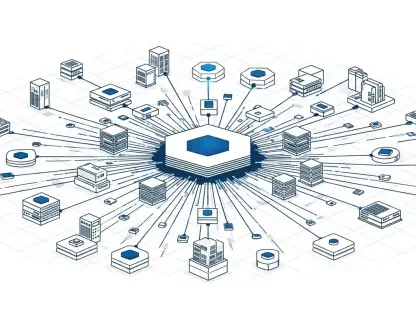
The integration of edge computing presents a potential solution to the current strain on central cloud servers by decentralizing AI processing. By moving some of the computational load closer to the end-user, providers could alleviate the pressure on their core infrastructure while also reducing latency. This architectural shift would represent a significant departure from the current centralized model, but it may be the only way to sustain the continued growth of high-demand AI applications. The move toward edge-based reasoning could provide the necessary buffer to prevent wide-scale outages during traffic spikes.
Enterprises are likely to adopt multi-model strategies as a standard practice to prevent productivity halts caused by a single provider’s downtime. By maintaining redundancy across multiple AI systems, businesses can ensure that an outage at one company does not paralyze their entire operation. This approach mirrors the way IT departments manage cloud storage and hosting, prioritizing resilience over brand loyalty. The shift will likely force AI providers to compete more aggressively on reliability and interoperability, as users become more adept at switching between different models as needed.
Summary of Findings and Strategic Recommendations
The recurring service disruptions observed in early 2026 underscored the fragile relationship between rapid innovation and operational stability. Anthropic’s struggle with its own success demonstrated that even a market leader could be humbled by the logistical complexities of global scaling. The outages on April 6 and April 7 served as a catalyst for a broader industry discussion regarding the necessity of a more resilient AI infrastructure. The resulting loss of user trust highlighted the fact that reasoning capabilities are irrelevant if the system remains inaccessible during peak work hours.
Operational maturity was eventually prioritized through the implementation of more transparent communication protocols and the fortification of regional data centers. Anthropic moved to rebuild its standing by offering more granular status updates and clearer pathways for enterprise recovery. The company also accelerated its investment in decentralized processing, acknowledging that a singular cloud-based approach was no longer sufficient for its expanding user base. These steps were essential in proving that the firm could evolve from a research-focused entity into a reliable utility provider.
The investment and growth prospects for the sector remained strong despite these technical hurdles, as the demand for advanced AI continued to rise. Anthropic successfully maintained its position as a leader in reasoning and safety by proving its ability to learn from these infrastructure crises. The transition toward more efficient, smaller models helped reduce the overall strain on the system, creating a more balanced ecosystem. Ultimately, the reliability crisis of early 2026 functioned as a necessary rite of passage, forcing the industry to mature its technical foundations to match its ambitious vision.