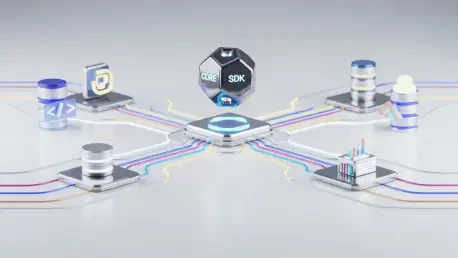

The modern software development lifecycle is increasingly fragmented, forcing engineers to constantly navigate a disorienting maze of specialized tools, command-line interfaces, and disparate data sources to bring intelligent applications to life. This constant context-switching creates friction, slows down innovation, and complicates the creation of truly integrated AI-powered systems. The challenge is no longer just about writing code faster but about building cohesive applications where artificial intelligence is a native, embedded component rather than an external utility. The GitHub Copilot SDK emerges as a pivotal framework designed to dissolve these barriers, offering a direct conduit to embed the sophisticated logic of AI agents into the very fabric of custom software. It signals a fundamental shift, transforming a beloved code assistant into a powerful engine for application-native intelligence.
Beyond Autocomplete: What If Your IDEs Smartest Feature Could Power Your Next Application?
GitHub Copilot first entered the developer’s toolkit as a groundbreaking code completion assistant, fundamentally altering the way code is written within the integrated development environment (IDE). Its ability to understand context and suggest entire blocks of functional code has made it an indispensable partner for millions. However, its potential extends far beyond the confines of the code editor. The introduction of the SDK unleashes this potential, allowing developers to harness Copilot’s underlying intelligence as a foundational component for their own applications, effectively turning the world’s most advanced AI pair programmer into a customizable agent for any software.
This evolution allows for the creation of a new class of intelligent applications where AI is not an afterthought but a core feature. Consider a custom business intelligence dashboard that allows users to generate complex data queries using natural language, or a project management tool where an AI agent can analyze repository activity to automatically generate progress reports and identify potential bottlenecks. The SDK provides the architectural bridge to make these scenarios a reality, equipping developers with the means to build more intuitive, responsive, and autonomous software solutions that can reason about data and execute tasks on behalf of the user.
The Evolution from Code Assistant to Agent Orchestrator
The expansion of Copilot into tools like the command-line interface (CLI) was a significant step, yet it still required developers to operate in a separate context from their primary applications. Executing a command in a terminal to query a repository or debug code is useful, but it remains an external action. The true need was to bring Copilot’s reasoning capabilities directly inside an application’s logic, allowing for seamless, programmatic interaction without manual intervention or context shifts. This addresses the core inefficiency of having powerful AI tools that still operate at arm’s length from the software they are meant to enhance.
Furthermore, building the command-and-control loop for an AI agent from scratch presents a substantial technical hurdle. Crafting the intricate logic for managing prompts, handling model responses, orchestrating tools, and maintaining state is a complex engineering task, even with advanced frameworks like Semantic Kernel. The GitHub Copilot SDK elegantly solves this by abstracting away this complexity. It provides a streamlined, high-level API that handles the underlying orchestration, allowing developers to embed Copilot’s agentic logic directly into their projects without needing to become experts in the low-level mechanics of agent design.
Deconstructing the SDK Architecture and Core Components
At the heart of the SDK’s design is a sophisticated client-server model that repurposes the GitHub Copilot CLI into a headless, cross-platform agent host. When an application initializes the SDK, it launches the CLI in a background server mode, ready to process programmatic requests. This architecture allows developers to treat the CLI as a pre-built, managed backend for all model interactions, abstracting away the complexities of model execution, environment configuration, and state management. This setup is remarkably flexible, supporting both local and remote deployments where a single CLI instance on a server can serve multiple client applications.
The power of this framework is significantly amplified by its native support for “tools,” which are essential for grounding large language models (LLMs) in real-world data and functionality. Tools act as a bridge, connecting the agent to external APIs and local code, enabling it to perform actions like fetching live data from a financial market or querying a proprietary database. This capability is standardized through the Model Context Protocol (MCP), a system that allows agents to discover and utilize a vast ecosystem of pre-existing data sources and services. By leveraging MCP, developers can instantly enhance their agents with rich, contextual information from sources like Microsoft 365, eliminating the need to build every data integration from scratch.
A Key Component in a Larger Vision: The Microsoft Agent Framework
The GitHub Copilot SDK is not an isolated tool but a strategic component within the broader Microsoft Agent Framework. This framework is designed with interoperability at its core, enabling developers to orchestrate complex workflows that involve multiple, specialized agents. An agent built using the Copilot SDK to interact with a GitHub repository can seamlessly collaborate with another agent developed in Microsoft Fabric to analyze enterprise data, or with a third agent that leverages a fine-tuned model in Azure OpenAI for a specific natural language task.
This vision of a unified ecosystem empowers organizations to build sophisticated, multi-agent applications that connect previously siloed business systems. A single automated workflow could initiate with a developer query, trigger a Copilot agent to analyze code dependencies, pass the findings to a Fabric agent to cross-reference against sales data in a data warehouse, and conclude by generating a comprehensive business impact report. This holistic approach bridges the gap between the software development lifecycle and broader enterprise operations, unifying information from GitHub repositories, email discussions, and critical business data platforms into a single, intelligent system.
Your Roadmap to Building an Agent: A Practical Guide
Getting started with the SDK is a straightforward process designed for rapid integration. The primary prerequisites are the installation of the GitHub Copilot CLI and the selection of the language-specific SDK package. Official support is robust, with libraries available for Node.js, .NET, Python, and Go, distributed through their respective standard package managers. This ensures that developers can work within their preferred technology stack, integrating agent capabilities with minimal disruption to their existing development workflows.
A typical interaction pattern with the SDK is both intuitive and powerful. The process begins by instantiating a CopilotClient object within the application code. From there, a developer establishes a session, specifying which AI model to use for the interaction. A prompt is then sent asynchronously to the agent, which processes the request and returns a response object. This object contains the model’s generated answer, which can be parsed and utilized by the application logic. For more interactive scenarios, such as chatbots or real-time data monitoring, the SDK also supports advanced techniques like streaming, allowing an application to receive and display the model’s response incrementally as it is being generated.
The journey from a simple autocomplete tool to a comprehensive agent-building framework marked a significant maturation of AI in software development. Developers who embraced this shift discovered that they could build more than just applications that used AI; they could construct software that was fundamentally intelligent. The SDK provided the necessary abstraction to make this complex technology accessible, removing the steep learning curve associated with building agentic systems from the ground up. This enabled a new wave of innovation, where the focus shifted from the mechanics of AI integration to the creative possibilities of what AI-powered applications could achieve. The result was a more connected and automated development ecosystem, where code, data, and business logic were no longer separate domains but were unified through intelligent agents that could reason and act across them.