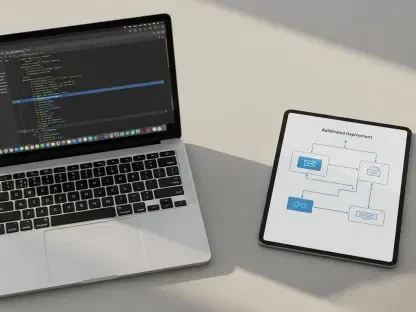

The rapid transition from manual syntax entry to high-level architectural oversight has fundamentally redefined the daily workflow of the modern engineer, yet this newfound speed comes with a hidden tax on system stability. As we navigate the landscape of 2026, the integration of Large Language Models into the software development life cycle has moved past the experimental phase and into the core of enterprise operations. This shift represents a move from human-centric coding to a model where developers serve as supervisors of automated agents, aiming to accelerate the journey from concept to deployment. While the ability to generate code has become nearly instantaneous, the industry is currently grappling with the reality that writing a script is not the same as maintaining a living, breathing service.
This review explores the current state of AI-driven engineering, examining how these tools function under pressure and why the initial promise of total automation has met significant resistance in the cloud. By analyzing the evolution of these technologies, it becomes clear that the focus is shifting from simple text generation to the complex problem of state management. The goal is to provide a thorough understanding of current capabilities while highlighting the operational gap that remains the primary hurdle for the next generation of software infrastructure.
Introduction to AI-Driven Engineering
AI-assisted development has matured into a sophisticated ecosystem where Large Language Models act as the primary engine for creative output. By treating programming as a complex linguistic puzzle, these models predict the next logical step in a sequence, effectively removing the “blank page” problem that has historically slowed down the initial phases of engineering. This paradigm shift allows teams to move at a pace that was previously impossible, transforming weeks of boilerplate construction into seconds of automated generation.
However, this acceleration introduces a unique psychological shift for the developer. Rather than focusing on the minutiae of semicolons and brackets, the engineer now occupies a role closer to that of an editor or a system architect. This transition is not merely about speed; it is about a change in the fundamental nature of the work. The significance of this evolution lies in its potential to democratize high-level engineering, though it simultaneously demands a higher level of critical thinking to ensure the AI-generated output aligns with the broader goals of the project.
Core Components and Functional Capabilities
Rapid Code Generation and Large Language Models
At the heart of this technological surge is the LLM, which has become adept at translating natural language requirements into functional source code. These models do not just “search and replace” but actually synthesize logic based on vast datasets of existing software patterns. This capability is unique because it allows for the generation of context-aware unit tests and documentation alongside the code itself, ensuring that the ancillary tasks of development are not ignored in the rush to ship new features.
The value of this component is most evident in its ability to handle “commodity code”—the standard functions and API integrations that form the backbone of most applications. By automating these repetitive elements, AI tools free up human intelligence for the more nuanced aspects of software design, such as security architecture and user experience. Nevertheless, the reliance on probabilistic token prediction means that the generated code, while syntactically correct, can occasionally lack the “soul” or specific optimization required for high-performance environments.
Agentic Development Tools and Automated Workflows
The current frontier of development involves “agentic” tools that do more than just write text; they attempt to execute it. These agents are designed to manage multi-step workflows, such as initializing cloud services, managing “git push” sequences, and even performing basic debugging. What makes this implementation unique is the attempt to bridge the gap between a static text file and a running environment, effectively acting as a junior DevOps engineer that never sleeps.
Despite their ambition, these tools often encounter a “performance ceiling” when faced with the unpredictability of live systems. The significance of agentic workflows lies in their ability to reduce the cognitive load of routine maintenance, but they currently struggle with the disconnect between the simulated world of the model and the messy reality of the cloud. This limitation highlights the current trade-off: we have gained immense speed in task execution, but we have not yet achieved the level of autonomous reliability required for mission-critical systems without constant human oversight.
Emerging Trends and Shifting Bottlenecks
As the industry moves away from basic autocomplete features toward comprehensive automated workflows, a new bottleneck has appeared: the “operational gap.” We have reached a point where the speed of code production far exceeds our ability to verify its long-term viability in a production environment. This shift indicates that the primary challenge is no longer the “writing” of the code, but the “management” of the state and the underlying services that the AI creates.
We are witnessing a transition where the focus is moving from linguistic mastery to operational discipline. The industry is beginning to realize that an AI can write a perfect migration script, but if that script fails to account for a hidden dependency in a legacy database, the speed of its creation becomes irrelevant. This emerging trend suggests that the next phase of development will focus on creating environments that are as structured and predictable as the code itself, aiming to eliminate the friction that currently exists at the point of deployment.
Real-World Applications and Sector Deployment
Cloud-Native Service Orchestration
In the cloud computing sector, AI tools are increasingly utilized to spin up microservices and manage containerized environments with minimal manual intervention. Organizations are using these agents to move from an architectural diagram to a functional cloud instance in a fraction of the time it once took. This capability allows for a more fluid approach to infrastructure, where services can be provisioned and decommissioned based on real-time demand, driven by AI logic rather than static scripts.
The impact here is profound for enterprise teams trying to maintain agility at scale. By automating the orchestration of complex environments, companies can reduce the overhead associated with traditional DevOps roles. However, this deployment strategy requires a high degree of trust in the AI’s ability to navigate the intricacies of cloud security and cost management, a balance that remains difficult to maintain as systems grow in complexity.
Rapid Prototyping and MVP Development
The most successful implementation of AI-assisted development is seen in the creation of Minimum Viable Products (MVPs). For startups, the ability to automate the “creative” side of development—such as building UI components and standard API endpoints—means they can test market hypotheses with almost zero overhead. This shift has fundamentally changed the economics of software entrepreneurship, allowing a single founder to do the work that previously required a small team.
This rapid iteration cycle is not just about saving money; it is about the speed of learning. By significantly lowering the cost of failure, AI tools encourage a more experimental approach to product development. The trade-off, however, is the accumulation of “technical debt” at an accelerated rate. Code that is generated quickly often lacks the long-term architectural vision necessary for scaling, leading to a situation where the initial version of a product is easy to build but difficult to evolve.
Technical Hurdles and Operational Challenges
Environmental Inconsistency and Infrastructure Fragility
One of the most persistent obstacles to the widespread adoption of AI agents is the “hostility” of modern cloud environments. AI models often lack the “tribal knowledge” that human engineers use to navigate messy, real-world setups. This leads to failures in environmental consistency, where a script that works perfectly in a sandbox environment fails in production due to an invisible configuration mismatch or a slight variation in the cloud provider’s API behavior.
Furthermore, AI-generated infrastructure often lacks the robustness required for real-world instability. A human developer might include specific retry logic or graceful degradation because they have experienced past outages; an AI, however, tends to write code that assumes a “happy path” unless specifically instructed otherwise. This fragility is a significant trade-off for the speed of generation, as it creates a higher risk of cascading failures when the AI-managed services interact with unpredictable external systems.
The Fragmented Truth of Cloud Configurations
Current AI agents struggle with the lack of a single source of truth in modern infrastructure management. The cloud is often a chaotic mix of Terraform files, manual patches, and legacy scripts that have accumulated over years. Because LLMs operate within a text-based vacuum, they cannot “see” the actual state of the resources they are trying to manage, leading to regulatory and technical hurdles when the model’s internal map does not match the reality of the system.
This disconnect is particularly dangerous when the AI is given the authority to perform destructive actions, such as deleting a database or modifying a security group. Without a unified, real-time view of the environment, the AI is effectively flying blind. The challenge for the industry is to move away from these fragmented configurations and toward more structured, “AI-friendly” infrastructure primitives that provide the necessary guardrails for automated agents to operate safely.
Future Outlook and Technological Trajectory
The future of AI-assisted development depends on the creation of “AI-compatible” infrastructure. Rather than simply building smarter models with more parameters, the focus is expected to shift toward redesigning the platforms themselves. This means moving toward structured data formats and enforced architectural boundaries that prevent AI agents from making the “boring” but catastrophic mistakes that currently plague the industry. By providing AI with a clear, real-time view of the system state, we can unlock its true potential for autonomous management.
Looking ahead, this trajectory suggests a democratization of professional-grade software engineering. As the environments become more structured, even non-experts will be able to maintain reliable and scalable systems. The long-term goal is to reach a state where the AI handles the operational discipline, allowing humans to focus entirely on the high-level logic and purpose of the software. This transition will likely mark the end of the “operational debt” era, leading to a more stable and efficient global software infrastructure.
Final Assessment of AI-Assisted Development
The investigation into AI-assisted software development revealed a technology that successfully revolutionized the linguistic aspects of coding but struggled with the rigid demands of operational reality. While the productivity gains in feature creation were undeniable, the resulting gap between code generation and cloud reliability created a new form of technical debt that teams were often unprepared to manage. The analysis demonstrated that the primary weakness of current AI agents was their lack of contextual awareness regarding the “state” of the systems they were tasked with building. This disconnect frequently led to systems that functioned in isolation but failed under the pressure of real-world dependencies and infrastructure inconsistencies.
The path forward required a fundamental shift from improving the “intelligence” of the models to refining the structure of the environments they inhabited. It was concluded that for AI to move beyond the prototyping phase and into the core of global infrastructure, the industry had to adopt more disciplined, structured, and “AI-compatible” platforms. By enforcing stricter architectural boundaries and providing live visibility into system resources, the inherent fragility of automated development was mitigated. Ultimately, the review found that when the operational environment was as well-defined as the code itself, AI-assisted development transitioned from a mere productivity booster to a robust and reliable foundation for the next generation of software engineering.