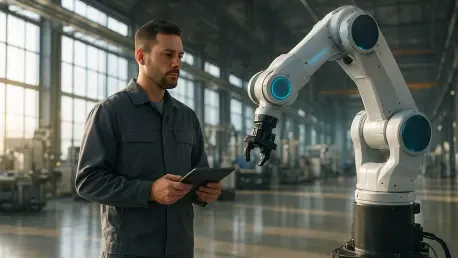

The sudden, catastrophic failure of a critical assembly line component often triggers a cascade of logistical failures that can jeopardize millions of dollars in contractual obligations within a single afternoon. In the current industrial climate of 2026, the margin for error has narrowed significantly, forcing manufacturers to reconsider the traditional boundaries between their physical assets and their digital management systems. The recent integration of LLumin’s industrial maintenance capabilities into CAI Software’s broader operational platform represents a pivotal moment in this shift. This transformation is not merely about updating software; it is about merging the heartbeat of the factory floor with the strategic brain of the enterprise to ensure that every machine contributes to the bottom line without interruption.
The synchronization of maintenance data with production execution is the definitive challenge for modern industrial leaders. For decades, the information generated by a machine remained trapped within its specific workstation, far removed from the eyes of the planners who determined the company’s output goals. By breaking down these silos, organizations are now able to treat asset health as a live variable in the production equation rather than an unpredictable disruption. This holistic approach ensures that the reliability of a factory is no longer a matter of luck but a direct result of calculated, data-driven strategy.
The Growing Need for Unified Industrial Operating Environments
The global manufacturing sector has moved definitively away from the era of fragmented software applications that once defined the industrial landscape. In the past, companies managed their enterprise resources, manufacturing execution, and asset maintenance through separate, often incompatible platforms. This fragmentation led to massive blind spots, where a production manager might schedule a high-priority job for a machine that was secretly on the verge of a breakdown. Today, the demand for a unified operating environment has reached a fever pitch, as companies realize that the speed of modern commerce requires a single, cohesive source of truth for all operational data.
Centralizing these functions into a unified nervous system allows for the seamless flow of intelligence across every department. When maintenance schedules are integrated directly into the broader operational framework, the entire organization gains visibility into the “health” of its commitments. This visibility is crucial for mid-market and enterprise manufacturers who must juggle complex supply chains and tight delivery windows. A unified environment does more than just save time; it reduces the friction between teams, ensuring that the goals of the production floor are always aligned with the reality of the machinery’s condition.
Furthermore, the adoption of these integrated platforms provides a foundation for long-term scalability. As manufacturers expand their operations from 2026 to 2030, the ability to plug new facilities and assets into an existing, unified framework will be a primary driver of growth. This architectural simplicity minimizes the technical debt that often plagues older industrial operations, allowing for a more agile response to changing market conditions. By investing in a unified environment now, leaders are effectively future-proofing their businesses against the inherent volatility of the global economy.
From Firefighting to Foresight: The Evolution of Asset Maintenance
The historical approach to maintenance was largely defined by “firefighting,” a reactive cycle where repairs were only initiated after a failure had already occurred. This model was not only expensive in terms of labor and spare parts but also devastatingly costly in terms of lost production time. As technology progressed, many firms transitioned to preventive maintenance, which relied on fixed schedules regardless of the machine’s actual state. However, even this method proved inefficient, as it often led to unnecessary servicing of healthy equipment or, conversely, failed to catch early-stage problems between scheduled checks.
The arrival of sophisticated condition monitoring has fundamentally altered this trajectory, moving the industry toward a model of foresight. By utilizing real-time data from sensors and plant-floor systems, software like LLumin can detect subtle anomalies—such as minute vibrations or temperature spikes—that human operators might miss. This shift allows maintenance teams to transition from being reactive repair crews to becoming proactive reliability engineers. They can now address a potential issue during a planned lull in activity, effectively eliminating the risk of a mid-shift breakdown that could derail an entire day’s output.
Artificial Intelligence plays a critical role in this evolution by providing the analytical depth required to make sense of massive streams of sensor data. Unlike general AI, the algorithms used in predictive maintenance are highly specialized, focusing on historical asset context and real-time operational signatures. These systems can predict when a component is likely to fail with startling accuracy, triggering automated work orders and alerts before the problem escalates. This level of predictive intelligence transforms the factory floor into a self-monitoring ecosystem where foresight is the standard operating procedure.
Bridging the Gap Between Machine Reliability and Manufacturing Execution Systems
The disconnect between machine reliability and manufacturing execution systems (MES) has long been a source of significant operational waste. When an MES schedules a production run based on theoretical capacity rather than actual machine health, the resulting plan is inherently flawed. If a machine is struggling to maintain tolerances or requires frequent resets, the production targets will not be met, leading to missed deadlines and frustrated customers. Bridging this gap requires a deep integration where the maintenance management system feeds real-time reliability data directly into the execution layer.
When these systems are fully synchronized, the benefits extend far beyond simple uptime. For instance, the integration allows for “intelligent scheduling,” where the software can automatically reroute jobs or adjust production speeds based on the current strain on a particular asset. If a critical motor is running hot, the system can prioritize lower-impact tasks for that machine until a repair can be performed, preserving the asset while still contributing to the facility’s overall throughput. This synergy ensures that the manufacturing plan is always grounded in the physical reality of the factory floor.
Moreover, this integration provides a comprehensive view of the total cost of production. By linking maintenance expenses and downtime directly to specific production jobs, management can gain a more accurate understanding of their profit margins. They can identify which machines are becoming “money pits” and which processes are placing undue stress on the equipment. This level of granular insight is only possible when machine reliability is treated as a core component of the manufacturing execution strategy, rather than a separate, secondary concern.
Market Insights on the Competitive Edge of Predictive Industrial Operations
In the competitive landscape of the mid-2020s, the ability to guarantee uptime has become a significant market differentiator. For manufacturers in capital-intensive industries like aerospace or medical device production, the cost of unplanned downtime can reach tens of thousands of dollars per hour. Consequently, companies that can demonstrate a high level of operational predictability are more likely to win long-term contracts with major global partners. Predictive industrial operations provide the reliability that modern supply chains demand, turning maintenance capabilities into a powerful sales tool.
Market data suggests that the democratization of these advanced tools is shifting the competitive balance in favor of agile, mid-market manufacturers. Previously, only the largest global conglomerates had the resources to develop and maintain custom predictive maintenance systems. However, with the rise of integrated platforms like CAI LLumin, specialized manufacturers can now access enterprise-grade predictive technology without the massive overhead. This shift allows smaller firms to compete on reliability and efficiency, challenging larger incumbents who may be slower to modernize their legacy systems.
Furthermore, the industry consensus points toward “connected industrial operations” as the new standard for excellence. Investors and analysts are increasingly looking at a firm’s digital maturity as a key indicator of its future performance. A manufacturer that can show a clear roadmap for AI integration and asset monitoring is viewed as a lower-risk investment. As the industry moves from 2026 to 2029, the gap between “connected” and “disconnected” manufacturers will likely widen, with the former capturing the majority of high-value growth opportunities in the global market.
Best Practices for Implementing AI-Assisted Maintenance and Monitoring
The successful implementation of AI-assisted maintenance begins with a rigorous focus on data quality. Artificial Intelligence is only as effective as the information it processes; therefore, manufacturers must ensure that their plant-floor sensors are calibrated correctly and that their historical records are clean and structured. It is essential to establish a baseline of “normal” operation before the AI can reliably identify anomalies. This initial investment in data integrity is the most critical step in ensuring that the system provides actionable insights rather than false alarms.
In addition to technical accuracy, organizations must address the human element of digital transformation. Maintenance technicians and production managers must be trained to trust the insights provided by the AI, even when a machine appears to be functioning normally on the surface. This requires a cultural shift where data-driven recommendations are given the same weight as years of hands-on experience. Successful firms often start with a pilot program on a single, critical asset, allowing the team to see the benefits of predictive alerts firsthand before scaling the technology across the entire facility.
Finally, long-term success depends on a commitment to continuous refinement of the system’s parameters. As the machinery ages and production demands change, the AI models must be updated to reflect the new operational reality. This is not a “set it and forget it” technology; it requires ongoing collaboration between IT, maintenance, and production teams. By treating AI-assisted monitoring as a dynamic, evolving part of the business, manufacturers can ensure that they continue to reap the rewards of increased uptime and reduced costs for years to come.
The adoption of integrated predictive technologies necessitated a significant shift in how industrial organizations prioritized their internal communication and data infrastructure. Leadership teams realized that the true value of AI lay not in the complexity of the algorithms, but in the clarity of the insights delivered to the people on the front lines. This transition moved the industry toward a standard where technical expertise was paired with a deep understanding of digital ecosystems. By focusing on workforce training and data standardization, companies successfully mitigated the risks of the digital divide. This proactive stance ensured that the pursuit of efficiency remained balanced with the need for operational stability and long-term resilience.