
The sudden transformation of the integrated development environment from a static text editor into a sentient collaborator has caught many veteran engineers by surprise. While the industry previously celebrated the arrival of simple autocomplete features that could predict the next line of code, the landscape has rapidly shifted toward fully integrated ecosystems. Modern development is no longer about human-led input alone; it is about the rise of the proactive agent. Cursor’s recent launch of Automations represents a pivotal moment where the tool stops waiting for a command and starts participating in the engineering process of its own volition.
This evolution marks a definitive break from the reactive models of the past few years. In the current market, the focus has moved beyond basic AI-assisted typing to sophisticated environments that manage entire repository lifecycles. This shift is driven by the realization that developer productivity is capped not by how fast one can type, but by how much cognitive load one can offload to reliable systems. Consequently, agentic workflows have become the new benchmark for excellence in software creation.
The competitive tension in this space is palpable as agile innovators like Cursor, Replit, and Codeium challenge established incumbents such as GitHub Copilot. While the larger players benefit from massive distribution networks, the smaller, more flexible teams are winning the race to implement agent-first architectures. This competition is expanding the industry scope, pushing AI-driven automation out of the local editor and directly into the heart of team communication platforms and cloud infrastructure.
Navigating the Shift Toward Event-Driven Autonomous Engineering
Emerging Trends in Agentic Software Creation
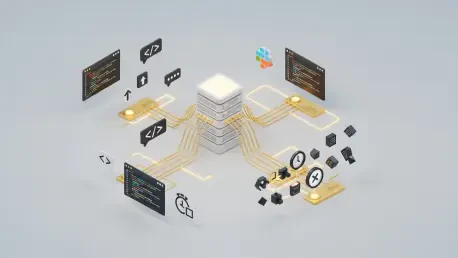
The introduction of trigger-based coding is fundamentally altering how software is built by moving away from the traditional call-and-response prompt. Instead of a developer specifically asking for a bug fix, these new systems react to external events like a code push, a mention in a Slack channel, or a scheduled timer. This event-driven architecture allows the AI to initiate work in the background, ensuring that by the time a human developer checks their notifications, a preliminary analysis or even a draft solution is already waiting for review.
Furthermore, placing AI agents within team communication channels is effectively collapsing response times. When a product manager reports a bug in a messaging app, a proactive agent can immediately pull the relevant source code, run a diagnostic scan, and provide a technical summary to the engineering team. This integration minimizes the friction between identifying a problem and initiating a resolution. As a result, the developer’s role is transitioning from a manual coder into a high-level architect who supervises a fleet of digital assistants.
Market Data and the Future Growth of AI Agents
Performance indicators for these AI-driven systems show significant efficiency gains, particularly in reducing the time spent on routine maintenance and dependency management. Early data suggests that teams utilizing proactive agents see a marked increase in deployment frequency because the AI handles the repetitive “plumbing” of the codebase. These metrics are becoming essential for organizations looking to justify their investment in advanced engineering tools over traditional headcount expansion.
Growth projections for the remainder of this decade suggest a total pivot toward fully integrated background AI operations. Industry analysts forecast that enterprise budget allocations will shift away from standalone licenses for basic assistants toward comprehensive platforms that offer autonomous problem-solving capabilities. The market is moving toward a future where the AI is an invisible but omnipresent member of the team, constantly optimizing performance without being told to do so.
Overcoming Trust Barriers and Technical Complexity in Automated Workflows
The primary hurdle for these autonomous systems remains the challenge of reliability and the potential for automated noise. Developers are naturally protective of their production environments, and the risk of an AI agent introducing “hallucinations” or false positives into a critical system is a significant concern. If an automation layer generates too many unnecessary alerts or incorrect refactors, it risks becoming a distraction rather than a benefit, leading to a breakdown in trust between the human and the machine.
Security and vulnerability management also present unique difficulties in an agentic world. There is a delicate balance to strike when allowing an autonomous agent to perform refactoring or update security patches without immediate human intervention. To mitigate these risks, organizations are developing layered oversight protocols that ensure every automated change is still subject to a final human gatekeeper. This approach preserves the speed of automation while maintaining the integrity of the software supply chain.
Standards and Compliance in the Age of Autonomous Code Agents
As proactive agents begin to write and commit more of the world’s code, the regulatory landscape is scrambling to keep pace. Emerging standards regarding intellectual property and code provenance are becoming critical for legal teams. Questions about who owns code generated by an autonomous agent triggered by a Slack message are no longer theoretical. Companies must now navigate a complex web of data privacy laws and internal security protocols to ensure that their AI agents do not inadvertently leak proprietary logic.
Moreover, the industry is seeing a push toward standardizing agent behavior to prevent conflicting actions across private repositories. Establishing robust audit trails is no longer optional; it is a fundamental requirement for compliance. These trails provide a clear record of every action taken by a proactive agent, allowing teams to reconstruct the logic behind an automated decision. This transparency is essential for maintaining safety in high-stakes environments like finance or healthcare.
The Future of the Software Engineering Profession and AI Integration
Looking ahead, the integration of AI agents with cloud infrastructure and CI/CD pipelines will likely be the next frontier of disruption. As agents gain the ability to provision their own testing environments and monitor real-time production telemetry, the boundary between development and operations will continue to blur. This deeper integration empowers agents to not only write code but to ensure its health throughout its entire operational life. This represents a move toward a frictionless experience where the environment anticipates the engineer’s needs.
The economic impacts of this democratization are profound, as the barrier to entry for complex coding tasks begins to lower. While some fear the displacement of engineering talent, others see an opportunity for specialized skills to become more valuable. The demand for engineers who can manage complex AI systems and design high-level architectures is expected to rise, even as routine coding tasks are offloaded to machines. This shift will likely redefine the global demand for technical skills, favoring those who can orchestrate hybrid human-AI teams.
Redefining Productivity through Cursor’s Automation Framework
The launch of Cursor’s Automations signaled the end of the reactive era and the beginning of a new phase where AI serves as a proactive participant. This transition moved the industry beyond the limitations of the text box and into a world where the context of a project dictated the AI’s actions. By integrating into the social and organizational fabric of development through tools like Slack and GitHub, these agents began to understand the human intent behind technical requirements.
Strategic investments in event-driven layers demonstrated that the future of engineering lies in background autonomy rather than constant manual prompting. Stakeholders who navigated this transition early found that their teams were able to focus on creative problem-solving while the agents managed the cognitive overhead of maintenance. Ultimately, the successful deployment of these systems rested on the ability of organizations to build scalable governance frameworks that balanced machine speed with human oversight. This evolution has left the software industry better equipped to handle the increasing complexity of the digital age.