
As a Development expert proficient in both frontend and backend development, Anand Naidu offers a unique perspective on the evolving landscape of open-source collaboration. We delve into the pressing challenges facing open-source projects today, particularly the surge of AI-generated code overwhelming maintainers. This conversation explores the operational strain this creates, the erosion of trust in the code review process, and the community’s divided reaction to potential solutions like restricting pull requests. We’ll also examine the promise and peril of using AI to filter submissions and the critical need for better attribution when AI tools are used, painting a detailed picture of a community at a technological crossroads.
Maintainers report being overwhelmed by low-quality, often AI-generated, pull requests. What specific operational challenges does this create for open-source projects, and how would allowing them to disable or delete PRs address the root cause of this problem? Please share a detailed example.
The operational challenge is a massive time-sink that’s burning out maintainers. Imagine you’re responsible for a popular open-source project. Every day, you’re flooded with submissions that fail to follow basic project guidelines, are abandoned almost immediately, or are clearly AI-generated by someone who doesn’t understand the underlying code. You end up dedicating a huge portion of your volunteer time just triaging this noise instead of focusing on meaningful contributions. Allowing maintainers to disable or delete these PRs is a direct, if blunt, solution. It acts like a circuit breaker, stopping the flood and letting them clear the queue of low-effort submissions. It’s about regaining control and creating space to engage with serious contributors, rather than being forced to use custom automations just to manage the influx.
A key concern is that the trust model for code review is breaking, as maintainers can no longer assume a contributor fully understands their submission. How does this shift the review burden, and what are the primary risks of merging code that appears structurally sound but is logically flawed?
This breakdown in trust fundamentally shifts the burden entirely onto the maintainer. In the past, you could assume a contributor understood their own code and had a reason for every line they wrote. Now, that assumption is gone. As Jiaxiao Zhou from Microsoft’s Azure team pointed out, we’re seeing pull requests that look perfect on the surface—clean syntax, proper formatting—but are logically unsound or even insecure. This forces maintainers into a mandatory, painstaking line-by-line review of every single submission, a process that simply doesn’t scale. The biggest risk is merging code that introduces subtle, hard-to-detect bugs or security vulnerabilities. It might pass all the automated tests but fail in a specific edge case in production, causing significant problems down the line because the original contributor never truly understood the logic they submitted.
GitHub has considered letting maintainers delete or turn off pull requests. Given that critics worry about losing valuable contributions or context, what are the trade-offs of this approach, and what might a more balanced, middle-ground solution for managing PR access look like in practice?
The trade-off is a classic case of control versus openness. On one hand, letting maintainers delete PRs gives them a powerful tool to eliminate spam and keep their repositories clean. On the other, as critics have rightly pointed out, it risks erasing valuable context or even legitimate-but-incomplete contributions. An accidental deletion could lose a crucial discussion thread forever. A more balanced approach would be to not delete PRs outright but to give maintainers more granular control over visibility and interaction. For example, instead of deleting, they could archive a low-quality PR, making it inaccessible from the main list but still reachable via a direct link. This preserves the content while reducing clutter. Another middle ground is better permissioning—allowing contributions from collaborators only, or perhaps from users who have been active in the community for a certain period, rather than a simple on/off switch for everyone.
One long-term proposal involves using AI to filter submissions, but this raises concerns about adding more uncertainty for maintainers. How can these tools be designed to act more like a reliable spam filter rather than another layer that requires human second-guessing and line-by-line validation?
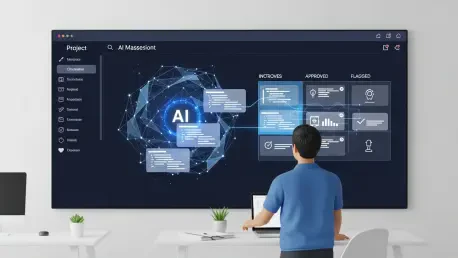
This is the million-dollar question, and the answer lies in reliability and focus. As Paul Chada of Doozer AI argued, these tools must have incredibly strong guardrails. The AI’s job shouldn’t be to judge the quality of the code’s logic, because that’s where hallucinations and uncertainty creep in. Instead, it should act as a smart assistant, a true spam filter. It could be trained to automatically flag submissions that don’t follow the project’s specific contribution guidelines, lack proper documentation, or fail to reference an existing issue. By focusing on objective, verifiable criteria, the AI reduces noise without adding another layer of subjective review. The goal is for the maintainer to trust the AI’s report implicitly, not to have to second-guess whether the AI understood the code’s intent.
Beyond filtering, there’s a suggestion for improved visibility when AI tools are used in a pull request. How would clear AI-usage attribution change a maintainer’s review process, and what specific metrics or labels would be most helpful for them to see?
Clear attribution would be a game-changer for a maintainer’s review process. It immediately resets expectations and adjusts the level of scrutiny required. If I see a PR with a clear label stating “80% AI-generated using GitHub Copilot,” I know I can’t assume the contributor has a deep understanding of the changes. My review instantly shifts from a collaborative discussion to a more rigorous, line-by-line audit. The most helpful labels would be the specific tool used and a percentage of code that was AI-assisted. This context allows the maintainer to approach the review with the right mindset, asking more fundamental questions about the logic and intent, rather than just stylistic ones. It helps rebuild that broken trust model by making the process more transparent.
What is your forecast for the role of AI in open-source contributions over the next few years?
My forecast is that we are in a temporary, chaotic phase of adjustment. Right now, AI is a firehose flooding open-source projects with low-quality contributions, but this won’t last. Over the next few years, I expect a rapid evolution on two fronts. First, the AI tools themselves will become much smarter, moving beyond simple code generation to providing better context and adhering more closely to project-specific guidelines. Second, the platforms, like GitHub, will develop the sophisticated “spam filter” and attribution systems we’ve been discussing. The role of AI will mature from being a source of noise to a powerful, specialized assistant that helps both contributors and maintainers. The future isn’t about blocking AI; it’s about integrating it intelligently and transparently into the workflow.