
In the fast-evolving landscape of technology, a striking statistic reveals that over 60% of web and app development tasks are now supported by AI tools, reshaping how solutions are built and prompting a critical examination of two powerful forces shaping modern industries: human creativity and AI automation. While AI streamlines processes with unprecedented speed, the unique spark of human imagination continues to define user experiences that resonate on a deeper level. This comparison dives into the strengths, limitations, and synergies of these two approaches, particularly in the realm of web and app development, to uncover how they can coexist or compete in creating impactful digital solutions.
Setting the Stage: Understanding Human Creativity and AI Automation
Human creativity and AI automation stand as distinct yet intersecting forces in today’s tech-driven industries, especially in web and app development. Human creativity embodies the ability to imagine, innovate, and connect emotionally with users through tailored designs and solutions. It thrives on contextual understanding, pushing boundaries to craft experiences that resonate with specific audiences, from intuitive app interfaces to compelling brand narratives.
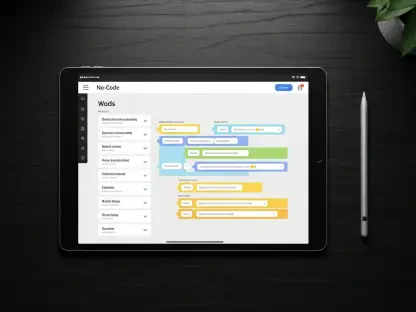
On the other hand, AI automation brings a transformative edge by optimizing workflows, cutting costs, and handling repetitive tasks with precision. Tools such as coding assistants and no-code platforms enable rapid prototyping, testing, and deployment, making development accessible even to non-technical individuals. This efficiency is invaluable for scaling projects and meeting tight deadlines in competitive markets.
The intersection of these forces is increasingly evident as businesses strive to balance speed with substance. In an era where user expectations demand both functionality and emotional engagement, the collaboration between human insight and AI capabilities is shaping technology and business strategies. This comparison seeks to explore how each contributes to user experiences and what their combined potential holds for the industry.
Core Comparisons: Strengths and Limitations
Productivity and Efficiency
AI automation undeniably leads in productivity, offering speed and consistency that humans cannot match. In web and app development, AI tools can generate code snippets, automate testing, and produce UI mockups in mere minutes, significantly reducing time-to-market for projects. For instance, coding assistants can draft functional code blocks instantly, allowing developers to focus on higher-level tasks.
In contrast, human creativity operates at a slower pace but delivers nuanced, user-centered solutions. Developers often spend considerable time researching user needs and iterating designs to ensure accessibility and engagement. While this approach may delay initial outputs, it often results in applications that better address specific pain points, enhancing long-term user satisfaction.
A clear example lies in prototyping: AI can churn out a basic app layout in moments, but a human designer might take days to refine the interface, ensuring it aligns with brand identity and user expectations. This trade-off between rapid delivery and thoughtful execution highlights the complementary nature of both approaches in achieving project goals.
Emotional and Cultural Depth
One of AI’s notable limitations is its inability to grasp emotional and cultural subtleties, often leading to outputs that feel generic or detached. Automated designs or content may lack the personal touch needed to connect with diverse audiences, resulting in experiences that fail to inspire trust or loyalty. This gap is particularly evident in sensitive sectors like healthcare, where empathy is paramount.
Human creativity, however, excels in weaving emotional and cultural depth into digital solutions. Designers and developers can craft app interfaces that reflect local values or evoke specific feelings, such as trust in a medical app through calming visuals and reassuring language. This human touch often transforms user perceptions, making interactions more meaningful and memorable.
Real-world scenarios underscore this difference. In cases where AI-generated app layouts were used without modification, user feedback often pointed to a lack of relatability. Conversely, when human designers intervened to personalize elements, engagement metrics improved, demonstrating the irreplaceable value of human insight in fostering connections.
Innovation and Adaptability
AI’s capacity for innovation is constrained by the data and patterns it has been trained on, limiting its ability to produce truly original ideas. While it can iterate on existing frameworks and optimize solutions, AI struggles to address unique or unforeseen challenges that fall outside its programmed scope. This often results in incremental rather than groundbreaking advancements.
Human creativity, by contrast, thrives on imagination and critical thinking, driving innovation through novel concepts and adaptive problem-solving. Developers can envision entirely new app features or pivot strategies in response to unexpected user feedback, pushing the boundaries of what technology can achieve. Such adaptability is crucial in a field where trends and needs evolve rapidly.
Consider the development of unique app functionalities: AI might enhance existing travel itinerary tools based on past data, but a human developer could conceptualize a feature that integrates local storytelling, setting the app apart. This ability to think beyond templates and data underscores the distinct edge human creativity holds in fostering true innovation.
Challenges and Ethical Considerations
AI automation presents significant challenges, including the risk of over-reliance, which can lead to homogenized products lacking originality. There’s also the looming concern of job displacement as routine tasks become fully automated, potentially sidelining certain skill sets. Businesses must navigate these issues to maintain diversity in their offerings and workforce.
Ethical dilemmas further complicate AI’s adoption, with issues like data privacy, algorithmic bias, and lack of accountability in automated decisions coming to the forefront. For instance, biased AI outputs in healthcare or travel apps can perpetuate unfair practices, necessitating rigorous oversight to ensure equitable outcomes. These concerns highlight the need for strict governance in AI deployment.
Human creativity, while invaluable, faces its own hurdles, such as scalability and time constraints in delivering personalized solutions. Keeping pace with technological advancements also demands continuous skill development, which can strain resources. Moreover, humans bear the ethical responsibility to oversee AI outputs, ensuring fairness and compliance in critical applications, a task that requires vigilance and expertise.
The Path Forward: Collaboration or Competition?
The comparison between human creativity and AI automation reveals a fundamental trade-off between productivity and depth. AI excels in handling repetitive, mechanical tasks with speed, while human ingenuity brings emotional resonance, cultural relevance, and innovative thinking to the table. Together, their strengths can offset individual limitations, pointing toward a synergy rather than rivalry.
A collaborative model emerges as the most promising path, where AI takes on routine tasks like drafting initial code or designs, freeing humans to focus on strategic refinement and creative input. This hybrid approach is particularly suited for web and app development, ensuring solutions are both efficient to produce and impactful for users, blending functionality with personal connection.
Looking ahead, businesses and developers are encouraged to adopt this balanced dynamic for sustained success. By investing in tools that automate grunt work and training teams to excel in design thinking and user empathy, companies can build applications that stand out in crowded markets. This partnership between human and machine holds the key to navigating future challenges and delivering digital experiences that truly matter.