Introduction
The monumental injection of venture capital into AI-driven development platforms signals a profound transformation in how software is created, moving beyond traditional code and into the realm of intuitive, conversational instruction. A new category of technology, dubbed “vibe-coding,” is attracting significant attention and investment, promising to democratize app creation for millions. This rapid evolution raises crucial questions about the future of software development, the role of human programmers, and the accessibility of technology for entrepreneurs and creators without a technical background.
This article addresses these pivotal questions in a comprehensive FAQ format. The objective is to demystify the concept of vibe-coding, exploring its underlying mechanisms and its meteoric rise. By examining the market forces, key industry players, and the groundbreaking potential of this technology, readers can expect to gain a clear understanding of what vibe-coding is, why it matters, and the far-reaching implications it holds for the entire technology landscape.
Key Questions and Topics
What Exactly Is Vibe-Coding?
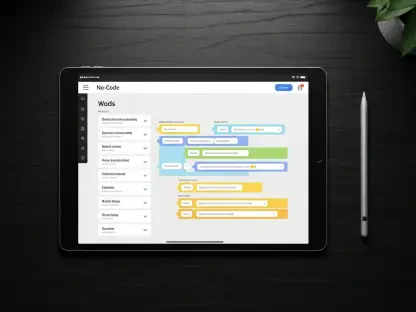
The journey to create software has historically been gated by the steep learning curve of programming languages, requiring deep expertise in syntax, logic, and architecture. While low-code and no-code platforms emerged as a significant step toward accessibility, they often confined users to predefined templates and limited functionality, struggling to accommodate truly custom or complex ideas. This gap created an urgent need for a more powerful yet intuitive bridge between a great idea and a functional application.
Vibe-coding represents the next evolutionary leap, moving beyond the constraints of its predecessors. It is a sophisticated form of AI-assisted development where a user interacts with intelligent agents using natural, conversational language. Instead of writing code or dragging and dropping components, a creator describes the desired outcome, functionality, and aesthetic—the “vibe”—of their application. The AI then interprets this intent, autonomously handling the intricate tasks of designing user interfaces, writing the underlying code, conducting tests, and even managing deployment. This allows for the creation of bespoke, full-stack applications that were previously the exclusive domain of skilled engineering teams.
Why Is Vibe-Coding Gaining So Much Momentum?
The explosive growth of vibe-coding is not a speculative trend but a market reality backed by substantial financial confidence and rapid user adoption. This momentum is best exemplified by the trajectory of Emergent, a leading startup in the space. Launched just over a year ago, the company has already amassed a global user base of over 5 million people across 190 countries, achieving an impressive $50 million in annual recurring revenue. This demonstrates a powerful market appetite for tools that lower the barrier to software creation.
This user growth is mirrored by immense investor confidence. Emergent’s recent $70 million Series B funding round, co-led by giants like SoftBank’s Vision Fund 2 and Khosla Ventures, propelled its valuation to $300 million. This followed a rapid succession of funding that saw the company raise a total of $100 million in a remarkably short period. Such aggressive investment from firms known for backing category-defining technologies serves as a powerful validation, signaling that the financial world sees vibe-coding not just as a novel tool but as a foundational technology poised to reshape the digital economy.
Who Is Driving This Technological Shift?
The vibe-coding revolution is being spearheaded by a new generation of innovative companies that are harnessing the power of large language models to dismantle traditional development barriers. Emergent has emerged as a prominent leader, but it operates within a dynamic and competitive ecosystem. Other pioneering platforms, including Lovable, Cursor, and Replit, are also making significant contributions, each carving out a niche in this burgeoning market by offering unique approaches to AI-assisted coding and application deployment.
These companies are strategically structured to maximize global talent and capital. Emergent, for instance, employs a hybrid US-India model, maintaining its headquarters in San Francisco to tap into Silicon Valley’s venture capital network while basing its core engineering team of over 70 employees in Bengaluru to leverage India’s deep pool of elite technical talent. This bicoastal, international structure allows for round-the-clock innovation and cost-effective scaling, a model that is becoming increasingly common among the top players in the AI development space. This global approach is accelerating the pace of innovation and expanding market reach into key regions like the United States, Europe, and India.
How Does This Impact the Role of Human Developers?
The rise of AI-powered development tools inevitably prompts discussion about the future for human software engineers. However, the prevailing view among industry experts is that vibe-coding platforms are set to augment, rather than replace, skilled developers. These tools excel at automating repetitive, time-consuming tasks and rapidly generating foundational code, which dramatically accelerates the development lifecycle. This frees up human engineers to focus on more strategic and complex challenges.
In this new paradigm, the role of the developer evolves. Their expertise will be crucial for overseeing system architecture, optimizing performance for scale, ensuring robust security, and solving novel problems that fall outside the current capabilities of AI. Instead of writing every line of code from scratch, developers will increasingly act as architects, validators, and creative problem-solvers, guiding AI agents to produce higher-quality outcomes more efficiently. This symbiotic relationship promises to elevate the craft of software engineering, making developers more productive and capable of tackling more ambitious projects than ever before.
Summary or Recap
The emergence of vibe-coding signifies a fundamental turning point in software development. This technology transforms app creation from a highly specialized skill into an accessible, conversational process, empowering a new wave of non-technical founders and creators. The concept is defined by its use of natural language to direct AI agents, which then manage the entire development lifecycle, delivering custom, full-stack applications.
The rapid market adoption and significant venture capital investment, highlighted by the success of companies like Emergent, confirm that this is not a fleeting trend but a sustainable market shift. This movement is powered by globally integrated companies leveraging the world’s best talent and is reshaping the competitive landscape. Ultimately, vibe-coding is not positioned as a replacement for human developers but as a powerful collaborative tool, set to redefine productivity and innovation in the technology sector.
Conclusion or Final Thoughts
The analysis of the vibe-coding phenomenon makes it clear that we have crossed a significant threshold. The massive financial and user-driven validation behind platforms like Emergent confirms that the democratization of technology is accelerating at an unprecedented pace. The discussion has moved beyond theoretical potential and into the practical realities of a market being actively reshaped by AI-assisted development. This shift has unlocked opportunities for creativity and entrepreneurship on a global scale, fundamentally altering who gets to build the future.
Looking forward, the key consideration is how individuals and organizations will adapt to this new ecosystem. For aspiring entrepreneurs, the challenge is no longer a lack of technical skill but the ability to articulate a clear vision. For existing developers, the imperative is to embrace these AI tools, evolving from pure coders into strategic architects and innovators. The rise of vibe-coding is not just about building apps differently; it is about reimagining the very nature of creation in the digital age.