
The sophisticated algorithms driving today’s artificial intelligence are quietly exposing a fundamental weakness at the heart of the digital enterprise: an infrastructure never designed to support their immense and specialized needs. As organizations move beyond experimental pilots and attempt to deploy AI at production scale, they are encountering a frustrating reality of spiraling costs, crippling performance bottlenecks, and operational complexity. This challenge signals more than a need for incremental upgrades; it necessitates a complete paradigm shift in how cloud infrastructure is architected, managed, and consumed. The era of simply “bolting on” AI capabilities to existing cloud environments is over, forcing a critical reevaluation of the foundational technology that powers modern business.
Are You Trying to Run a Supercar on Regular Gas Why Your Current Cloud Is Straining Under the Weight of AI
The analogy of running a high-performance supercar on low-octane fuel perfectly captures the predicament many enterprises face. Generative AI models and other advanced algorithms are the supercars of the digital world—meticulously engineered for speed, power, and intelligence. They require a specialized, high-energy fuel source to perform as designed. Traditional cloud infrastructure, however, is the equivalent of regular gasoline. It is reliable and perfectly adequate for powering the everyday vehicles of the internet—websites, SaaS applications, and standard business workloads—but it lacks the specific composition required to unlock the potential of high-performance AI. Pushing these advanced systems on a conventional cloud leads to engine knocking, sputtered performance, and the risk of costly damage.
This strain manifests in tangible technical and financial consequences. The immense computational hunger of AI, particularly during the training phase of large language models, places unprecedented demands on compute resources that legacy cloud architectures struggle to meet efficiently. These older systems were primarily designed around CPU-based virtualization, treating specialized hardware like Graphics Processing Units (GPUs) and Tensor Processing Units (TPUs) as auxiliary add-ons rather than central components. This architectural bias results in significant scheduling inefficiencies, network latency, and I/O bottlenecks that can dramatically slow down model training and inference, rendering real-time AI applications impractical and driving up operational expenses without delivering proportional value.
Ultimately, the friction between advanced AI and traditional cloud infrastructure extends beyond mere technical limitations to impact innovation and developer productivity directly. The architectural mismatch creates a fragmented and cumbersome experience for data scientists and engineers, who are forced to stitch together a patchwork of disparate services for data preparation, model training, fine-tuning, and deployment. This complexity not only slows the development lifecycle but also introduces points of failure that can compromise the reliability of AI applications. The result is a cycle of frustration where promising AI initiatives stall under the weight of an infrastructure that was simply not built for the intelligence-driven future.
The Breaking Point How Generative AI Upended the Traditional Cloud Paradigm
The original cloud computing paradigm was born from a need for elasticity and cost-efficiency, engineered to serve the software-as-a-service revolution. Its architecture was optimized for general-purpose workloads, prioritizing horizontally scalable, CPU-based computing and virtualized environments that could be spun up and down on demand. In this model, intelligence was a workload to be run, not a core utility to be delivered. This design philosophy proved incredibly successful for a generation of digital services, but the explosive arrival of generative AI exposed its fundamental limitations. Generative AI is not just another application; it is a new computing platform with non-negotiable requirements that directly challenge the foundational assumptions of the traditional cloud.
These new demands are uncompromising and multifaceted. First and foremost is the need for massive, parallel computational power delivered by thousands of interconnected, specialized processors. Training a foundational model requires orchestrating vast fleets of GPUs or TPUs working in concert, a task for which general-purpose cloud schedulers are ill-equipped. Second is the requirement for ultra-fast, low-latency access to enormous and diverse datasets. AI models are voracious consumers of information, and any delay in the data pipeline becomes a critical performance bottleneck, extending training times from weeks to months. Finally, the iterative nature of AI development—a constant cycle of training, testing, and fine-tuning—demands a highly flexible and scalable infrastructure that can adapt seamlessly between different computational profiles without manual reconfiguration.
The consequences of this profound architectural mismatch are severe and unavoidable. Organizations attempting to run large-scale AI on conventional cloud infrastructure face crippling and unpredictable computing costs, as the pricing models were not designed for the sustained, high-intensity usage that GPUs demand. Furthermore, data bottlenecks, caused by storage and networking layers not optimized for the high-throughput needs of AI, hamper performance and slow the pace of innovation. This leads to a fragmented and inefficient experience for developers, who must navigate a maze of incompatible tools and services to bring their models to life, hindering the very agility the cloud was meant to provide.
Redefining the Foundation Core Principles and Components of the AI-Native Cloud
Addressing these challenges requires a fundamental shift in perspective: moving from a model where AI is treated as a secondary workload to one where intelligence is the cornerstone of the infrastructure itself. An AI-native cloud is not an incremental improvement but a complete re-architecting of the technology stack. In this new paradigm, every layer—from the physical network interconnects and storage systems to the compute orchestration and management planes—is designed and optimized for the unique physics of training and serving large-scale AI models. This “design-first” approach ensures that the entire system is engineered to support the high-throughput, low-latency, and massively parallel demands of modern AI from the ground up.
Several key characteristics differentiate an AI-native cloud from its traditional counterpart. At its heart is a GPU-first orchestration model, where specialized accelerators like GPUs and TPUs are treated as first-class citizens, not peripheral resources. Advanced management tools, often built on specialized implementations of Kubernetes, are used to handle the complexities of distributed training, ensuring that thousands of processors can work together as a cohesive unit. This is supported by a vector foundation, where vector databases become the essential long-term memory for AI systems. These databases allow models to access and reason over proprietary enterprise data in real-time, providing crucial context and dramatically reducing the risk of model hallucinations. This evolution also recognizes the rise of neoclouds—specialized providers like CoreWeave and Lambda that have built their infrastructure exclusively for GPU-centric workloads, often delivering superior performance and cost-efficiency compared to general-purpose hyperscalers. The ultimate vision extends from AIOps to AgenticOps, aiming for a self-operating system where intelligent agents can autonomously manage network traffic, resolve IT issues, and optimize cloud spending.
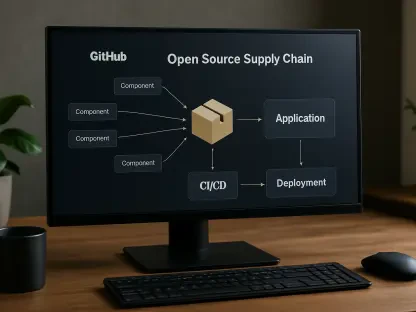
Constructing or migrating to an AI-native environment requires adopting a set of essential building blocks. It begins with embracing cloud-native principles, including microservices architecture, containerization for portability, and robust CI/CD practices for agile development. However, the price of entry is data modernization. AI systems are only as good as the data they consume, necessitating real-time data flow from modern data lakes and lakehouses. Furthermore, success depends on incorporating sophisticated operational frameworks. MLOps (Machine Learning Operations) ensures the reliable and repeatable deployment of models, AIOps (AI for IT Operations) uses machine learning to automate infrastructure management, and FinOps (Cloud Financial Operations) provides the financial governance needed to control the significant costs associated with AI workloads.
Industry Insights Expert Analysis on the AI Infrastructure Revolution
The shift toward AI-native systems is not just a theoretical concept; it is a tangible trend recognized by leading industry bodies and analysts. The Cloud Native Computing Foundation (CNCF), the steward of cornerstone projects like Kubernetes, emphasizes that core cloud-native techniques provide the essential groundwork for building resilient and manageable AI systems. Technologies such as containers, microservices, and declarative APIs offer the modularity and automation required to tame the complexity of distributed AI workloads. According to this view, the future is not about replacing cloud-native principles but extending them, adapting them to the unique demands of GPU orchestration, model serving, and massive-scale data processing.
Further validating this trend, Forrester Research has identified the emergence of a new market segment poised to reshape the cloud landscape. In its analysis, Forrester predicts that by 2026, the industry will witness the definitive “rise of specialized neocloud providers.” These companies are challenging the dominance of traditional hyperscalers by offering GPU-centric infrastructure that is meticulously optimized for raw performance and cost-efficiency. By focusing exclusively on the needs of AI and high-performance computing, these neoclouds can provide a level of specialization that is difficult for general-purpose cloud providers to match, creating a more dynamic and competitive ecosystem for enterprises with aggressive AI ambitions.
Beyond the technical architecture, the business case for building AI-natively is becoming increasingly compelling. An infrastructure designed for intelligence unlocks transformative capabilities that are simply unattainable with legacy systems. It enables organizations to implement hyper-personalization at an unprecedented scale, tailoring customer experiences in real-time based on complex behavioral data. It also drives profound operational efficiency by automating routine tasks and providing predictive insights that can optimize supply chains, anticipate maintenance needs, and reduce waste. Ultimately, an AI-native foundation creates a virtuous cycle of continuous improvement, where data-driven feedback loops allow businesses to learn, adapt, and innovate faster than their competitors.
From Theory to Practice Five Strategic Paths to an AI-Native Future
Navigating the transition to an AI-native infrastructure is not a one-size-fits-all endeavor. The optimal path depends on an organization’s existing technical maturity, strategic goals, and internal expertise. Forrester has identified five distinct adoption models that serve as a strategic map for this journey, offering different levels of control, abstraction, and specialization. These paths provide a framework for enterprises to align their infrastructure choices with the specific needs of their business leaders, technologists, data scientists, and governance teams, ensuring a more cohesive and successful implementation.
These five strategic routes offer a spectrum of options. The Open-Source Ecosystem path allows organizations with deep engineering talent to tap directly into cutting-edge innovation by building on platforms like Kubernetes, giving them maximum flexibility and control. For those seeking to abstract away infrastructure complexity, AI-Centric Neo-PaaS solutions provide prebuilt platforms for flexible, self-service AI development. The most common entry point for many remains Public Cloud Platform-Managed AI Services, leveraging established enterprise-grade offerings like Amazon Bedrock, Google Vertex AI, and Microsoft Azure AI. For the most demanding and performance-critical initiatives, partnering with AI Infrastructure Cloud Platforms (Neoclouds) offers access to highly specialized, GPU-optimized environments. Finally, Data/AI Cloud Platforms from providers like Databricks and Snowflake allow organizations to build AI applications directly on their data foundations, tightly aligning data scientists with business units.
A successful implementation requires a practical and methodical approach. The first step for most organizations should be to thoroughly evaluate the AI services and technology roadmap of their primary cloud vendor before considering a switch. It is crucial to resist the temptation of premature production deployments; instead, enterprises should first establish robust AI governance policies that assess model risk in the context of specific use cases. Furthermore, every initial AI initiative is a learning opportunity. The lessons derived from early projects should be systematically documented and shared across the organization to build collective expertise. Scaling should be incremental, based on proven success in well-defined domains, such as boosting internal productivity or enhancing information retrieval, to build momentum and demonstrate value.
The architectural reassessment prompted by artificial intelligence marked a pivotal moment for cloud computing. Enterprises recognized that treating AI as just another application on legacy infrastructure was a strategy destined for failure. The move toward an AI-native foundation was not merely a technical upgrade but a fundamental business transformation. By embracing principles like GPU-first orchestration, data modernization, and specialized infrastructure, organizations built the capacity to not only deploy AI but to embed intelligence into the very fabric of their operations, setting a new standard for innovation and efficiency.