
The transition from simple predictive text to fully autonomous software agents has moved beyond theoretical curiosity to become the operational standard for high-velocity engineering teams in the current year. This shift marks the decline of basic code completion and the rise of a comprehensive orchestration layer. JetBrains Air enters this space not as a single tool, but as a multi-layered ecosystem designed to manage the complexities of agentic development. By moving the focus from the individual file to the entire repository and beyond, the system seeks to address the fragmentation that occurs when multiple AI models and specialized agents are used across a single organization.
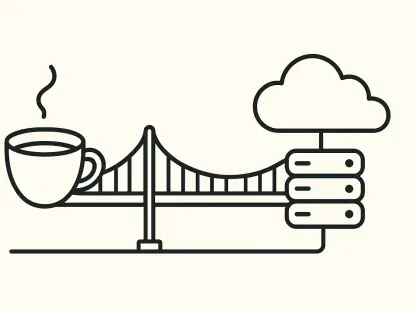
The core philosophy behind this technology rests on the integration of disparate development surfaces. While previous iterations of AI assistants functioned primarily within the confines of the editor, this new ecosystem expands toward the web, command-line interfaces, and team-based cloud environments. It recognizes that modern software engineering involves a constant movement between coding, testing, and deployment, and that an effective AI agent must be able to follow the developer across all these stages. Consequently, the technology acts as a bridge, ensuring that context is not lost as a task moves from a local IDE to a shared pull request or a production server.
The Evolution of Agentic Development and JetBrains Air
The emergence of agentic development represents a fundamental change in the relationship between the human programmer and the machine. Historically, AI in software was reactive, providing suggestions only when prompted by a specific keystroke or command. In contrast, JetBrains Air facilitates a proactive model where autonomous agents like Junie can analyze a task, plan a multi-step solution, and execute changes across several files. This evolution is rooted in the transition from large language models acting as simple translators to agents acting as logical reasoning engines that understand the specific nuances of a project’s architecture.
Within this broader technological landscape, the Air ecosystem serves as a stabilizing force for organizations attempting to scale their AI adoption. As companies move away from monolithic AI providers, they face the challenge of managing a “wild west” of specialized agents. This implementation provides the necessary structure by offering a unified interface for agent orchestration. It ensures that whether an agent is performing a routine refactoring or a complex system migration, it operates within a controlled framework that respects the underlying logic and history of the codebase.
The Three Pillars of the Air Architecture
Air in IDEs: The Refined Developer Experience
The integration of Air within the Integrated Development Environment (IDE) transforms the traditional workspace into a sophisticated orchestration hub. This plugin-based approach allows developers to manage high-level tasks through a dedicated session interface, where each session represents a specific objective. Instead of manually tracking every file change, the human developer monitors a feed of agent activity, providing feedback at critical junctures. This interactive loop is essential for maintaining high standards, as it allows for line-level comments on agent-generated diffs, which the agent then uses to iterate and improve its proposal.
Furthermore, the system excels at multi-project oversight, enabling a single developer to supervise several autonomous sessions simultaneously. This capability is supported by a robust feedback mechanism that highlights unread updates and pending commits across the workspace. By centralizing these interactions, the IDE version of Air reduces the cognitive overhead associated with context switching. It allows the human to remain in a “director” role, focusing on architectural decisions while the agents handle the implementation details across the local environment and connected remote repositories.
Air Teams: Collaborative Workflow Automation
Moving beyond the individual workstation, Air Teams introduces a layer of automation designed for the collective engineering lifecycle. By providing shared cloud environments, the system ensures that every team member interacts with agents in a consistent state. This prevents the “it works on my machine” syndrome that often plagues AI-generated code. These environments are not merely hosting spaces but are integrated with the Model Context Protocol (MCP), allowing teams to share custom tools and data sources that give agents the specific context they need to be effective within a particular business domain.
This collaborative focus extends to the automation of high-frequency, low-creativity tasks that typically drain team resources. Automated code reviews and the generation of release notes are handled by agents that have access to the full history of the project. Because these agents operate within a shared team infrastructure, they can be configured with specific security policies, such as restricted internet access or encrypted secret management. This ensures that the speed gained through automation does not come at the expense of the organization’s security posture or operational stability.
Air Governance: Organizational Control and Policy
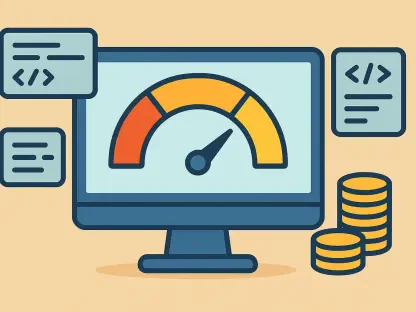
At the highest level, Air Governance provides the administrative oversight necessary for enterprise-grade deployments. This component is designed to eliminate “shadow AI” by offering a centralized dashboard for managing model access, spending limits, and auditing. Organizations can utilize a “Bring Your Own Key” (BYOK) strategy, integrating their existing subscriptions from providers like OpenAI or Anthropic while maintaining a unified view of how these resources are consumed. This level of transparency is critical for financial planning, as it allows managers to attribute AI costs to specific teams or projects accurately.
The governance framework also serves as a defensive mechanism against the risks of unregulated AI usage. By setting granular permissions, administrators can define which agents are allowed to access specific repositories or which models can be used for sensitive data. Detailed audit logs provide a trail of every action taken by an agent, which is vital for compliance in regulated industries. This balance of flexibility and control ensures that the organization can experiment with the latest AI breakthroughs without losing its grip on security or budget.
Innovations in Interoperability and Standards
One of the most significant shifts in industry behavior is the move toward open standards for agent communication. The co-development of the Agent Client Protocol (ACP) by JetBrains and Zed represents a major milestone in preventing vendor lock-in. By establishing a common language for how an IDE and an AI agent interact, ACP ensures that the development environment remains a neutral ground. This shift allows developers to swap one agent for another—such as moving from a general-purpose assistant to a specialized bug-hunting agent—without needing to reconfigure their entire workflow or learn a new interface.
This commitment to interoperability influences the market by encouraging the development of specialized, best-in-class agents rather than monolithic, closed ecosystems. When an IDE can speak to any ACP-compliant agent, the barrier to entry for new AI startups is lowered, fostering a more competitive and innovative landscape. For the end user, this means that the Air ecosystem acts as a future-proof investment. As model rankings change and new technologies emerge from 2026 to 2030, the platform remains capable of integrating the most advanced tools available without forcing a migration.
Real-World Applications of Agentic Orchestration
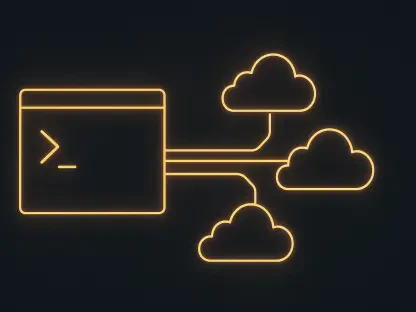
The practical utility of this technology is best observed in how it handles complex tasks across different surfaces. In a modern web development scenario, an agent might identify a performance regression in a production environment, navigate to the relevant CLI tools to run a diagnostic suite, and then suggest a code fix within the IDE. This ability to operate across the web, desktop, and command line allows agents to handle end-to-end workflows that were previously restricted to human intervention. Such orchestration is particularly valuable for routine bug remediation in massive repositories where a human might take hours just to locate the relevant files.
Another impactful application is the automation of the documentation and release cycle. In large-scale production environments, maintaining accurate release notes and documentation is a persistent challenge. Agents within the Air ecosystem can analyze months of commit history and pull request discussions to synthesize clear, technically accurate summaries. This not only saves time but also ensures that the documentation evolves in lockstep with the code. By automating these administrative burdens, the technology allows engineering teams to dedicate more energy to product innovation and complex problem-solving.
Navigating the Challenges of AI-Generated Code
Despite the gains in productivity, the move to agentic development introduces a “verification bottleneck” that organizations must carefully navigate. When agents can produce a high volume of code almost instantaneously, the primary challenge for the human developer shifts from creation to validation. There is a real risk of accumulating “agent-generated code debt,” where the sheer volume of changes makes it difficult to maintain a deep understanding of the system’s architecture. To mitigate this, the technology relies on deterministic code intelligence and semantic indexing to ground agents in the actual structure of the codebase, reducing the likelihood of logical errors.
Furthermore, managing the long-term maintenance of AI-written code requires a new set of skills and tools. The ecosystem addresses this by treating agent interactions as structured data that can be indexed and searched. This allows developers to see not just what code was changed, but why it was changed and what the agent’s reasoning was at the time. Ongoing development efforts are focused on making these verification tools more intuitive, ensuring that the human remains an informed and effective final authority. Balancing the speed of the agent with the rigor of human oversight remains the central technical hurdle of the current era.
The Future of Event-Driven Software Delivery
Looking ahead, the trajectory of this technology points toward a shift into fully autonomous, event-triggered development pipelines. In this future state, agents will not wait for a human to initiate a session but will instead respond to events within the repository or the production environment. For example, a failing integration test could automatically trigger a diagnostic agent that identifies the cause and prepares a pull request before a human even realizes there is an issue. This move toward “autonomous maintenance” could redefine the role of the developer, shifting the focus further toward high-level system design and oversight.
The expansion into mobile platforms will also play a crucial role in making this autonomous future accessible. Developers will be able to monitor agentic progress and approve critical changes from their mobile devices, ensuring that the development cycle is never stalled by a lack of access to a desktop workstation. As these agents become more sophisticated in their repository management, the long-term impact will likely be a significant reduction in the time spent on “toil”—the manual, repetitive tasks that characterize much of modern software engineering. The focus will remain on building trust through transparent, auditable, and deterministic AI interactions.
Assessment of the JetBrains Air Ecosystem
The evaluation of the JetBrains Air ecosystem showed that the platform successfully addressed the most pressing challenges of agentic software development. It moved the industry forward by prioritizing a multi-vendor, open-standard approach that protected organizations from the risks of proprietary lock-in. The implementation of the Agent Client Protocol proved to be a decisive factor in creating a flexible environment where developers could leverage the best available AI models. By focusing on governance and context, the system provided the necessary guardrails to turn AI from a experimental tool into a reliable component of the professional engineering stack.
The assessment concluded that the balance between developer autonomy and organizational oversight was maintained through the three-pillar architecture. While the IDE features empowered individual engineers to direct complex agents, the governance and team layers ensured that this activity remained secure and cost-effective. The transition from simple code completion to a sophisticated orchestration layer signaled a new era where the value of a development platform was measured by its ability to facilitate trust and verification. Ultimately, the ecosystem demonstrated that the future of software engineering lay in the seamless collaboration between human creativity and autonomous machine execution.