
A polished resume and a list of certifications are no longer the definitive passports to a top-tier software engineering role; instead, a GitHub repository filled with tangible, complex projects has become the ultimate proof of a developer’s capability. In a market saturated with talent, the ability to demonstrate practical problem-solving and deep technical understanding through a curated portfolio is the new currency. This shift demands a more strategic approach to personal development, where the choice of a project can significantly alter a career trajectory. The projects that follow are not mere academic exercises but strategic investments in building a compelling professional narrative.
Beyond Tutorials: Why Your Next Project Will Define Your Career in the AI Era
The landscape of software development is undergoing a fundamental transformation, where the emphasis has decisively shifted from theoretical knowledge to demonstrable skill. Practical, portfolio-driven evidence of what a developer can build is rapidly supplanting traditional credentials as the primary metric for evaluation. Hiring managers are increasingly looking past bullet points on a resume and directly into the commit history of a candidate’s projects, seeking tangible proof of their ability to design, implement, and maintain complex systems. This evolution in hiring practices makes the selection and execution of personal projects a high-stakes endeavor directly tied to professional advancement.
This pivot point is particularly critical as AI integration ceases to be a niche specialization and becomes a core competency for developers across the stack. The expectation is no longer simply about using an API; it is about understanding how to weave intelligent features seamlessly into applications to create smarter, more responsive user experiences. Consequently, the choice of a project in the current climate is more important than ever. It reflects a developer’s awareness of industry trends, their ambition, and their capacity to tackle the multifaceted challenges that define modern software engineering.
The following curated project categories are designed to bridge the gap between passive learning and active creation, providing a roadmap for developers to build substantial assets for their careers. Each archetype represents a different path toward mastery, from deconstructing foundational systems to engineering next-generation user interfaces. By moving beyond isolated tutorials and committing to building comprehensive solutions, developers can cultivate the deep, practical expertise that the industry now demands.
Crafting Your AI-Powered Portfolio: Four Project Archetypes for 2025
Deconstructing the Digital World: Building Foundational Systems from Scratch
The “build-your-own” philosophy represents a powerful approach for developers seeking to gain a profound and lasting understanding of the systems they use every day. This methodology involves recreating complex, foundational tools like the Redis in-memory database or a Git-like version control system from first principles. Such projects force a direct confrontation with the low-level mechanics of software, moving beyond the comfortable abstractions of modern frameworks. By engaging with these fundamental challenges, a developer proves they can reason about system architecture from the ground up.
Mastering the core principles of networking protocols, data persistence, and concurrency through these endeavors makes a developer exceptionally valuable, particularly for backend and systems engineering roles. For instance, building a custom HTTP server requires handling raw network sockets, parsing headers, and managing request-response cycles, skills that are directly transferable to building scalable web services. This deep-seated knowledge provides a robust foundation that remains relevant even as specific frameworks and libraries evolve, offering significant long-term career benefits.
However, this approach is not without its challenges, the most significant being its steep difficulty curve and substantial time commitment. It requires immense discipline to work through complex, often sparsely documented problems. In contrast to the quick wins offered by high-level frameworks, building foundational systems is a long-term investment. The payoff is the immense competitive advantage that comes from true comprehension versus surface-level proficiency, a distinction that senior engineers and technical leads readily recognize.
Weaving Intelligence into Every Layer: The Rise of AI-Native Full-Stack Applications
A dominant trend in modern application development is the deep integration of artificial intelligence, moving beyond standalone machine learning models to create intelligent, cohesive systems where AI is a native component of the user experience. This paradigm shift involves embedding intelligence directly into user-facing features, transforming how applications respond and adapt. Instead of treating AI as a bolt-on service, these projects treat it as an integral part of the application’s core logic.
Real-world examples of this archetype demonstrate a sophisticated fusion of technologies. Consider an emotion-based music player that uses a facial recognition API to analyze a user’s expression and curate a playlist that matches their mood. Another powerful example is an NLP-powered distraction blocker that learns a user’s work patterns and intelligently restricts access to non-productive sites during focus periods. These projects showcase an ability to not only consume AI services but to orchestrate them within a larger, purpose-driven application.
Embarking on such a project provides a unique opportunity to demonstrate versatility across the entire technology stack. It requires expertise in frontend UI/UX design to create an intuitive interface, backend engineering to manage data and business logic, and a solid understanding of how to integrate and fine-tune machine learning models. The primary risk, however, is becoming overly reliant on third-party APIs without grasping the underlying principles. The most impressive portfolios balance the practical use of external services with a clear understanding of the machine learning concepts that power them.
Engineering Tomorrow’s User Experiences: From Real-Time Collaboration to Immersive Realities
This category of projects stands at the forefront of user interaction, pushing the boundaries of what is possible in digital experiences. It includes the development of real-time collaborative tools, sophisticated Internet of Things (IoT) dashboards, and augmented reality e-commerce solutions that blend the physical and digital worlds. These applications are defined by their complexity and their focus on creating seamless, dynamic, and often immersive user interfaces.
Building these systems forces developers to grapple with a host of advanced technical challenges. Creating a collaborative document editor, for example, requires a deep understanding of real-time communication protocols like WebSockets, intricate state management, and algorithms for resolving data synchronization conflicts between multiple users. Similarly, developing an AR application for virtual furniture placement involves not only 3D model rendering and spatial tracking but also a robust backend to manage product catalogs and user data.
A common misconception is that these ambitious projects are solely within the domain of large, well-funded tech companies. However, the maturation of open-source libraries and platforms, such as AR.js for web-based augmented reality or robust WebSocket libraries, has made these technologies more accessible to individual developers. This democratization of tools allows solo creators and small teams to build disruptive prototypes that showcase innovation and a forward-thinking mindset, proving that cutting-edge development is no longer confined to corporate research labs.
Automating Infrastructure and Solving Niche Problems: Specialized Projects for a Competitive Edge
A distinct and highly effective strategy for portfolio building involves creating projects that target developer productivity, infrastructure automation, or specialized domains like sustainable computing. Rather than building another consumer-facing application, this approach focuses on creating tools that solve specific, often technical, problems for a well-defined audience. This demonstrates an understanding of the software development lifecycle itself and a capacity for systems-level thinking.
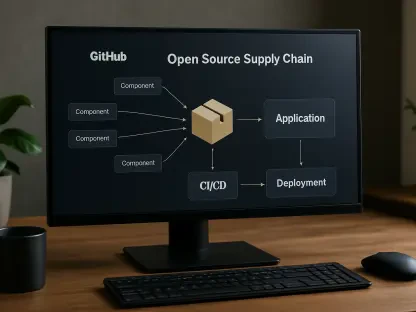
Examples of such specialized projects are diverse and impactful. A developer might create a custom Continuous Integration/Continuous Deployment (CI/CD) pipeline from scratch to automate testing and deployment processes, build an automated personal finance system that integrates with bank APIs to categorize transactions and forecast budgets, or develop a tool that analyzes and visualizes the energy consumption of code execution. Each of these projects addresses a critical, real-world need within a particular niche.
A comparative analysis reveals a key strategic trade-off. While a consumer-facing app may have broader appeal, a specialized tool that solves a critical problem for a niche audience can have a much deeper industry impact. Such projects often attract the attention of companies facing that exact problem, leading to unique career opportunities that might not be accessible through more conventional routes. They signal a developer’s ability to identify inefficiencies and engineer elegant, targeted solutions—a hallmark of a senior-level contributor.
From Idea to Impact: A Strategic Blueprint for Project Success
The most valuable projects are multi-layered systems that solve a genuine problem and compel developers to venture beyond their current skill set. They are not defined by a single technology but by the thoughtful integration of multiple components—frontend, backend, database, and often an AI element—to deliver a cohesive and functional solution. This holistic approach to building mirrors the reality of professional software engineering and serves as the most compelling evidence of a developer’s capabilities.
An actionable blueprint for achieving success with such projects involves starting with a minimal viable prototype, often achievable in under 100 lines of code, to validate the core concept. From there, development should proceed through clear, iterative milestones. This incremental process allows for the progressive addition of complex features, such as secure user authentication, accessibility compliance, and internationalization support, without becoming overwhelmed. This methodical approach ensures steady progress and helps maintain momentum over the life of the project.
Finally, the presentation of these projects is as crucial as their implementation. Meticulous documentation on platforms like GitHub, including a clear README.md file that explains the project’s purpose, architecture, and setup instructions, creates a compelling narrative. This narrative should highlight the problems faced and the solutions engineered, transforming a collection of code into a story of skill, innovation, and perseverance that resonates powerfully with potential employers.
The Future is Built, Not Learned: Your Role in the Next Wave of Innovation
The overarching theme that emerged from an analysis of industry expectations was that true mastery in the age of AI came from the act of building complex, integrated systems, not merely from completing isolated tutorials. This hands-on approach proved to be the most effective method for staying relevant and adaptable in a technological landscape characterized by rapid and relentless evolution. Developers who embraced this philosophy were better equipped to navigate change and seize emerging opportunities.
This emphasis on practical application underscored the importance of continuous creation as a core professional discipline. The insights gathered suggested that by consistently challenging themselves with ambitious projects, developers were not just acquiring new skills but were actively participating in the innovation cycle. They were not passive consumers of technology but active contributors shaping its future trajectory.
Ultimately, the most successful career narratives were written by those who chose a challenging project and began the difficult but rewarding work of building. They took an active role in shaping the future of technology, one commit at a time, demonstrating that the most profound learning happens when an idea is transformed into a tangible, functional reality.