
The initial fascination with artificial intelligence producing entire software applications from a single, vague prompt has finally given way to a more pragmatic and effective engineering reality. While the early days of this technological shift focused on the “magic” of generative models, the current professional landscape has pivoted toward granular, high-utility tools that address specific friction points in the development lifecycle. This transition marks a departure from general-purpose chatbots that often produce hallucinations or unmaintainable “spaghetti” code, moving instead toward a modular ecosystem. In this new context, the engineer acts less like a typist and more like a high-level architect who utilizes specialized agents to handle the repetitive, error-prone tasks that historically consumed the majority of a workday.
The Shift Toward Granular AI Utilities
The emergence of task-specific engineering assistants represents a sophisticated evolution of the large language model. Rather than attempting to be a “jack-of-all-trades,” these utilities are designed with narrow parameters that align with the discrete stages of the software development life cycle. This shift is significant because it recognizes that the “expensive” problems in coding are rarely the ones requiring creative genius; they are the tedious, manual processes like refactoring, writing boilerplate, and maintaining documentation. By decomposing the role of an AI assistant into specialized functions, developers gain more control over the output, ensuring that the technology serves the codebase rather than complicating it.
This technological maturation has moved the industry away from the “black box” approach of general-purpose AI. Engineers now prefer tools that integrate directly into their existing environments, providing surgical interventions where they are needed most. This relevance is underscored by the increasing complexity of modern tech stacks, where the cognitive load of managing multiple languages, frameworks, and legacy systems has become a primary bottleneck. Specialized tools act as a relief valve, allowing teams to maintain high velocity without sacrificing the structural integrity of their software.
Primary Features and Functional Components
Specialized Code Generation and Portability
Modern code generators have moved beyond simple autocomplete functions to become sophisticated engines for logic translation and architectural scaffolding. By focusing on discrete units of work—such as generating API wrappers or constructing validation logic—these tools reduce the “blank page” syndrome that often stalls the initial phases of a project. The primary advantage here is not just speed, but the ability to enforce best practices and architectural patterns consistently across a repository. Because these generators require specific parameters, the resulting code is often more predictable and easier to integrate than the sprawling outputs of generic chatbots.
Furthermore, the advent of dedicated code converters has revolutionized how organizations handle technical debt and platform migrations. These components are designed to translate business logic from one language to another while preserving the original intent and edge-case handling. However, the significance of this feature lies in its collaborative nature; while the AI handles the bulk of the manual syntax transformation, it leaves the final optimization and integration to human experts. This hybrid approach ensures that the migration is not just a mechanical copy but a meaningful upgrade that respects the nuances of the target environment.
Automated Comprehension and Documentation
One of the most profound technical hurdles in software engineering is the “onboarding tax”—the time lost when a developer tries to understand a legacy system. AI-driven code explainers address this by breaking down complex, often undocumented algorithms into readable summaries and logic flows. These tools analyze the relationships between different modules, providing a narrative context that is often missing from raw source files. By identifying potential risks and explaining the “why” behind obscure logic, these utilities prevent context loss, which is a leading cause of long-term technical debt.
In tandem with comprehension tools, automated comment generators have standardized the way documentation is produced. By generating docstrings and inline annotations that adhere to specific organizational styles, these tools ensure that the codebase remains accessible to future maintainers. This is not merely about adding text to a file; it is about context preservation. When an AI can accurately describe the intent of a function, it bridges the gap between the original author and subsequent developers, facilitating a smoother transition of knowledge across increasingly distributed and fluid engineering teams.
Logic Verification and Architectural Visualization
The role of unit test generators has become central to ensuring code quality without the traditional overhead associated with manual test writing. These utilities analyze the logic of a function and automatically produce the necessary fixtures, mocks, and assertions to verify its behavior. This is a critical development because test output is inherently binary—it either passes or it fails—making it one of the most verifiable applications of AI. By automating the “scaffolding” of tests, organizations can achieve high code coverage metrics that were previously deemed too time-consuming to maintain.
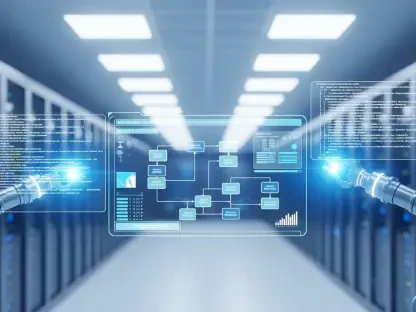
Beyond text-based verification, the rise of diagram generators has provided a visual layer to architectural reviews. These tools convert complex code structures into flowcharts or class diagrams, making it easier to spot circular dependencies or structural flaws that might be invisible in a standard text editor. This visualization is essential for high-level communication, allowing stakeholders to see the “big picture” of a system’s architecture. It transforms the way teams discuss design, moving from abstract debates to concrete visual representations that can be audited and refined in real time.
Current Trends in the AI Engineering Ecosystem
The prevailing trend in the current ecosystem is the move toward “utility-based” AI that prioritizes tangible results over speculative capabilities. Organizations are increasingly rejecting all-in-one platforms in favor of modular suites that can be injected into specific parts of the workflow. This modularity allows companies to customize their AI strategy, using different models or tools for testing than they use for documentation. Such a granular approach minimizes the risk of vendor lock-in and allows teams to swap out components as more specialized models become available.
Moreover, there is a growing emphasis on seamless integration. Developers are resistant to tools that require them to leave their integrated development environment (IDE) or navigate complex external interfaces. Consequently, the most successful AI utilities today are those that exist as “invisible” layers within the existing toolchain. They operate in the background, offering suggestions or performing tasks like documentation updates and test generation without disrupting the developer’s flow. This focus on “frictionless” interaction is the defining characteristic of the current generation of engineering tools.
Real-World Applications and Sector Impact
In practice, these specialized utilities have found a foothold in sectors dealing with massive legacy infrastructures, such as finance and telecommunications. For instance, large-scale migrations from aging COBOL or Java systems to modern, cloud-native architectures are now being accelerated by AI converters. These tools handle the repetitive parts of the translation, allowing human engineers to focus on the high-level security and performance optimizations that these sensitive industries require. This has transformed migration projects from multi-year marathons into manageable, iterative sprints.
In the world of open-source and large-scale enterprise development, AI-driven visualization and documentation tools are being used to standardize tech stacks. By automatically generating structural diagrams and ensuring consistent commenting styles, large organizations can maintain a unified “language” across thousands of repositories. This prevents the fragmentation that often occurs when different teams use different coding conventions. The impact is a more cohesive engineering culture where the barrier to entry for any given project is significantly lowered, regardless of its original complexity.
Technical Hurdles and Industry Obstacles
Despite the progress, the industry continues to grapple with the inherent risks of “hallucination” in AI-generated code. Even specialized tools can occasionally produce logic that looks correct but fails in subtle, dangerous ways. This necessitates a “trust but verify” mindset, where AI output is never treated as the final word. Furthermore, the security of proprietary codebases remains a significant regulatory and operational concern. Many organizations are hesitant to feed their core intellectual property into cloud-based AI models, leading to a surge in demand for locally hosted or “fine-tuned” private models that offer the benefits of AI without the data privacy risks.
To mitigate these limitations, current development efforts are focused on hyper-specialization. Rather than training models on the entire internet, developers are fine-tuning them on specific programming languages or even specific internal libraries. This increases the accuracy and verifiability of the output, as the AI becomes an “expert” in a narrow domain rather than a generalist with a high error rate. Ongoing research into autonomous debugging also aims to close the loop, where an AI can not only write code but also identify and fix its own errors before they ever reach a human reviewer.
The Future of AI-Assisted Development
The trajectory of this technology points toward a “frictionless” development lifecycle where the boundary between human intent and machine execution becomes increasingly blurred. We are likely to see breakthroughs in autonomous debugging where AI agents proactively monitor codebases for vulnerabilities and structural weaknesses, suggesting patches before a developer even notices a problem. This level of proactivity would shift the engineer’s role even further away from manual labor and toward a position of high-level oversight and strategic decision-making.
In the long term, AI will likely become a permanent force multiplier that fundamentally changes the economics of software creation. The cost of maintaining legacy systems will drop as comprehension and conversion tools become more sophisticated, potentially leading to a “renaissance” of software modernization. As AI continues to handle the “scaffolding” of the digital world, the value of human engineers will reside in their ability to understand complex business requirements and design resilient, ethical, and creative solutions that machines cannot yet conceive.
Summary of Findings and Assessment
The review of specialized AI coding tools revealed that the industry has successfully moved past the era of generic automation and toward a more mature, modular approach. It was observed that granularity and verifiability were the cornerstones of the most successful implementations, as they provided immediate value without compromising code quality. The transition from broad generative tasks to specific utilities like unit test generation, architectural visualization, and legacy code explanation proved to be the most effective strategy for reducing developer burnout and increasing team velocity.
Ultimately, the technology demonstrated a significant potential to transform software maintenance from a reactive burden into a proactive, streamlined process. While challenges regarding security and accuracy remained, the shift toward fine-tuned, localized models offered a viable path forward. The assessment concluded that these specialized tools were no longer optional luxuries but had become essential components of a modern engineering stack, providing the necessary leverage to manage the ever-increasing complexity of the global software ecosystem.