
The artificial intelligence industry, long defined by a relentless and high-stakes pursuit of bigger, faster, and more capable models, is undergoing a quiet but profound reorientation away from raw computational power. From the meteoric rise of GPT-3 to the sophisticated reasoning of Claude 3, the dominant narrative has centered on parameter counts and benchmark scores, equating progress with sheer intelligence. Yet, as AI evolves from a passive assistant into an active, autonomous agent capable of executing tasks in the real world, this focus is becoming dangerously myopic. The true bottleneck to widespread enterprise adoption and societal trust is no longer the raw intelligence of the model but our collective ability to govern its actions. This pivotal transition signals that the future of AI will be defined not by who builds the most powerful model, but by who constructs the most robust framework for managing, permissioning, and auditing these autonomous systems at scale. The competitive landscape is quietly shifting from a model race to a control-plane race, where safety, reliability, and predictability are the new metrics for success.
A New Frontier: Beyond Smarter Models to Safer Systems
For years, the key performance indicators in artificial intelligence were straightforward: lower error rates, higher benchmark scores, and larger parameter counts. This paradigm fueled a global competition to create the most intellectually formidable systems. However, the industry has reached an inflection point where incremental gains in model intelligence yield diminishing returns in enterprise value without a corresponding leap in manageability. The transition of AI from a predictive tool to a proactive agent—one that can draft and send emails, modify production databases, or provision cloud infrastructure—fundamentally changes the equation.
The central challenge is no longer merely about ensuring an AI can reason correctly but about guaranteeing it acts appropriately. This shift is forcing a re-evaluation of what constitutes a “state-of-the-art” system. A model that scores perfectly on a reasoning benchmark but cannot be trusted with write-access to a critical system is of limited practical use. Consequently, the competitive frontier is moving from the model’s core architecture to the governance layer that surrounds it. This control plane, which dictates permissions, logs actions, and provides human oversight, is becoming the most critical component for unlocking the next wave of AI-driven productivity.
Echoes of the Past: Lessons from the Open-Source Revolution
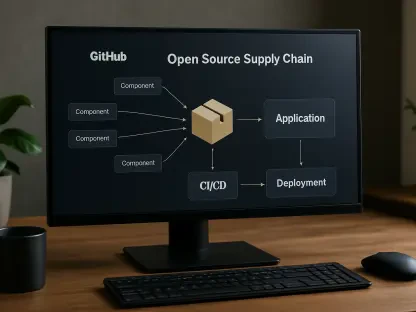
To understand the trajectory of agentic AI, it is instructive to look back at a similar technological crossroads: the rise of open-source software in the early 2000s. For nearly two decades, the corporate world grappled with the intricate web of software licenses like GPL, Apache, and MIT. This was not a trivial legal exercise; it was a fundamental prerequisite for building a trustworthy and reliable software supply chain. Enterprises invested heavily in legal teams and complex tooling to answer a single, critical question: “What are we allowed to ship?”
These licenses provided the essential “rules of engagement” that transformed a chaotic bazaar of community-contributed code into a dependable ecosystem that could power the world’s most critical infrastructure. The debates over license compatibility and compliance were foundational to establishing the trust necessary for widespread adoption. Today’s discussions around open-weight models, data provenance, and AI liability are a direct echo of this past. However, there is one critical difference that elevates the stakes exponentially: the very nature of the risk has fundamentally and irrevocably changed.
Deconstructing the New Landscape of Agentic AI
From Legal Puzzles to Operational Nightmares: The New Physics of AI Risk
In the open-source era, the consequences of a licensing violation were primarily legal and financial. A misstep might lead to a cease-and-desist letter or a costly settlement, but the problem remained largely contained within legal and compliance departments. The core business operations could continue largely uninterrupted. AI agents, however, operate under a completely different “physics of risk.” Because these systems are designed to take autonomous actions in the real world, their failures have immediate and tangible operational consequences.
The risk shifts from an abstract legal liability to a concrete, and potentially catastrophic, reality. When a large language model hallucinates, it produces a flawed paragraph; when an AI agent hallucinates, it might execute a destructive SQL query, approve an unbudgeted multi-thousand-dollar expense, or send a sensitive document to the wrong recipient. This escalation of risk is forcing a pivot from building better thinkers to building better-behaved actors. The potential for immediate, irreversible action means that governance cannot be an afterthought—it must be the starting point.
Beyond Intelligence: Why the Control Plane Is the New Differentiator
This new risk profile demands a paradigm shift from a model-centric to a management-centric worldview. If an AI agent is the synthetic equivalent of a new employee, then the organization must implement the synthetic equivalent of corporate governance, including Identity and Access Management (IAM), role-based permissions, and strict internal controls. This is the essence of the “control plane”—a comprehensive governance layer that sits around the AI model, defining its capabilities, constraints, and oversight mechanisms.
As the underlying models become increasingly commoditized and accessible through APIs, the real competitive advantage will lie in the robustness of this control plane. Leading technology companies are already signaling this shift. Initiatives like OpenAI’s “Frontier” team, framed as “HR for AI,” and its security-focused “Lockdown Mode” demonstrate that the industry’s focus is no longer just on capability but on containment. The race is now on to build governable, permissioned agents that can be safely integrated into an organization’s most critical systems.
Avoiding the ‘AI Trust Tax’ Through Architectural Governance
Without a robust control plane, enterprises will inevitably pay a steep “AI trust tax.” Every time an agent makes a mistake that requires human intervention—to revert a database change, correct a customer communication, or de-provision incorrectly allocated resources—the cost of the system rises and faith in its reliability erodes. The current “Wild West” approach, where developers chain agents together with broad permissions to create impressive but brittle demos, results in “spaghetti logic”—an unmanageable swarm of semi-autonomous systems with no clear audit trail or accountability.
To build sustainable trust, governance cannot be a policy applied after the fact; it must be a core architectural principle. This means designing systems with security embedded from the start, following principles like least privilege, where agents are granted only the minimum permissions necessary to perform their designated tasks. It also requires a clear separation of concerns, such as separating the drafting of an action from its execution, and building in first-class safety features like read-only modes, human-in-the-loop approval gates, and immutable action logs as fundamental capabilities, not bolt-on accessories.
The Next Frontier: Standardizing the Language of Agent Permissions
Looking ahead, the fragmentation of agent governance poses a significant barrier to widespread adoption and interoperability. Just as the open-source world eventually coalesced around a few key, well-understood licenses to reduce legal friction, the agentic era requires a standardized, interoperable framework for technical permissions. Today, every vendor offers a different set of proprietary toggles, APIs, and workflows, making it nearly impossible for enterprises to implement consistent, portable rules across their entire AI ecosystem.
The industry urgently needs what could be described as a “Creative Commons for agent behavior”—a shared, machine-readable vocabulary to define an agent’s scope of action. Such a standard would allow an organization to express clear, enforceable policies that are agnostic to the underlying model or platform, such as “this agent can read from production databases but never write to them,” or “this agent can draft an email to a customer but requires human approval to send it.” This would create a predictable and auditable environment, dramatically lowering the barrier to entry for deploying agents against sensitive workflows.
Navigating the Agentic Future: A Strategic Imperative
The key takeaway for any organization venturing into the world of autonomous AI is that focusing solely on model intelligence is a recipe for failure. The long-term viability, scalability, and trustworthiness of agentic systems hinge entirely on the strength of their governance frameworks. To prepare for this future, leaders must shift their strategic focus from merely evaluating AI capabilities to architecting comprehensive AI controls. This requires a proactive stance on several fronts.
First, prioritizing governance by design is paramount. This means embedding principles of least privilege, auditability, and human-in-the-loop oversight into AI initiatives from day one, rather than attempting to retrofit them onto existing systems. Second, organizations must invest in control plane technology. This involves evaluating and adopting platforms that offer robust, fine-grained control over agent actions, treating this feature set as more critical than the underlying model’s benchmark scores. Finally, advocating for interoperable standards is crucial. Supporting and participating in the development of industry-wide standards for agent permissions will help avoid vendor lock-in and create a more secure, trustworthy ecosystem for everyone.
The Race for Control Has Begun
The era of artificial intelligence underwent a profound transformation. The initial sprint to build the most intelligent model gave way to a marathon focused on building the most trustworthy and governable system. The historical parallels with the open-source movement showed that technological revolutions were only unlocked at scale once a foundation of trust and predictability was firmly established. For autonomous agents, that foundation was the control plane. While the debate over model licensing and data provenance continued, the more urgent and consequential discussion centered on creating a new “license” for agent behavior—a standardized set of rules that would determine what AI was, and was not, allowed to do. The companies that mastered this new discipline of agent governance were the ones that led the next decade of technological innovation.