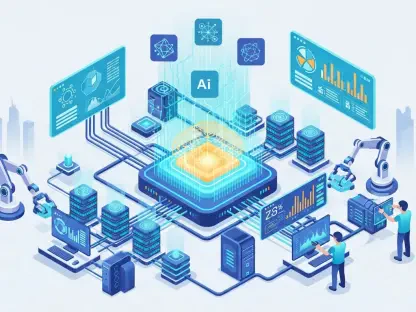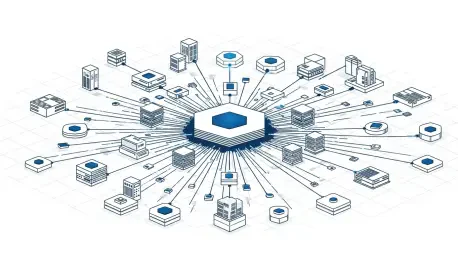

The modern artificial intelligence industry has reached a pivotal juncture where the capacity of software to orchestrate hundreds of thousands of specialized accelerators defines the success of global machine learning initiatives. As computational demands for training frontier models escalate, the industry has transitioned away from localized computing toward massive, distributed supercomputing clusters. This shift places immense pressure on the software layers responsible for managing high-density hardware. The complexity of these systems necessitates a bridge between the flexible environments favored by researchers and the rigid, high-performance architectures required for industrial-scale deployment.
Google’s Tensor Processing Units (TPUs) have emerged as a defining frontier for this machine learning supercomputing. These application-specific integrated circuits (ASICs) are built from the ground up to handle the specific mathematical operations that underpin deep learning. However, for a significant period, a friction point existed between these powerful chips and the PyTorch framework, which holds a dominant position in the global research community. The strategic launch of TorchTPU addresses this gap, providing a native, seamless interface that allows developers to access Google-scale infrastructure without abandoning the software ecosystem they prefer.
Democratizing this level of compute power is not merely a matter of convenience; it is a structural necessity for the continued growth of the AI market. By integrating PyTorch directly into the TPU stack, organizations can now leverage the high-speed Inter-Chip Interconnect (ICI) and specialized hardware units like TensorCores and SparseCores with minimal code modifications. This native integration ensures that the flexibility of software-driven innovation is no longer stifled by the architectural constraints of specialized hardware, paving the way for more rapid iterations in model development.
Strategic Market Drivers and the Future of Distributed Training
Emerging Trends in Model Development and Hardware Portability
The current landscape of model development is witnessing a powerful return to the eager-first paradigm, where intuitive and immediate execution serves as the baseline for developer productivity. While static graphs were once the only way to achieve high performance on specialized hardware, modern engineers increasingly demand the ability to debug and iterate in real time. This shift has forced hardware-aware software engineering to evolve, moving toward frameworks that expose the low-level capabilities of an ASIC while hiding the underlying complexity from the user.
Software frameworks are now being redesigned to handle hardware nuances automatically. Instead of requiring developers to manually partition their models for different chip architectures, the industry is gravitating toward the consolidation of distributed APIs. Standardized interfaces such as FSDPv2 and DTensor are becoming the norm, providing a unified way to manage large-scale data and model parallelism. This movement toward abstraction allows for a high degree of hardware portability, ensuring that code written for one environment can be deployed on TPU clusters with predictable performance and reliability.
Market Performance and Growth Projections for TPU Ecosystems
The expansion of the TPU ecosystem is currently fueled by the need to support next-generation models that require unprecedented levels of memory and throughput. Analyzing the current roadmap, the integration of TorchTPU is playing a central role in sustaining the development of massive systems like Gemini and Veo. Performance benchmarking indicates that the introduction of Fused Eager modes has fundamentally changed the value proposition for cloud-based training. These modes allow for higher TPU utilization rates by automatically combining smaller operations into larger computational blocks, often resulting in significant efficiency gains over traditional execution methods.
Adoption forecasts suggest that the release of public repositories and the deepening of ecosystem integration will significantly impact cloud compute market shares. Organizations that previously relied solely on GPU-based clusters are now evaluating TPUs as a viable and often more efficient alternative for large-scale training. This trend is expected to continue as the barrier to entry for PyTorch developers remains at an all-time low. The growth of the TPU-backed cloud market is increasingly driven by this software-led accessibility, making high-performance computing a more attainable resource for a broader range of enterprises.
Overcoming Architectural Barriers and Performance Bottlenecks
One of the most persistent hurdles in distributed systems is the Multi-Program, Multiple-Data (MPMD) execution challenge. In many training scripts, different ranks in a cluster may need to perform divergent tasks, such as specialized logging on a lead node while other nodes continue numerical processing. Handling these divergent code paths without breaking compiler optimizations or causing system hangs is a significant technical achievement. Modern integration strategies now isolate these communication primitives, allowing the system to maintain high-level compiler benefits across the entire cluster while respecting the individual logic of each participant in the network.
Another critical bottleneck has been the recompilation hurdle associated with dynamic data shapes. When models handle varying batch sizes or sequence lengths, traditional compilers often trigger frequent and expensive recompilation cycles that degrade training throughput. To address this, current systems implement bounded dynamism, a technique that allows the hardware to handle a range of shapes without needing to regenerate machine code constantly. This approach drastically reduces latency, particularly in the initial stages of a training run, and ensures that the hardware remains focused on computation rather than administrative overhead.
Achieving true hardware-software alignment also requires a sophisticated approach to model architecture. While software flexibility is paramount, some degree of hardware awareness is necessary to unlock peak performance. For example, refactoring model dimensions to match the preferred alignment of TPU TensorCores—such as scaling attention heads to specific multiples—can result in dramatic speedups. Furthermore, the integration of custom kernels through tools like Pallas and the Helion DSL allows developers to bypass standard lowering paths for specialized operations. This ensures that unique research ideas can be implemented with the same level of optimization as standard operations.
Navigating the Standards and Compliance of High-Performance Computing
The stability of high-performance computing environments depends heavily on standardized intermediate representations. The role of StableHLO and the XLA compiler is central to this effort, as they provide a consistent target for diverse hardware versions. By mapping PyTorch operators into a standardized representation, the system ensures that execution remains consistent regardless of the specific generation of the TPU hardware being used. This level of standardization is essential for maintaining code longevity and ensuring that investments in model development are not rendered obsolete by hardware iterations.
Compliance with core framework standards is maintained through the use of the PrivateUse1 interface within PyTorch. This native device extensibility allows TPUs to be treated as first-class citizens alongside CPUs and GPUs, rather than being relegated to a secondary, wrapped status. This architectural choice is crucial for ensuring that the system remains compatible with the broader PyTorch ecosystem, including third-party libraries and debugging tools. It allows for a more secure and predictable development environment, where the behavior of the hardware remains transparent to the user.
Security and resource isolation are also paramount in modern cloud environments, particularly when dealing with multi-host setups and Inter-Chip Interconnect protocols. Managing the data flow across thousands of chips requires rigorous protocols to ensure that information is not compromised and that resources are allocated efficiently. TorchTPU incorporates these considerations by leveraging the native security features of the cloud infrastructure, providing a regulated environment where high-performance tasks can be executed without sacrificing the isolation required by multi-tenant systems.
The Technological Horizon: Innovations Shaping the Roadmap
The future of high-performance execution lies in the advancement of automated graph fusion. Technology such as Fused Eager execution is moving toward a state where the need for manual static graph compilation is entirely eliminated. By dynamically analyzing the stream of incoming operations and fusing them into optimized kernels on the fly, the system can achieve the performance of a static compiler with the flexibility of an eager environment. This evolution is expected to further simplify the developer experience, making the transition between research and production almost instantaneous.
Library-driven latency reduction is another area of significant innovation. The development of precompiled kernel libraries for the most common operations aims to enable zero-lag execution from the very first step of a training loop. Traditionally, the first few iterations of a training session are slowed down by the need to warm up the compiler and cache. By shipping a comprehensive set of precompiled binaries, the system can deliver peak performance immediately, which is particularly beneficial for short-running fine-tuning tasks and interactive development sessions.
Maintaining linear scaling across massive clusters remains a top priority, especially as model sizes continue to grow. Advancements in systems like TorchTitan are designed to ensure that performance does not plateau as more TPU pods are added to a cluster. This requires a deep integration of collective communication protocols and a sophisticated understanding of network topology. Additionally, deep serving integration through native vLLM support is enhancing high-throughput inference. By utilizing multi-queue asynchronous execution, the system can handle a larger number of concurrent requests, ensuring that the benefits of TPU acceleration extend from the training phase through to large-scale deployment.
The integration of TorchTPU fundamentally resolved the tension between the flexibility required by developers and the efficiency demanded by high-performance hardware. By prioritizing an eager-first approach and leveraging a native interface, the system removed the structural barriers that previously hindered the adoption of specialized ASICs within the PyTorch community. This transformation established a new standard for machine learning infrastructure, where the complexity of distributed systems became largely transparent to the end user. The collaboration between software and hardware engineering teams resulted in a stack that not only matched the performance of traditional setups but often exceeded them in terms of usability and scalability. Moving forward, the focus shifted toward maximizing the accessibility of these tools across the entire AI ecosystem. Organizations were encouraged to adopt hardware-aware development practices, such as optimizing model dimensions for TensorCore alignment, to fully capitalize on the efficiency of the TPU architecture. The continuous expansion of precompiled kernel libraries and automated fusion technologies further diminished the overhead of initial training steps. As these innovations became integrated into the standard workflow, they accelerated the development lifecycle of frontier models and provided a more robust foundation for large-scale innovation. Final recommendations for the industry emphasized the long-term value of investing in these native integrations to sustain the next wave of computational growth.