
An unexpected system failure plunges a Site Reliability Engineering team into a high-stakes investigation, where every second of downtime translates into lost revenue and eroding customer trust. For years, this scenario has played out like a chaotic crime scene, with engineers sifting through a mountain of digital evidence—logs, metrics, and traces—under immense pressure. As digital systems grow ever more intricate, the human capacity to manage this complexity is reaching a breaking point, creating a critical demand for smarter, more intuitive tools. This analysis explores the emerging trend of “human-aware” AI in incident management, spotlighting a new approach that could redefine how we resolve system failures.
The Evolution of Incident Response with AI
The Data Behind the Demand
The relentless pace of digital transformation has made system reliability a cornerstone of business success, yet the statistics paint a challenging picture. Industry reports consistently show a rise in both the frequency and cost of system downtime, with financial impacts reaching hundreds of thousands of dollars per hour for many enterprises. Consequently, the AIOps market has seen significant growth as organizations aggressively adopt AI-powered tools to help DevOps and SRE teams shorten the critical Mean Time to Resolution (MTTR) metric.
However, a crucial paradox has emerged from this data-rich environment. Despite access to more telemetry and sophisticated analytics than ever before, incident resolution times are not improving proportionally. This stagnation suggests that simply adding more data into the equation is not the answer. The overwhelming volume of context-poor information often creates more noise than signal, indicating a clear need for a new approach that moves beyond raw data analysis toward a more nuanced understanding of system failures.
Harness AI Scribe a New Breed of SRE Agent
Harness Inc.’s recent launch of AI Scribe serves as a prime example of this evolving trend toward smarter, context-aware tooling. This new solution is positioned not merely as an analytics platform but as a “human-aware” SRE agent designed to act as an integrated member of the response team. Its purpose is to transform the chaotic nature of incident management by providing investigative support and coordinating actions based on the team’s natural workflow.
The core innovation of a tool like AI Scribe lies in its unique method of data ingestion. Instead of starting with machine logs, it actively listens to team conversations on collaborative platforms such as Slack. It is programmed to capture and prioritize what are termed “human signals”—informal but vital clues like customer complaints, ad-hoc team observations, and speculative queries about recent system changes. This function represents a stark departure from traditional log-centric AI tools, which often overlook the rich, contextual insights generated during human collaboration.
Expert Insight Tapping into Human Signals
The philosophy driving this new wave of AI is the recognition that the most critical clues for diagnosing an issue often originate from human conversations long before technical data is comprehensively analyzed. An offhand comment like, “Service X felt slow an hour before this started,” or a customer report that “The checkout button froze after they updated the cart,” contains invaluable context that machine logs alone cannot provide. SRE teams are frequently overwhelmed not by a lack of data, but by a cascade of complex, disconnected information that lacks a clear narrative.
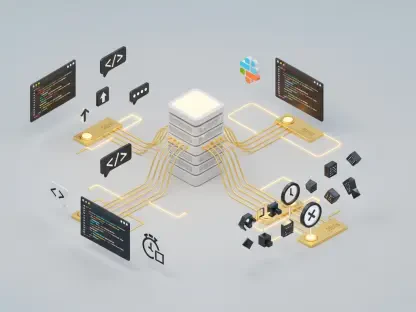
AI Scribe bridges this gap by treating human-generated insights as primary evidence. It synthesizes operational signals from a team’s natural dialogue—identifying symptoms, proposed theories, and critical sequences of events. The tool then intelligently cross-references these human clues with a technical “change graph” that maps recent deployments, feature flag updates, and configuration adjustments. This fusion of conversational context with technical change data allows it to generate clear, data-supported hypotheses, dramatically accelerating the path to identifying the root cause.
The Future Trajectory from Assistant to Responder
The current trend points toward a future where these AI agents evolve from passive summarization utilities into functional, active members of the incident response team. The trajectory is moving beyond simply providing insights toward delivering actionable intelligence. This evolution will likely see AI agents that not only present data-supported hypotheses but also suggest or even autonomously execute remediation steps, such as rolling back a problematic deployment or disabling a faulty feature flag, with human oversight.
This shift promises profound benefits for organizations, leading to significantly accelerated root cause discovery and a substantial reduction in engineer burnout. By automating the tedious work of correlating disparate data sources, these tools free up human experts to focus on strategic problem-solving. Over time, this could lead to more resilient, self-healing systems. However, this future also presents challenges, primarily centered on building organizational trust in AI-driven insights and ensuring the privacy and security of the conversational data these systems analyze.
Conclusion Redefining Reliability with Conversational Intelligence
The limitations of traditional, log-centric incident management became increasingly apparent as digital systems grew in complexity, paving the way for the rise of “human-aware” AI. This emerging trend, exemplified by tools that prioritize conversational data, marked a significant shift in how organizations approached system failures. It underscored the realization that human context is not a secondary data source but the essential glue that connects disparate technical events into a coherent narrative.
The integration of human signals into automated analysis represented the next frontier in building truly intelligent and efficient incident response systems. By harnessing the power of conversational intelligence, this approach empowered SRE teams to move from a state of reactive firefighting to one of proactive, strategic reliability engineering, ultimately fostering a culture of resilience and continuous improvement.