
The rapid acceleration of AI-powered code generation has introduced a frustrating paradox for software developers: the very tools designed to speed up their work often create a new, hidden bottleneck in the most critical stage of deployment. As assistants like GitHub Copilot and Cursor write code with increasing sophistication, they have left a significant gap in their capabilities, forcing a return to manual intervention where it matters most—in production.
The End of the It Worked on My Machine Era
The promise of AI coding assistants is to streamline the creative process, allowing developers to build features faster than ever before. However, the utility of this generated code often shatters upon contact with reality. Code that functions perfectly within the controlled confines of a developer’s local environment frequently breaks when subjected to the dynamic and unpredictable conditions of a live system. This disconnect has created a significant chokepoint in the development lifecycle.
Developers are increasingly finding themselves in a difficult position, tasked with manually debugging and refactoring code that the AI assistant is entirely “blind” to once it has been deployed. The AI can write the initial script, but it has no awareness of how that script performs under the pressure of real user traffic, complex data interactions, or intricate service dependencies. This limitation represents a fundamental obstacle to achieving true AI-driven development, tethering innovation to a slow, manual, and often frustrating validation process.
The Core Challenge AI’s Production Blind Spot
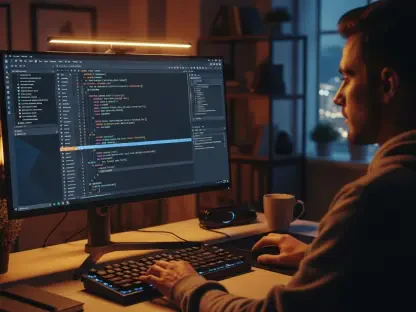
The root of this problem lies in the inherent limitations of current-generation AI coding tools. These assistants operate exclusively within the developer’s Integrated Development Environment (IDE), a sandbox where the code’s behavior can be simulated but never truly replicated. Their knowledge base is confined to the code repository and the immediate context of the files being edited, granting them no visibility into the live application environments where the code will ultimately run.
This “production blind spot” is the direct cause of high failure rates. When AI-generated code is deployed to staging, pre-production, or production, it encounters a world of variables the AI never anticipated. Unexpected workloads can expose performance flaws, interactions with other services can reveal integration bugs, and unique user data can trigger edge cases the model was not trained to handle. Consequently, the efficiency gained during code generation is often lost in the lengthy, human-led effort required to diagnose and fix these real-world failures.
The Solution Bridging the Gap with Runtime Context
To address this critical gap, observability startup Lightrun Inc. has introduced a groundbreaking technology designed to give AI coding assistants the environmental awareness they so desperately lack. Its “Model Context Protocol” (MCP) acts as a bridge, connecting the AI model not just to the code, but to the live runtime where that code executes, heralding a new era of production-aware AI.
This innovative approach fundamentally transforms the development workflow by providing what Lightrun calls “Runtime Context.” Instead of operating in a vacuum, the AI can now access and analyze real-time data from deployed applications, allowing it to understand the direct consequences of the code it generates. This technology moves AI from being a mere author to an active participant in the entire software lifecycle.
Introducing Runtime Context
At its core, the Model Context Protocol functions as a secure conduit between three key elements: the developer’s IDE, the AI assistant, and the live application environment. This connection is established without requiring code changes, restarts, or redeployments, ensuring that observability does not interfere with performance or stability.
By creating this link, MCP effectively gives the AI “eyes and ears” inside production. It can perceive the application’s state, monitor its performance, and analyze its interactions with other systems in real time. This newfound visibility closes the feedback loop, enabling the AI to learn from the code’s real-world behavior and use that information to improve its suggestions and diagnose issues.
Empowering AI for Full Lifecycle Development
With access to runtime context, developers can now delegate far more sophisticated tasks to their AI partners. For instance, a developer could instruct their AI to “check the traffic patterns in staging before writing this new service” or “investigate the root cause of the spike in API errors in production over the last hour.”
This capability extends to dynamic instrumentation. A developer can ask the AI to add temporary logs, metrics, or traces to a live application to validate the behavior of a new feature without having to go through a full deployment cycle. The AI can analyze the output and confirm whether the code is performing as expected under real-world conditions, transforming the validation process from a multi-day ordeal into a matter of minutes.
From Code Generation to Autonomous Debugging
The implications of this technology extend beyond simple validation. Armed with runtime data, AI assistants can evolve into powerful autonomous debugging tools. When an issue arises in production, the AI can be instructed to capture a “snapshot” of the application’s state at the moment of failure, including stack traces and variable values.
This allows the AI to investigate the problem directly, eliminating the need for developers to manually reproduce complex bugs. Based on its analysis of the runtime data, the AI can then suggest precise, context-aware fixes. It no longer just guesses at a solution based on static code analysis; it recommends a remediation strategy informed by the actual conditions that caused the failure.
A Step Change for AI in Software Engineering
The introduction of Runtime Context marks a fundamental shift in the role of AI in software development. Until now, AI’s involvement has been largely confined to the creative phase of coding—the initial act of generation. The far more challenging and time-consuming work of validation, debugging, and maintenance has remained an exclusively human domain.
This technology changes that dynamic. By enabling AI to participate in the post-deployment lifecycle, it moves the industry from simple code generation to comprehensive code ownership. AI can now be a partner in ensuring the quality, stability, and performance of the code it helps create, handling not just the “what” of writing a feature but also the “why” of its failure and the “how” of its remediation. This represents a true step change, elevating AI from a clever tool to an indispensable collaborator.
Lightrun’s Vision in Action Credibility and Backing
The company behind this innovation, Lightrun Inc., is a well-established and venture-backed startup dedicated to solving the most pressing challenges in software observability. Its mission to empower developers with real-time insights has attracted significant confidence from the technology and financial sectors.
This confidence is underscored by the company’s substantial funding, which totals $115 million. The investment has been led by a roster of prominent venture capital firms, including Insight Partners, Glilot Capital, Accel, and Citigroup. This robust financial backing not only validates Lightrun’s vision but also provides the resources necessary to pioneer a new frontier in AI-assisted software engineering.
Reflection and Broader Impacts
The arrival of production-aware AI is not merely an incremental improvement; it is a catalyst for rethinking core development and deployment practices. The ability to instantly understand and react to code behavior in live environments promises to reshape how software is built, tested, and maintained.
This innovation addresses a critical pain point in the industry, offering a solution that aligns perfectly with the broader move toward more agile, responsive, and data-driven development methodologies. Its influence is poised to extend far beyond individual developer workflows, impacting everything from team structures to release cycles.
Revolutionizing Debugging and Deployment
For developers and engineering teams, the immediate benefits are clear and profound. Debugging cycles that previously took days or even weeks of painstaking investigation can now be compressed into minutes. The ability to diagnose and resolve production issues with AI assistance leads to a dramatic reduction in mean time to resolution (MTTR) and a significant improvement in system uptime.
Moreover, this technology fosters the creation of more robust and reliable software from the outset. By providing instant feedback on how AI-generated code performs in the real world, it enables a continuous loop of improvement, resulting in higher-quality deployments and a more stable user experience. The era of deploying code with fingers crossed is drawing to a close.
The Future of Autonomous Software Engineering
Looking at the broader landscape, this technology signals a significant trend toward more sophisticated and autonomous AI in software engineering. It lays the groundwork for a future where AI is not just an assistant but a proactive partner, capable of anticipating issues, optimizing performance, and even healing systems without human intervention.
The integration of runtime context represents a crucial milestone on the path to fully autonomous software development. As AI models become more adept at interpreting and acting on real-world data, their role will continue to expand, freeing human developers to focus on higher-level architectural and product strategy challenges.
The Dawn of Production Aware AI
The longstanding “production blind spot” of AI had been a major impediment, confining its role to the pre-deployment phase and leaving developers to handle the difficult work of real-world validation. Lightrun’s Model Context Protocol provided the crucial “Runtime Context” needed to overcome this obstacle, transforming the AI from a simple code generator into an active and aware partner. This development elevated the relationship between developer and machine, creating a collaborative synergy that spanned the entire software lifecycle. The ability of an AI to not only write code but also ensure it performed flawlessly in the real world marked the beginning of a new chapter in software engineering.