
The towering monoliths of code that hold the global economy together are no longer the permanent monuments they were once assumed to be by the engineers who built them. For decades, the software industry operated under a sacred tenet of preservation: never attempt a full rewrite of a core legacy system because the complexity is too vast and the risk of catastrophic failure is too high. This cautious philosophy birthed the “ball of mud” phenomenon, where companies layered new features onto decaying foundations, resulting in fragile architectures that consumed the majority of IT budgets just to remain operational.
Today, the emergence of agentic coding has shattered this status quo, transforming the once-impossible task of modernization into a streamlined, automated reality. Unlike the static tools of the past, autonomous AI agents can now navigate millions of lines of “spaghetti code,” deciphering undocumented business logic and reconstructing it into clean, modern frameworks. This technological leap means that technical debt is no longer an insurmountable anchor; it is a problem that can be solved in weeks rather than decades.
The End of the Ball of Mud Era
Software development has entered a period of reckoning where the cumulative weight of old codebases is being systematically lifted. The industry consensus used to suggest that any attempt to replace a thirty-year-old banking or logistics system was a foolhardy mission that would inevitably lead to bankruptcy or career ruin. However, agentic workflows are flipping this logic on its head, turning these ancient systems from protected assets into strategic liabilities. As agents gain the ability to map dependencies and rewrite logic at lightning speed, the moat of complexity that once protected incumbents is rapidly evaporating.
The traditional fear of the “big bang” rewrite stemmed from the human inability to track every edge case across a massive, convoluted system. Agents do not suffer from this cognitive limitation, as they can ingest an entire repository and maintain context across thousands of files simultaneously. This shift is turning the “ball of mud” into high-quality digital clay that can be reshaped into efficient, cloud-native architectures. Organizations are realizing that the cost of maintaining a legacy system now outweighs the cost of having an agentic team recreate it from scratch.
The Shift: Manual Labor to Autonomous Orchestration
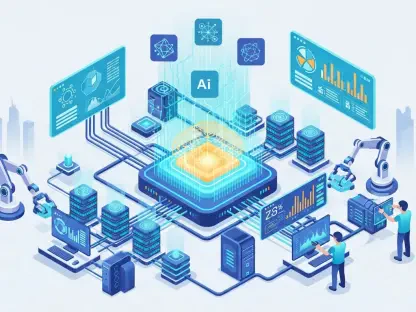
Understanding the gravity of this transition requires observing the widening gap between traditional manual programming and the new paradigm of agentic orchestration. In previous cycles, software evolution was strictly linear, constrained by the finite number of human hours available to untangle legacy knots. Modern tools like Claude Code and various autonomous agents are no longer just passive assistants providing autocomplete suggestions; they act as independent operators capable of conceiving, building, and verifying entire modules without constant human intervention.
This transition eliminates the primary bottleneck of global innovation—the sheer human effort required to sustain outdated systems. In this new workflow, the human role moves from a “writer of syntax” to a “director of intent.” This evolution allows organizations to shift their focus from the preservation of the past toward the creation of the future. By offloading the mechanical burden of refactoring and debugging to autonomous agents, developers are finally free to solve high-level architectural problems that were previously ignored due to lack of resources.
From Decades to Days: The Case for Modernization
The most compelling evidence of this revolution lies in the dramatic compression of development timelines seen in recent pilot projects. What used to take an entire generation of engineers to build and refine can now be replicated and improved upon within a single fiscal quarter. The barrier to entry for building complex, enterprise-grade software has effectively collapsed, making historical longevity a poor predictor of future market dominance.
- The EmDash Precedent: Cloudflare’s EmDash project stands as a landmark example of this shift, where a small team utilized AI agents to replicate the core functionality of WordPress. While the original platform represented over 20 years of collective human development, the agentic version achieved functional parity and modernization in a mere fraction of that time.
- The Parallel Development Advantage: Unlike human teams that face diminishing returns as they scale due to communication overhead, AI agents can run in parallel. A single lead developer can now execute dozens of high-level architectural changes simultaneously, achieving a throughput that was once reserved for massive engineering departments.
- The Vulnerability of Incumbents: Businesses relying on rigid, legacy platforms are finding their moats dry. Competitors are using agents to bypass decades of incremental development, launching leaner, faster equivalents that are not burdened by the technical debt of the previous century.
Insights From the Front Lines of AI Integration
Industry experts and early adopters are signaling a total collapse in the barrier to entry for high-quality, specialized software. The consensus is shifting toward a “predator vs. prey” dynamic, where the speed of adaptation determines survival in a market that no longer rewards stability over agility. Observations from tech leaders suggest that the era of “one-size-fits-all” enterprise software is ending, as the cost of building custom solutions has plummeted to near zero.
We are already seeing a trend where non-technical stakeholders, such as finance heads or operations directors, are successfully authoring specialized business tools. These individuals possess the domain expertise required to solve specific problems but previously lacked the coding skills to execute them. By using agentic tools, they are replacing rigid, off-the-shelf products with bespoke applications that reflect the actual workflow of their departments. This firsthand evidence points to a future where deep industry knowledge is far more valuable than the ability to write a specific programming language.
Strategies for Transitioning to an Agentic Workflow
Adapting to this new reality requires more than just installing the latest AI tools; it necessitates a fundamental restructuring of how a business approaches its technological assets. To avoid being left behind by faster, agent-equipped competitors, organizations should consider implementing a framework that prioritizes agility and custom logic over legacy preservation.
- Audit for Obsolescence: Executives must identify “spaghetti code” departments where maintenance costs and technical debt outweigh the benefits of a fresh, agent-driven rewrite.
- Empower Domain Experts: Leadership should provide agentic tools to staff who understand the underlying business logic, allowing them to build custom solutions that replace generic, expensive third-party software.
- Adopt an Agent-First Mentality: Instead of treating AI as a simple productivity booster, autonomous agents should be integrated directly into the deployment pipeline to handle routine refactoring and continuous debt reduction.
- Pivot to Bespoke Architecture: Companies should move away from forcing their unique processes into the rigid templates of legacy software and instead use agents to build vertical-specific applications that offer a genuine competitive advantage.
The shift toward agentic coding provided a clear path for organizations to finally shed the weight of the past. Companies that embraced these autonomous systems transformed their ancient infrastructures into modern, high-performance assets. By prioritizing custom-built solutions over generic legacy platforms, these pioneers established a new standard for operational efficiency. The transition confirmed that in a world of automated development, the ultimate competitive advantage was no longer the size of one’s codebase, but the clarity of one’s business logic.