
The declaration from Anthropic’s CEO that artificial intelligence stands just months away from automating the vast majority of software development tasks sent a shockwave through an industry long defined by human ingenuity and complex problem-solving. This isn’t a forecast for a distant future; it’s a projection for the immediate term, suggesting a fundamental restructuring of how digital products are conceived, built, and maintained. As evidence mounts and AI capabilities grow at an exponential rate, the conversation has shifted from “if” to “when,” forcing a critical examination of the software engineer’s role in a world where code can be generated on demand. The implications extend far beyond Silicon Valley, touching every sector that relies on software to function, from finance and healthcare to global logistics.
The Digital Architects: Understanding Software Engineering in the Modern Age
Building Our World, One Line at a Time
Software engineering has long been the invisible architecture supporting modern civilization. From the complex financial systems that power global markets to the mobile applications that organize daily life, every digital interaction is the result of meticulous design, logic, and implementation by human developers. This process involves more than simply writing code; it is an act of translation, converting abstract business needs and user desires into functional, reliable, and scalable systems. Engineers are problem-solvers who must understand the intricate needs of a project, anticipate potential failures, and build robust solutions that can withstand the test of time and user demand.
The creation of software is a deeply collaborative and iterative process. It requires teams of specialists—architects, developers, testers, and project managers—to communicate effectively, align on complex requirements, and integrate disparate components into a cohesive whole. This craft combines the precision of science with the creativity of art, demanding both analytical rigor and an intuitive understanding of human-computer interaction. The result is a digital infrastructure that has become as essential as roads and bridges, a testament to the specialized skills that have, until now, been exclusively human.
The Human Touch in a Sea of Code
Beyond the technical requirements of syntax and algorithms, effective software engineering is profoundly shaped by human context and empathy. A successful application is not merely one that functions correctly but one that resonates with its intended audience, addressing its pain points and enhancing its experience. This requires engineers to step outside the ones and zeros to consider usability, accessibility, and the ethical implications of their creations. Understanding the nuances of user behavior and anticipating their needs are tasks that demand insight and a level of qualitative judgment that algorithms have struggled to replicate.
Furthermore, the role of a software engineer often extends into mentorship, strategic planning, and system-level thinking. Senior engineers guide junior developers, steward the long-term health of a codebase, and make critical architectural decisions that will impact a product for years to come. They must navigate ambiguity, negotiate technical trade-offs, and champion best practices within an organization. These leadership and communication skills are the connective tissue of a successful engineering team, ensuring that the final product is not just a collection of features but a well-architected and sustainable solution.
The AI Tidal Wave: How Automation is Redefining Development
From Keystrokes to Prompts: The Rise of AI Coding Assistants
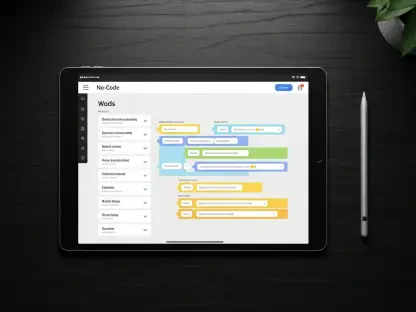
The traditional image of a software engineer typing methodically at a keyboard is rapidly being replaced by a more dynamic, collaborative model with AI as a partner. The widespread adoption of AI coding assistants marks a fundamental shift in the development workflow. Instead of manually writing every line of code, developers now often provide high-level instructions or prompts, guiding an AI model to generate functional code snippets, boilerplate, and even entire modules. This transition frees engineers from tedious and repetitive tasks, allowing them to focus on more complex architectural challenges and system design.
This new paradigm redefines the developer’s role into one of an editor, supervisor, and strategic director. At companies like Anthropic, this future is already the present, with some engineers ceasing manual coding altogether. Their expertise is now applied to refining AI-generated output, debugging the subtle edge cases that models might miss, and ensuring the seamless integration of automated code into larger, existing systems. The core skill is no longer just the ability to write code, but the ability to effectively communicate intent to an AI and critically evaluate its output.
The Revolution by the Numbers: Quantifying AI’s Explosive Growth
The anecdotal evidence of AI’s impact is overwhelmingly supported by hard data. Recent benchmarks demonstrate a staggering leap in capability; on the SWE-bench Verified test, which measures the ability to resolve real-world issues from open-source projects, top AI models now resolve over 70% of problems, a dramatic increase from just 33% a year prior. This is not just a theoretical improvement but a practical one, translating directly into tangible productivity gains across the industry. Studies from Microsoft and Google consistently show that developers using AI assistants complete tasks between 20% and 55% faster.
This acceleration is visible at a macro level. In 2025, GitHub reported a 25% year-over-year surge in code commits, a spike largely attributed to the proliferation of AI-assisted development. The technology is also moving beyond general-purpose coding into highly specialized fields, exemplified by IBM’s Qiskit Code Assistant for quantum computing. Advanced models like Anthropic’s Claude 4.5 Sonnet can now autonomously work on complex coding projects for over 30 hours without a significant drop in performance, showcasing a level of endurance and focus previously unimaginable. This rapid, quantifiable progress lends significant credibility to predictions of near-total automation.
More Than a Machine: The Enduring Complexities of Engineering
The Limits of Logic: Where AI Falters and Humans Excel
Despite their remarkable progress in code generation, current AI models still exhibit significant limitations when faced with tasks requiring deep contextual understanding, abstract reasoning, and true innovation. AI excels at pattern recognition and executing well-defined instructions, making it highly effective for completing known programming tasks. However, software engineering is often about solving novel problems for which no template exists. It involves interpreting ambiguous client needs, inventing new algorithms, and making high-stakes architectural decisions based on incomplete information—all areas where human intuition and creative problem-solving remain superior.
The engineering discipline also encompasses rigorous testing, debugging complex system interactions, and ensuring long-term maintainability, which are challenges that extend beyond simple code completion. AI can generate code that appears functional in isolation but may introduce subtle bugs, security flaws, or performance bottlenecks when integrated into a larger ecosystem. Identifying and rectifying these issues requires a holistic understanding of the entire system, an ability to trace causality through layers of abstraction, and a foresight that current models have yet to demonstrate consistently.
Doubts and Debates: Challenging the Hype of Full Automation
While proponents herald an imminent era of full automation, a significant portion of the tech community remains skeptical, arguing that such forecasts oversimplify the multifaceted nature of software engineering. Critics point out that coding is just one component of a much broader discipline. The most challenging aspects of the job involve stakeholder communication, requirement gathering, ethical considerations, and collaborative design sessions—activities deeply rooted in human interaction and nuanced understanding. AI can assist with these, but it cannot yet replace the human judgment required to navigate them successfully.
This skepticism is echoed in online forums and industry discussions, where many view the latest predictions as “recycled hype,” noting that similar claims have been made in the past. The argument is that while AI will undoubtedly become an indispensable tool, it will augment, not obliterate, the role of the human engineer. They contend the focus should be on how to best leverage these new capabilities to elevate the craft of engineering, rather than on predicting its demise. The true value of a senior engineer lies not just in their ability to code, but in their wisdom, experience, and architectural vision, qualities that remain distinctly human.
A New Code of Conduct: Governance in an AI-Powered Ecosystem
Who Owns the Code?: Intellectual Property in the Age of AI
The rise of AI-generated code introduces profound and largely unanswered questions regarding intellectual property and ownership. When an AI model trained on a vast corpus of public and proprietary code produces a novel solution, the chain of authorship becomes blurred. Does the resulting code belong to the user who wrote the prompt, the company that developed the AI, or the countless original authors whose work contributed to the training data? This legal ambiguity creates a significant risk for businesses that rely on AI-generated code for their products.
Resolving these issues is critical for fostering continued innovation and ensuring fair compensation. Legal frameworks developed for human creators are ill-equipped to handle the complexities of machine-generated content. As AI becomes responsible for the majority of code, new regulations and industry standards will be required to define ownership, establish licensing models, and handle disputes. Without clear guidelines, companies may face an onslaught of litigation, and the open-source community, a cornerstone of modern development, could be fundamentally undermined.
Securing the Future: Addressing AI-Generated Vulnerabilities
The same efficiency that makes AI a powerful development tool also makes it a potential source of widespread security vulnerabilities. AI models can inadvertently replicate insecure coding patterns found in their training data, introducing flaws like SQL injection or buffer overflows at an unprecedented scale. A single vulnerability in a popular AI model could be propagated across thousands of applications simultaneously, creating a systemic risk that far surpasses that of an individual human error.
Consequently, the paradigm of cybersecurity must evolve to address this new threat vector. A greater emphasis will be placed on robust code review, automated security scanning, and AI-powered threat detection systems capable of identifying and mitigating these AI-generated vulnerabilities in real time. The role of the human security expert will become even more critical, shifting from manual code auditing to overseeing these automated systems, designing sophisticated security architectures, and performing adversarial testing to probe AI models for weaknesses. Securing the future of software requires building a new layer of intelligent defenses against the very tools used to create it.
Engineering Tomorrow: The Future Role of the Human Developer
The Self-Improving Loop: When AI Starts Building Better AI
A transformative, and perhaps inevitable, inflection point in this technological evolution is the concept of a self-improving feedback loop. As AI models master the art of software engineering, they will inevitably be applied to the task of AI research and development itself. An AI that can write, debug, and optimize code efficiently could theoretically accelerate the creation of its own, more powerful successors. This cycle, where AI builds better AI, has the potential to trigger an exponential explosion in capability, far outpacing the cadence of human-led innovation.
While this vision of recursive self-improvement is compelling, it is not without its physical and logistical constraints. The development of next-generation AI models still depends on tangible resources, such as the manufacturing of advanced semiconductor chips and the immense energy required for lengthy training runs. These bottlenecks may temper the speed of this feedback loop. Nevertheless, the prospect of AI-driven AI development represents the core mechanism through which the industry could achieve comprehensive automation, fundamentally altering the timeline and trajectory of technological progress.
Beyond the Keyboard: Liberating Talent for Higher-Level Innovation
The automation of routine coding tasks does not necessarily signal the end of the human engineer; rather, it could herald a liberation of human talent. By offloading the mechanical aspects of software development to AI, engineers will be free to dedicate more of their cognitive energy to higher-level, more creative, and more strategic endeavors. This could lead to a golden age of innovation, where human intellect is focused on conceiving new product categories, designing unprecedented user experiences, and solving society’s most complex challenges.
In this future, the most valuable skills for a developer will shift from technical implementation to creative ideation, systems thinking, and product vision. The engineer of tomorrow may spend less time writing code and more time collaborating with designers, ethicists, and business leaders to define what should be built and why. This evolution promises to make the field more accessible and impactful as the focus moves from the “how” of coding to the “what” and “why” of true innovation, unleashing a wave of productivity across all industries.
The Final Verdict: Adapt or Be Automated?
A Paradigm Shift, Not a Replacement
The evidence presented suggests a future where the role of the software engineer undergoes a profound transformation rather than outright obsolescence. The transition from manual coding to AI supervision represents a significant paradigm shift, elevating the human developer from a builder to an architect. The most valuable skills are no longer rooted in syntax and algorithms but in strategic oversight, creative problem-solving, and the ability to effectively guide artificial intelligence. The engineer’s purpose evolves to focus on the complex, nuanced tasks that remain beyond the reach of automated systems.
This shift promises to redefine productivity and innovation across every economic sector. The ability to develop and deploy complex applications in a fraction of the time, as demonstrated by early adopters, points to a massive economic boom. The automation of high-skill roles in software, finance, and law does not signal an end to human labor but rather a reallocation of human ingenuity toward more ambitious and creative pursuits. The core function of engineering—to solve problems—remains, though the tools and methods used to do so have changed irrevocably.
The Call to Action: Preparing for the Coming Transformation
The analysis of industry trends and expert forecasts culminates in a clear and urgent call to action. The impending technological revolution is not presented as a matter of speculation but as an imminent reality for which individuals, corporations, and educational institutions need to prepare. The central challenge is not to resist the wave of automation but to adapt to it, fostering a new generation of engineers equipped with the skills to thrive in an AI-powered ecosystem.
This requires a fundamental rethinking of technical education, with a greater emphasis on systems architecture, critical thinking, and human-AI collaboration. For the existing workforce, continuous upskilling and a willingness to embrace new workflows are identified as essential for remaining relevant. The debate ultimately moves beyond whether AI will automate coding and focuses on the more critical question of how society will choose to harness this powerful new capability. How the industry responds to this transformation will determine the future landscape of technology and work for decades to come.