
The enterprise artificial intelligence landscape is witnessing a pivotal evolution, and at its forefront is Yellow.ai with the launch of Nexus, a groundbreaking platform billed as the industry’s first Universal Agentic Interface. This announcement marks a significant departure from the prevailing “copilot” model, signaling a new era of autonomous automation. While copilots have empowered human operators with intelligent recommendations, Nexus aims to transcend this paradigm by creating AI agents that not only suggest but also execute complex tasks. This article will explore the fundamental shift from human-assisted AI to human-defined autonomous systems, dissecting the architecture of the Nexus platform and analyzing its profound implications for the future of customer and employee experience.
The Evolution from AI Assistants to Autonomous Agents
For years, the trajectory of enterprise automation has been a steady climb from basic rule-based chatbots to sophisticated AI copilots. These copilots, integrated into countless software suites, act as knowledgeable assistants, surfacing insights and suggesting next steps for human users. However, they remain fundamentally dependent on a human-in-the-loop to perform the final action. This tool-centric model, where humans operate software, is now being challenged. Yellow.ai’s vision for Nexus introduces an agent-centric model—what cofounder Rashid Khan calls “Service as a Software”—where humans define the desired outcome, and an autonomous AI agent performs the work. This transition is not merely an upgrade; it’s a redefinition of the relationship between people and technology, moving from assistance to autonomous execution.
Deconstructing Nexus: The Pillars of Autonomous AI
Eyes and Understanding: Building a Living Business Model
At the core of Nexus is its ability to perceive and comprehend an organization’s intricate digital ecosystem. Termed “Eyes,” this foundational capability allows the platform to continuously observe and analyze hundreds of thousands of conversations, workflows, and data points across CRM systems and other enterprise tools. Instead of relying on static, manually configured process maps, Nexus processes this torrent of information to build a dynamic “living business model.” This model maps interconnected processes, understands evolving customer behaviors, and identifies data relationships in real time, providing an ever-current blueprint of the entire business operation.
Hands and Execution: From Intent to Action with Natural Language
Building upon its deep understanding, Nexus translates human intent into direct action through its “Hands” capability. This feature revolutionizes the development process by eliminating the need for complex, code-heavy configurations. Business users can simply describe their objectives in natural language—for example, “Create a workflow to resolve payment disputes for premium customers”—and the platform autonomously constructs the necessary logic, generates user interfaces, and integrates with the required systems. This dramatically accelerates deployment cycles, clears engineering backlogs, and empowers non-technical teams to build and manage sophisticated automation solutions.
Autonomy and Authority: The Self Governing Automation Layer
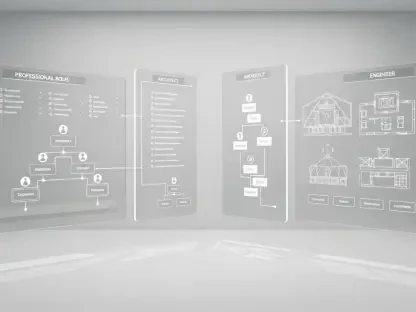
The most transformative aspect of Nexus is its “Autonomy,” which grants the system the authority to act, validate, and heal itself. This is managed by a robust multi-agent architecture where specialized agent personas oversee the entire automation lifecycle. A “Strategist” agent analyzes the business model to produce “Automation Heatmaps,” identifying high-impact opportunities. An “Architect” translates user intent into executable workflows. Crucially, a “QA Engineer” agent runs thousands of simulations with virtual users to proactively identify vulnerabilities, including adversarial prompt injections, ensuring security before deployment. Finally, a “Mechanic” agent provides continuous monitoring, conducts root-cause analysis for failures, and can apply fixes autonomously, only seeking human approval for the final push.
The Dawn of the Agent Centric Enterprise
The introduction of platforms like Nexus heralds the beginning of the agent-centric enterprise, a future where autonomous AI systems form an intelligent control layer across business operations. This trend suggests a fundamental shift in workforce dynamics, where human intervention becomes more strategic and less tactical. Instead of manually executing routine tasks, employees will focus on defining high-level goals, approving AI-devised strategies, and managing exceptions. With its multi-LLM architecture and out-of-the-box integrations for over 100 enterprise systems, Nexus is designed to be the central nervous system for this new operational model, enabling businesses to achieve unprecedented levels of efficiency and responsiveness.
Practical Implications and Strategic Adoption
For enterprises looking to harness this next wave of AI, the key takeaway is the need to move beyond an assistance-based mindset. Adopting an autonomous system requires a strategic shift. Businesses can begin by leveraging Nexus’s diagnostic capabilities to identify processes ripe for high-impact automation. The focus should be on empowering AI agents with the authority to execute within well-defined business rules, freeing up human capital for creative, strategic, and customer-facing initiatives. The best practice is not to simply replace tasks but to reimagine entire workflows, allowing autonomous agents to manage the end-to-end process from observation to resolution.
Redefining Work in an Autonomous World
Yellow.ai’s Nexus is more than just a new product; it’s a clear statement on the future direction of enterprise automation. The platform’s core innovation lies in its transition from a tool-centric model operated by humans to an agent-centric model governed by them. By equipping AI with the ability to see, act, and self-govern, Nexus lays the groundwork for a future where software doesn’t just provide services—it is the service. As this technology matures, it will undoubtedly remain a significant force, compelling organizations to fundamentally rethink how work is done and how value is created in an increasingly autonomous world.