
Modern software engineering has reached a critical threshold where the sheer volume of code obscures the original intent behind its creation, leaving developers to navigate a complex labyrinth of logic without a clear map. The Atlassian Code Context represents a significant advancement in the software development industry. This review will explore the evolution of the technology, its key features, performance metrics, and the impact it has had on various applications. The purpose of this review is to provide a thorough understanding of the technology, its current capabilities, and its potential development in the coming years.
Evolution of Collaborative Ecosystems: From Isolated Repositories to Integrated Intelligence
The transition from static code storage to integrated intelligence marks a fundamental change in how engineering teams manage their assets. For years, source code existed in silos, disconnected from the planning documents and task descriptions that explained its existence. Atlassian’s latest enhancement addresses this by integrating Code Context directly with the Teamwork Graph, effectively bridging the gap between raw syntax and project documentation. This integration allows the system to treat a line of code not just as a command, but as a response to a specific business requirement.
This evolution is particularly relevant in the current landscape where AI-powered coding agents are becoming standard. These agents require deep organizational awareness to function effectively beyond local file structures. Without this context, an AI might suggest a fix that contradicts a documented architectural decision or a pending Jira ticket. By weaving code into the broader organizational fabric, the technology ensures that every automated suggestion is grounded in the reality of the existing project ecosystem.
Core Pillars of the Code Context Framework
The Teamwork Graph as a Relational Data Foundation
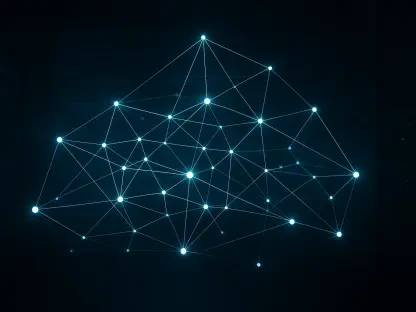
At the heart of this system lies the Teamwork Graph, a relational data layer that maps the intricate connections between tasks, documents, and individuals. By adding a source code layer to this environment, the framework creates a unified map of a company’s intellectual property. This relational approach moves beyond simple indexing; it captures the “why” and “who” behind every update, allowing the system to understand that a specific pull request is the direct result of a sprint goal or a customer feedback loop.
This unified data environment serves as the single source of truth for both humans and machines. When a developer joins a project, the graph provides an immediate visual of how different components interact across various repositories. For AI tools, this foundation is even more critical, as it provides the metadata necessary to navigate millions of lines of code without getting lost in the noise of irrelevant functions.
Semantic Retrieval and Natural-Language Understanding
The framework facilitates a transition from basic keyword searches to sophisticated semantic retrieval. Traditional tools often fail when a developer searches for a concept rather than a specific variable name. However, Code Context utilizes natural-language understanding to interpret the intent behind a query. If a user asks how the system handles user authentication, the AI agent can navigate multi-repository systems to find the relevant logic, even if the term “authentication” is not explicitly used in the filenames.
This intent-based navigation is a game-changer for maintaining complex legacy systems. Instead of spending hours grepping through directories, engineers can interact with their codebase using conversational queries. The system analyzes the underlying meaning of the code structures, identifying patterns and relationships that would be invisible to a standard search engine. This level of comprehension reduces the cognitive load on developers, allowing them to focus on logic rather than location.
Grounding AI Agents via the Teamwork Graph CLI
The technical implementation of this intelligence is managed through the Teamwork Graph CLI, which plays a vital role in grounding agents like Rovo or Claude Code. Grounding is the process of ensuring an AI’s output is informed by specific, accurate data rather than generic training sets. By using the CLI, these agents can pull “tribal knowledge” from Jira issues and Confluence pages, ensuring that their code generation adheres to the team’s specific standards and historical context.
This grounding mechanism prevents the isolation that typically plagues external AI tools. When an agent is aware of the discussions in a Jira ticket, it can avoid repeating past mistakes or suggesting deprecated methods. The CLI acts as a secure pipe, funneling the right amount of context to the agent at the right time. This precision is essential for maintaining the integrity of the codebase while leveraging the speed of automated generation.
Emergent Trends in AI-Native Development Workflows
The industry is currently witnessing a shift toward AI-native environments where large language models are fundamental to the workflow rather than just external add-ons. In these environments, the AI is a constant collaborator that understands the “system of work” as well as any human team member. This trend influences how organizations manage their operations, moving toward a model where every task is initiated, documented, and executed within a single, intelligent loop.
As LLMs become more deeply embedded, the focus shifts from writing code to orchestrating logic. Organizations are prioritizing tools that offer a holistic view of the development lifecycle, recognizing that the value of an AI is only as good as the context it can access. This shift is redefining the role of the developer, who now acts as a high-level architect overseeing a fleet of informed agents that handle the granular implementation details.
Real-World Implementations and Cross-Platform Integration
In sectors requiring high-velocity delivery, such as fintech or rapid-response software services, the deployment of this technology has yielded immediate results. Companies like SpotOn have utilized Code Context to eliminate the manual mapping of dependencies. By grounding agents in the full organizational context, they have reduced the time spent on discovery and onboarding, as the AI can explain the relationships between microservices without human intervention.
Furthermore, the unique implementation of linking code blocks to Jira work items and Loom videos provides a cohesive narrative for every line of code. When an engineer views a block of code, they can instantly see the video of the bug report that triggered the change or the Confluence page that outlines the security protocols. This cross-platform integration ensures that no piece of information exists in a vacuum, creating a self-documenting ecosystem that lives and breathes with the code.
Security Frameworks and Operational Obstacles
Maintaining security in AI-driven workflows remains a significant challenge, but Atlassian addresses this through permission-aware access. The system ensures that AI agents only retrieve data that the specific user is authorized to see. This prevents sensitive information from leaking across teams and maintains a strict governance model. By mirroring the existing security permissions of the organization, the Code Context framework provides a safe environment for AI experimentation without compromising data privacy.
Operational hurdles, such as the tendency for AI to “hallucinate” or generate incorrect information, are mitigated through precise data grounding. The more context an agent has, the less likely it is to fill in the gaps with fabrications. Additionally, the system focuses on minimizing token consumption by delivering only the most relevant data snippets to the AI. This efficiency not only reduces costs but also increases the speed of the agent’s responses, making the workflow feel more fluid and responsive.
Future Outlook: The Trajectory of Context-Aware Engineering
The trajectory of context-aware engineering points toward more autonomous development cycles. As the technology matures from 2026 to 2028, the industry expects breakthroughs in agentic reasoning, where AI can not only suggest code but also proactively identify architectural weaknesses or suggest refactoring based on upcoming business goals. The long-term impact involves treating code as an interconnected asset that is fully integrated into the broader business strategy.
This progression will likely see AI agents taking on more responsibility for maintenance and security patching, informed by a deep understanding of the historical context of the codebase. The boundary between project management and engineering will continue to blur, as the tools used to plan work become indistinguishable from the tools used to execute it. This holistic approach will enable organizations to scale their technical infrastructure at unprecedented speeds.
Final Assessment: Redefining Developer Productivity
The implementation of Atlassian Code Context delivered measurable improvements across the software development lifecycle. Organizations reported a 44% increase in the accuracy of AI-generated code and a 48% reduction in token usage, highlighting the efficiency gained through better grounding. These metrics indicated that the technology successfully addressed the “context gap” that previously hindered the effectiveness of automated tools in large-scale environments.
The technology proved to be a vital component in modernizing how teams interacted with their technical debt and new features alike. By turning the codebase into a searchable, relational asset, it empowered developers to work with greater confidence and less manual overhead. The overall assessment confirmed that Code Context was not merely an incremental update, but a foundational shift that prepared the industry for a future of highly informed, autonomous engineering workflows. Moving forward, teams should focus on refining their internal documentation to further enhance the relational depth of their Teamwork Graph.