
With a career spent navigating the seismic shifts in cloud computing, our guest today brings decades of perspective to the ever-evolving landscape of enterprise architecture. We’re here to unpack one of the latest, most significant developments from AWS: durable functions for Lambda. This innovation promises to redefine how complex workflows are built in the cloud, but it also brings familiar strategic challenges to the forefront. In our conversation, we will explore how this feature empowers developers by simplifying orchestration, the critical trade-off between agility and vendor lock-in, the new operational hurdles in observability that arise, and how leaders can make a disciplined, strategic decision about adoption rather than simply following the latest trend.
AWS Lambda historically excelled at short, stateless tasks. How do its new durable functions change the game for complex, long-running workflows like order processing? What specific engineering burdens, such as custom state management or external orchestration tools, do they eliminate for developers?
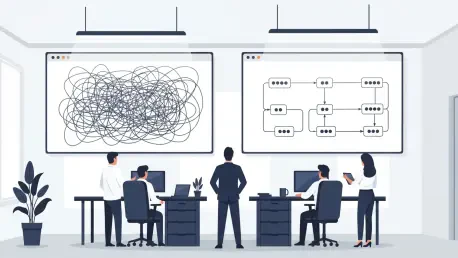
It’s a complete paradigm shift for those kinds of applications. For years, we’ve seen teams wrestle with this exact problem. You’d have this beautiful, simple, stateless function, but the moment you needed to string several of them together for something like a multi-stage customer onboarding, the complexity just exploded. You were suddenly in the business of building custom state machines, managing external databases for state, or wiring everything together with a separate service like AWS Step Functions. It felt like a ton of heavy, undifferentiated plumbing. What durable functions do is absorb that entire burden. They introduce native state management and automatic checkpointing directly into the Lambda model. This means a developer can now define a workflow with waits that could last for hours, days, or even up to a year, and not have to write a single line of code to manage that pause or worry about the system losing its place. The feeling of relief for an engineering team is palpable; they can finally focus purely on the business logic, not on building resilient, distributed state management from scratch.
Durable functions offer significant agility by abstracting away infrastructure. How should an enterprise architect balance this near-term value against the long-term risk of vendor lock-in from proprietary AWS APIs? Please share a practical example of how a team might manage this trade-off.
This is the classic, high-stakes balancing act every architect faces. The agility is real and incredibly tempting. You can deliver features faster because the cloud provider is handling the orchestration. However, that agility comes from leaning on proprietary AWS APIs that have no direct equivalent on Azure, Google Cloud, or in an on-premises environment. A practical way to manage this is to be deliberate about what logic goes inside the durable function. For instance, a team building an order processing workflow might use the durable function to orchestrate the high-level steps: “Receive Order,” “Wait for Payment,” “Dispatch to Warehouse,” “Send Confirmation.” The orchestration logic itself is tied to AWS. However, the core business logic—the code that calculates the tax, validates the address, or generates the shipping label—can be encapsulated in a way that it’s not dependent on the serverless runtime. This creates a strategic seam. If, five years down the road, the company decides to move to a multi-cloud strategy, they don’t have to rewrite their entire business logic. They only need to replace the AWS-specific orchestration “shell,” which is a much more manageable migration project.
While durable functions simplify orchestration, they also increase the “magic” happening behind the scenes. What new observability and debugging challenges arise with these multi-step workflows, and what new monitoring practices or tools must teams adopt to maintain visibility and control?
That “magic” is a double-edged sword. On one hand, it’s fantastic that you don’t have to manage the state machine yourself. On the other hand, when a workflow fails in the middle of a week-long pause, debugging can feel like trying to solve a mystery in a black box. The traditional logs from a single function execution are no longer sufficient. You’re now dealing with a distributed system where the state is managed for you, and understanding a failure requires seeing the entire history of the workflow across all its steps. This forces a necessary evolution in monitoring. Teams absolutely must invest in practices and tools that provide enterprisewide visibility. This means structured logging that correlates events across different function invocations and a greater reliance on distributed tracing. You need to be able to visualize the entire flow, see where it got stuck, and inspect the state at the point of failure. Without this investment, you’re flying blind, and the operational troubleshooting will quickly negate the development agility you gained in the first place.
With initial support for specific Python and Node.js versions, how does this influence adoption for teams with different tech stacks? Beyond language, what existing developer skill sets are most transferable, and where is the steepest learning curve when transitioning to this model?
The initial language support—specifically for newer versions like Python 3.13 and Node.js 22—creates a clear path for teams already in that ecosystem, but it’s a temporary barrier for others. If your organization is standardized on Java or .NET, you’ll have to wait, which can be a non-starter for some projects. Beyond the language itself, developers who already have a strong grasp of asynchronous programming and event-driven architectures will feel right at home. The concepts of callbacks, promises, and designing for statelessness are highly transferable. The steepest learning curve isn’t in the code itself, but in the mental model shift. Developers accustomed to traditional, monolithic applications have to unlearn the habit of thinking about long-running processes on a single server. They have to embrace the idea of composability and distributed state, and crucially, they need to learn how to debug in this new, distributed environment. That operational aspect is often where the real challenge lies.
When evaluating durable functions, leaders must weigh TCO against more portable alternatives. Can you walk through how an organization should assess the total cost of ownership, including migration risk and compliance overhead, to make an informed, strategic decision rather than a fad-driven one?
A proper TCO analysis here goes far beyond just comparing the cost of Lambda invocations to the cost of a running VM. That’s just the tip of the iceberg. First, you have to quantify the developer productivity gain. How many engineering hours are you saving by not building and maintaining a custom orchestration engine? That’s a huge operational expense reduction. Then, you must put a price on the risk of vendor lock-in. This involves estimating the potential cost of a future migration. What would it take, in terms of staff-months and lost opportunity, to re-platform this critical workflow in three to five years if your cloud strategy changes? You also have to factor in the cost of new tools for monitoring and observability, as well as any staff training required. Finally, for regulated industries, there’s the compliance overhead. You must ensure your auditing and data governance processes can cope with this new, more abstracted model. An informed decision comes from weighing all these factors—the immediate efficiency gains against the long-term strategic risks and hidden operational costs.
What is your forecast for the evolution of serverless computing?
I believe we are entering the next major phase of serverless maturity, moving beyond simple functions to orchestrating complex business processes. The introduction of durable functions is a clear signal of this trend. My forecast is that we’ll see this pattern of abstracting away complex infrastructure primitives continue across the board. The next frontier will likely be a tighter, more seamless integration of serverless functions with data and AI services, allowing developers to build incredibly sophisticated, event-driven intelligent applications with even less “plumbing.” The ultimate vision has always been to let developers focus solely on business logic, and every innovation like this brings us one step closer. The trade-offs around lock-in and observability will remain, but the value proposition of speed and focus will become so compelling that most new, cloud-native applications will be built this way by default.