
The Dawn of the AI Powered Repository
In the relentless pursuit of engineering velocity, a significant portion of a developer’s time is consumed by “invisible housekeeping”—the unrewarding yet critical work of maintaining a software repository. From debugging flaky continuous integration (CI) pipelines and triaging low-quality issues to updating outdated documentation, these tasks create an operational drag that diverts focus from innovation. Now, GitHub is readying a new feature, Agentic Workflows, that uses AI to automate this foundational work. This article will explore how these AI agents promise to redefine repository hygiene, examine the significant questions surrounding their cost and control, and analyze the strategic implications for the entire software development lifecycle.
The Evolution from Scripted Actions to Intelligent Agents
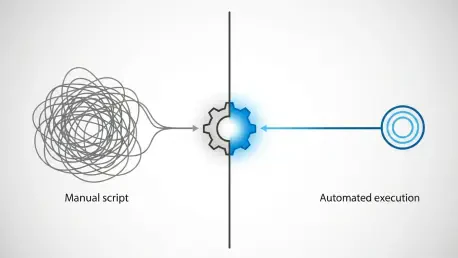
For years, DevOps has leaned on automation to streamline the path from code commitment to production deployment. The foundation of this movement has been tools like GitHub Actions, which rely on developers explicitly defining workflows in structured formats like YAML. While powerful, this approach requires developers to be prescriptive, detailing every step, condition, and command. This manual scripting process, however, does little to alleviate the cognitive tax of diagnosing unforeseen build failures or managing the unpredictable influx of community-reported issues. The industry has reached a point where the complexity of maintaining these scripted automations has itself become a source of toil, creating a clear demand for a more intelligent, adaptive layer of automation.
A Deep Dive into Agentic Workflows
From Manual Drudgery to AI Driven Productivity
At its core, GitHub’s Agentic Workflows initiative aims to replace rigid scripts with intelligent, goal-oriented agents. Instead of writing verbose YAML files, developers can describe a desired outcome in natural language using Markdown. These instructions, stored directly in the repository, guide an AI agent connected to a large language model (LLM) like GitHub Copilot or others from providers like OpenAI. Triggered by events such as a new pull request or a scheduled run, the agent interprets the goal, plans a course of action, and executes it within the familiar GitHub Actions environment.
Industry analysts see immediate benefits, particularly for mid-sized engineering teams struggling with maintenance overhead. This approach can lead to “fewer stalled builds, faster root-cause analysis, and cleaner repositories,” boosting delivery velocity without increasing headcount. However, this flexibility comes with trade-offs. Some senior engineers caution that while Markdown is faster to write, natural language can be interpreted differently by different models or even updated versions of the same model. This potential for ambiguity could reduce the precision and predictability that explicit YAML provides, introducing a new class of maintenance challenges.
The Hidden Costs of Intelligent Automation
Beyond the potential for ambiguity, the shift to AI agents introduces significant financial and strategic considerations. While the productivity gains are appealing, the underlying compute and model-inference costs can quietly compound as these workflows scale across an organization. What starts as a productivity tool can quickly become a growing operational line item, demanding that CIOs justify its return on investment. This requires a careful evaluation of the total cost of ownership, factoring in not just subscription fees but also the variable expenses associated with LLM usage.
Furthermore, analysts highlight a strategic risk: vendor lock-in. By embedding these agents natively into GitHub Actions, the platform creates switching costs that go beyond tooling familiarity. An intent-based workflow designed for GitHub’s specific execution engine, permissions model, and LLM integrations cannot be easily ported to a competitor like GitLab. This move reflects a broader industry push to exert greater control over the automation layer of software development, making platform choices more consequential for long-term architectural planning.
Navigating the Security and Compliance Minefield
For organizations in regulated industries like finance and healthcare, the introduction of autonomous agents operating within code repositories presents a complex set of challenges. While GitHub touts security features like least-privilege permissions and sandboxed execution, critical compliance questions remain unanswered. There is a lack of clarity on whether execution environments are FedRAMP-authorized for government work or if the generated audit logs meet HIPAA’s stringent standards for data retention and access control.
Moreover, concerns about data residency and the agent’s access to sensitive information embedded in code are paramount. For financial services, a simple log entry noting that a workflow created a pull request is insufficient. A full lineage layer is needed, detailing every API call, file read, and decision the agent made to ensure complete transparency and accountability. These gaps highlight that enterprise-grade adoption will require a far more robust governance and auditability framework than what has been initially presented.
The Future of DevOps Supervising Not Scripting
The rise of agentic workflows signals a profound shift in the developer’s role and the competitive landscape. As rivals like GitLab and Atlassian are expected to respond with their own offerings, the key differentiator may become the ecosystem’s openness. The recent move of the Multi-agent Converged-intelligence Platform (MCP) to the Linux Foundation could accelerate a third-party, interoperable agent model, challenging GitHub’s more proprietary approach. This creates a potential bifurcation in the market between integrated, platform-native solutions and more flexible, vendor-agnostic frameworks.
Internally, developer culture is poised to evolve from executing routine tasks to supervising intelligent automation. This will allow developers to focus on higher-value work like architecture, complex problem-solving, and strategic design. Consequently, performance metrics will likely move away from activity-based measures like commits and pull requests toward outcomes such as improved cycle time, system reliability, and overall engineering effectiveness. This cultural transformation will require new training and a redefinition of engineering roles within organizations.
Strategic Recommendations for the Agentic Era
The introduction of Agentic Workflows is more than just a new feature; it is a preview of the future of software development. For CIOs and engineering leaders, the immediate task is to approach this technical preview as a controlled testing window. It is advisable for organizations to establish controlled pilots in non-critical repositories, develop governance patterns early, and prepare for broader adoption once auditability and operational predictability stabilize. This initial phase is crucial for understanding the real-world implications of the technology within a specific corporate context.
To manage the financial impact, leaders should set budget caps on LLM usage, closely track run frequency, and benchmark automation costs against reclaimed developer time and reduced operational delays. This data-driven approach will be essential for building a solid business case for wider implementation. For developers, this is an opportunity to begin transitioning their skill sets, moving from being masters of scripting to becoming adept supervisors of AI, capable of articulating complex goals and validating automated outcomes with a critical eye.
Embracing an Automated Future
GitHub’s venture into AI-powered DevOps agents marks a pivotal moment in the industry’s journey toward hyper-automation. By targeting the tedious but essential tasks of repository maintenance, these tools promise to unlock significant developer productivity and streamline software delivery. However, this powerful new paradigm brings with it critical challenges related to cost management, vendor lock-in, and security governance that cannot be overlooked. As the technology matures, the organizations that succeed will be those that not only embrace AI’s potential but also implement the rigorous controls and strategic foresight necessary to harness it responsibly, transforming their engineering culture from one of manual execution to one of intelligent supervision.