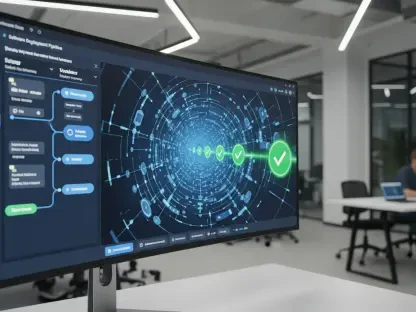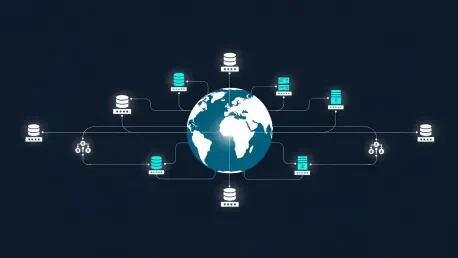

Engineering teams across the globe are currently grappling with an unprecedented surge in code production that frequently outpaces the traditional capacity of centralized cloud testing environments. This explosion in software volume is largely attributed to the integration of generative artificial intelligence into the development lifecycle. As organizations move away from slow, cloud-only testing cycles, a shift toward local-first workflows has emerged as the definitive standard for modern software engineering. By emulating complex cloud services on a local machine, developers can bypass the inherent latency and high infrastructure costs associated with remote staging environments.
Major cloud providers have historically focused on their own proprietary ecosystems, but the emergence of LocalStack as a standard emulation layer has filled a critical gap in the market. Platform engineering teams now prioritize these local tools to streamline productivity and ensure that developers spend more time writing logic rather than managing environment configurations. This evolution represents a strategic pivot toward developer autonomy, where the local workstation serves as a high-fidelity replica of the production environment, allowing for rapid iteration and immediate feedback.
Driving Efficiency Through Local Emulation and Modern Tooling
Key Industry Shifts: AI-Generated Code and the Demand for Speed
The software landscape is currently facing a transformation where AI-powered development tools generate massive amounts of code, necessitating a faster validation process than ever before. Basic API mocking no longer suffices for complex microservices; instead, there is a growing demand for deep functional parity with services like AWS. To address this friction, the introduction of the 1stk command line interface and a refined Terminal User Interface has significantly reduced the time required for initial onboarding. These revamped tools provide a single binary installation that simplifies authentication and profile management for engineers.
Furthermore, the transition from static responses to functional emulation ensures that developers are testing against realistic logic. Improved log management in recent updates helps maintain a clean workspace by disabling verbose output by default, allowing developers to focus on relevant data. As the volume of code continues to expand, these efficiency gains are no longer just a luxury but a fundamental requirement for maintaining a competitive deployment cadence.
Market Trajectory: The Growing Value of Dev-Focused Infrastructure
Market demand is increasingly leaning toward unified platforms that consolidate community and enterprise features into a single, cohesive experience. By removing limitations on continuous integration credits across all service tiers, local cloud emulation tools are fostering a culture of perpetual testing without financial penalties. This shift indicates a broader market trajectory where the removal of friction in the DevOps pipeline is viewed as a primary value driver for enterprise organizations.
Growth projections suggest that local cloud emulation will soon be classified as an essential DevOps category rather than a niche utility. The move toward a token-based authentication model reflects a professionalization of the toolset, aligning it with the governance requirements of large-scale corporations. As performance indicators show a direct correlation between local parity and deployment speed, the strategic value of dev-focused infrastructure continues to rise.
Overcoming the Friction in Distributed System Testing
The notorious “it works on my machine” dilemma remains a persistent hurdle in distributed system architecture, particularly when dealing with intricate cloud interactions. Managing the complexity of the Resource Groups Tagging API across various services like EKS and CloudWatch often leads to configuration drift between local and remote environments. To combat this, modern emulation frameworks have expanded their internal logic to provide seamless integration across these disparate services. This ensures that resource management behaves identically regardless of where the code is executed.
Strategies for replacing static mocks with functional infrastructure fleets, such as those found in EC2, have become vital for testing complex networking and scaling behaviors. By providing a functional API for the creation and deletion of actual infrastructure fleets locally, developers can simulate high-stakes operations without incurring actual cloud costs. This ability to scale local environments to match the rapid pace of modern code production is essential for maintaining the integrity of the software delivery lifecycle.
Maintaining Compliance and Security in Local Cloud Sandboxes
Navigating the regulatory landscape of data privacy requires that non-production environments remain isolated from sensitive production data. The shift toward token-based authentication in local cloud tools enhances security by providing a centralized method for governing access and auditing usage. Standardized local environments assist organizations in meeting strict industry compliance requirements, as they allow for thorough security testing without exposing live assets to potential vulnerabilities.
Balancing developer flexibility with enterprise-grade security controls is a delicate act that requires robust tooling. By using a local sandbox, security teams can enforce specific policies and guardrails early in the development process, long before any code reaches the public cloud. This proactive approach to security ensures that compliance is a continuous part of the development cycle rather than a final hurdle before launch.
The Road Ahead: Multi-Cloud Support and Enhanced Virtualization
Looking forward, the integration of deeper hardware emulation through technologies like the libvirt VM manager is set to redefine the boundaries of local development. This advancement will allow for more sophisticated virtualization, bringing local environments even closer to the actual hardware configurations of cloud data centers. Additionally, the expansion of local emulation beyond AWS to include Microsoft Azure signals a major market disruption. This move toward a multi-cloud emulation strategy will enable developers to build and test cross-cloud applications with unprecedented ease.
The future of the developer experience will likely involve predictive testing and AI-integrated local clouds that can anticipate configuration errors before they occur. Global economic factors, including the push for cost-efficiency and reduced carbon footprints, are also influencing the move toward localized testing. As virtualization technology improves, the reliance on remote, energy-intensive staging environments will continue to diminish in favor of efficient, local alternatives.
Reimagining the DevOps Pipeline with Local Parity
The advancements in LocalStack 3 demonstrated a successful bridge between local development and cloud production by focusing on deep functional parity and simplified user interfaces. Organizations recognized that the necessity of local emulation for speed and reliability was paramount in an era of AI-driven code production. Leaders who invested in these high-fidelity local environments observed a significant reduction in deployment failures and a more streamlined path to production.
Strategically, the move toward a unified platform and the removal of CI limitations set a new benchmark for how dev-focused tools should operate. Future investments should prioritize tools that offer multi-cloud support and deeper virtualization to handle the increasing complexity of modern architectures. By adopting a local-first mindset, teams successfully navigated the challenges of modern software delivery while maintaining high standards of security and compliance.