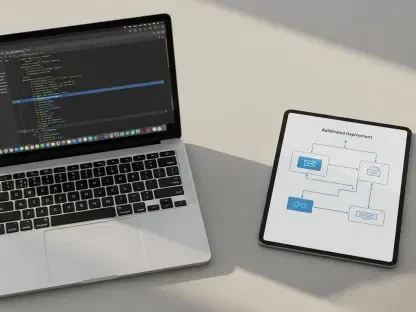

The Rise of the AI Velocity Paradox in Software Engineering
The unprecedented surge in artificial intelligence integration has fundamentally rewritten the rules of software development, yet it has simultaneously birthed a systemic friction that threatens to stall the very progress it promised. As organizations race to adopt AI-driven coding assistants, they are encountering a counterintuitive phenomenon known as the “AI Velocity Paradox.” This paradox occurs when the sheer speed of AI-generated code production outpaces the capacity of downstream DevOps processes to test, secure, and deploy that code. While developers are writing more lines than ever before, the systems designed to deliver that value to the end user are buckling under the pressure.
This imbalance is reshaping the industry by highlighting the hidden costs of accelerated coding. The traditional focus on individual developer productivity has shifted toward a more holistic view of the entire delivery pipeline. If the “front end” of the development cycle moves at light speed while the “back end” remains anchored in manual processes, the net result is a bottleneck that negates any initial efficiency gains. Modernizing the delivery pipeline is no longer an optional upgrade but a fundamental requirement for survival in a market where software remains the primary engine of business value.
Contextualizing the Shift: From Manual Pipelines to AI-Driven Development
To understand the current friction, one must look at the evolution of DevOps over the last decade. Historically, the primary bottleneck in software delivery was the manual act of writing code and managing physical infrastructure. The Agile movement and the subsequent rise of DevOps aimed to bridge the gap between development and operations through automation and cultural shifts. However, for years, the pace of delivery was largely dictated by human cognitive limits—how fast an engineer could solve a problem and type the solution. The introduction of Large Language Models (LLMs) fundamentally altered this baseline.
Industry shifts now show a transition where the initial stages of the software development lifecycle (SDLC) have become hyper-automated, while the delivery and governance stages remain tethered to legacy frameworks. This historical mismatch has set the stage for the operational challenges organizations face today. The transition toward AI-driven development happened so rapidly that the underlying infrastructure, security protocols, and testing suites were left in a reactive state. Consequently, the industry is witnessing a struggle to reconcile the output of high-speed algorithms with the rigorous requirements of enterprise-grade stability.
The Operational Strain of Accelerated Code Production
The Correlation: Between Coding Speed and Deployment Instability
The surge in AI tool usage has created a direct link to increased deployment frequency, but this speed often comes at the expense of reliability. Data indicates that developers using AI daily are far more likely to push code to production multiple times a day compared to their peers. However, this high-velocity environment is fraught with risk; nearly 69% of frequent AI users report that their teams encounter deployment problems “always” or “frequently” when AI-generated code is involved. This suggests that while AI can generate logic quickly, it does not necessarily account for the architectural context or environmental nuances of the target infrastructure.
This lack of contextual awareness often results in code that looks functional in isolation but fails when integrated into complex distributed systems. The frequency of these failures creates a volatile production environment where the sheer volume of changes makes it difficult to maintain a stable baseline. As a result, the perceived gain in velocity is often eroded by the necessity of hotfixes and emergency rollbacks. The gap between code generation and successful deployment highlights the urgent need for more sophisticated validation mechanisms that can match the pace of the developer.
The Recovery Gap: The Complexity of AI Failures
One of the most concerning aspects of the velocity paradox is the “recovery gap”—the increasing amount of time it takes to fix a production incident when it involves AI-generated code. Because AI can produce complex boilerplate and intricate logic at scale, human engineers often find it more difficult to diagnose and remediate root causes during a failure. On average, teams heavily utilizing AI take approximately 20% longer to resolve incidents than those who do not. This complexity increases the “blast radius” of any single error, as the volume of code produced makes it harder for developers to maintain a full mental model of the system.
When a system fails, the cognitive load required to understand code that a human did not write is significantly higher. This leads to longer Mean Time to Recovery (MTTR) as engineers sift through layers of generated logic to find a specific flaw. The resulting downtime carries substantial financial and reputational risks, further complicating the relationship between AI and operational efficiency. The recovery gap illustrates that speed without understanding is a liability, particularly in high-stakes environments where every minute of downtime is scrutinized.
Manual Drudgery: The Reality of Developer Burnout
Contrary to the narrative that AI would liberate engineers from “drudge work,” the reality for many is an increase in manual oversight. As the volume of code grows, so does the burden of quality assurance, security validation, and remediation. Engineers now spend an average of 36% of their time on repetitive tasks such as chasing tickets and manual approvals just to keep up with the influx of AI-generated assets. This operational overhead is driving a surge in burnout, with a staggering 96% of high-frequency AI users reporting that they must work evenings or weekends to manage release-related issues.
The paradox is clear: by trying to move faster with AI, teams are inadvertently creating more manual work for themselves in the downstream. The labor saved during the coding phase is often redirected toward the exhausting task of managing a bloated and fast-moving release cycle. This trend is unsustainable, as the mental toll on engineering teams eventually leads to higher turnover and decreased innovation. Addressing this burnout requires a fundamental reassessment of how work is distributed across the SDLC.
Future Trends: Automating the Entire Delivery Ecosystem
Looking ahead, the industry is moving toward a model of “Full-Stack Automation” to resolve the velocity paradox. The emergence of “Golden Paths”—standardized, pre-approved service templates—allows AI-generated code to flow through a predictable and secure pipeline without manual intervention. Furthermore, the rise of AI-driven observability and automated rollbacks will likely become the standard for managing deployment risks. Experts predict that the next wave of innovation will not be in better coding assistants, but in “AI for DevOps,” where machines manage the governance, compliance, and infrastructure scaling required to support the increased code output.
Regulatory shifts regarding software supply chain security will also force organizations to integrate automated security guardrails directly into the delivery path. As governments and industry bodies demand higher transparency and accountability, manual checks will become obsolete. The future of DevOps lies in a self-healing and self-governing infrastructure that can anticipate issues before they reach production. This evolution toward autonomous delivery systems will finally allow organizations to match their deployment capabilities with their coding speed, closing the loop on the velocity paradox.
Strategies: Harmonizing AI Speed with Operational Stability
To navigate this paradox, organizations must shift their focus from coding efficiency to delivery maturity. First, it is essential to implement “Golden Paths” to eliminate the need for custom-built pipelines for every new service. These templates provide a secure and standardized environment that reduces the cognitive load on developers. Second, security and quality checks must be shifted “left” and fully automated; manual QA is no longer a viable gatekeeper for AI-speed development. Automated scanning tools should be integrated directly into the development environment to provide real-time feedback.
Finally, teams should adopt advanced deployment strategies such as feature flags and automated “canary” releases. These tools act as a safety net, allowing organizations to maintain high velocity while ensuring that failures can be instantly neutralized. By standardizing the environment and automating the “boring” parts of the SDLC, businesses can finally realize the productivity gains promised by AI. These strategies emphasize that stability and speed are not mutually exclusive but are two sides of the same coin in a modernized DevOps organization.
Conclusion: Balancing Innovation with Delivery Discipline
The AI Velocity Paradox served as a vital reminder that software engineering functioned as a holistic system rather than a collection of isolated tasks. While AI provided a powerful engine for code generation, that engine was only as effective as the chassis—the DevOps infrastructure—that carried it. The state of “unbalanced modernization” highlighted that focusing solely on coding speed led to instability, longer recovery times, and developer exhaustion. To truly harness the power of AI, organizations invested in automated, standardized, and secure delivery frameworks that matched the pace of their developers.
The ultimate goal was not just to write code faster, but to create a seamless and sustainable flow of value that benefited both the developer and the end user. Strategic shifts toward “Golden Paths” and automated governance allowed enterprises to mitigate the risks of high-volume code production. By prioritizing delivery discipline alongside innovation, businesses avoided the pitfalls of deployment instability and burnout. This balanced approach ensured that the gains made in the development phase were successfully realized in the production environment, establishing a new standard for software excellence in an AI-dominated landscape.