
Security measures within the Statuspane project, such as stripping control characters and restricting file sizes, protect the terminal environment from potential malicious code execution or visual spoofing. This initiative comes at a time when autonomous AI agents like Claude Code have become indispensable to the modern software engineering lifecycle, yet their rapid integration has outpaced the development of clear monitoring frameworks. Developers frequently encounter a visibility gap where critical resource metrics remain obscured during complex, multi-step operations that span hours or days. Without real-time telemetry, high-intensity coding sessions often end abruptly due to unforeseen rate limit exhaustion or budget overruns, creating significant friction in automated workflows. The Statuspane project addresses these challenges by transforming the terminal into a sophisticated command center, ensuring that every token spent and every limit approached is visible to the human supervisor in a clear and actionable format. By moving beyond static text logs to a dynamic interface, the tool ensures that the engineer remains fully aware of the agent’s current state and resource trajectory.
Visualizing Resource Consumption and Financial Impact
Contextual Monitoring: Managing Token Limits and Thresholds
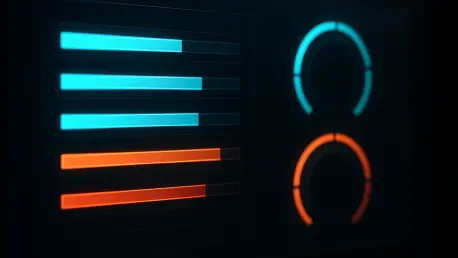
The primary utility of the dashboard lies in its ability to demystify the complex constraints of large language models, specifically by tracking token-based context windows and multi-tiered rate limits. Through integrated visual gauges, the tool provides immediate feedback on how much of the context window is occupied at any given moment. For example, if a session consumes 222,000 out of a million available tokens, the card displays a clear 42% usage bar. To prevent catastrophic session failures during long-running tasks, the interface includes color-coded warnings that shift from standard themes to yellow at 60% and critical red at 85%. This allow an engineer to pause or prune the conversation before the model loses context or hits a hard cap. By providing these metrics in a persistent, unobtrusive card, the system transforms abstract resource depletion into a tangible visual signal that guides developer decision-making throughout the coding process.
In addition to immediate token usage, the system effectively manages temporal constraints that frequently disrupt the development flow. It tracks various rate limits, such as those resetting over five-hour or seven-day periods, providing active countdowns that let the user know exactly when their capacity will be restored. This level of foresight is vital for planning intensive development sprints where hitting a limit could mean hours of downtime. The dashboard also maintains environment awareness by displaying the active model version and the current reasoning effort level, which might be toggled depending on the complexity of the task. By keeping these data points front and center, developers can adjust their strategy in real-time, perhaps opting for a lower reasoning level to conserve tokens or waiting for a limit reset before initiating a massive codebase audit. This proactive approach to resource management ensures that AI-assisted workflows remain both efficient and predictable for the team.
Fiscal Accountability: Real-Time Cost Tracking and Orientation
Financial transparency is another critical pillar of the Statuspane modification, as it provides real-time tracking of session costs based on current model pricing. By calculating the cost of each query as it occurs, the tool removes the guesswork from budgeting AI-assisted projects. Developers can see the immediate monetary impact of their queries, which encourages more precise and thoughtful interaction with the agent. This transparency is complemented by a high level of situational awareness, as the dashboard displays the active Git branch and the current working directory. This ensures that even during a complex refactoring task that might involve dozens of files, the human supervisor remains oriented within the specific technical and economic scope of the operation. The ability to see exactly how much a specific refactor command costs in dollars and cents brings a level of fiscal discipline to the terminal that was previously only available through retrospective billing dashboards.
Beyond basic monitoring, the project bridges the gap between the AI agent and existing DevOps pipelines by integrating with GitHub Actions and local progress scripts. Using the GitHub CLI, the dashboard monitors the latest CI/CD runs for the current branch, refreshing every minute—or every ten seconds during an active job—to show whether a build is pending, successful, or has failed. This feedback loop is essential because it prevents the developer from having to switch to a browser to verify the results of the agent’s work. Furthermore, the inclusion of a custom Progress API allows external scripts to write JSON files to a local directory, which the dashboard then renders as live progress bars. With a built-in time-to-live mechanism, the interface ensures that only relevant and active tasks occupy screen real estate, preventing the UI from becoming cluttered with stale information. This synchronization ensures that the human and the AI are always looking at the same operational truth.
The implementation of Claude Statuspane demonstrated that effective AI observability required a shift from individual monitoring to a broader governance framework. While the tool initially focused on personal utility, it highlighted the urgent need for enterprise-level telemetry that could provide auditable data across entire organizations. Strategic leaders realized that to fully adopt autonomous agents, they needed to observe and prove the spend and outcomes of every session globally. This evolution pushed developers to treat AI session health with the same rigor as traditional system performance metrics. Organizations eventually moved toward centralized dashboards that aggregated data from various local agents, ensuring that the efficiency gains of AI were not offset by unmanaged costs or security risks. The project proved that for AI to truly integrate into the professional development lifecycle, the monitoring tools had to become as sophisticated as the agents themselves. Future engineering teams prioritized these observability platforms to maintain control over their digital workforce.