
We’re joined by Anand Naidu, our resident Development expert, proficient in both frontend and backend development. Today, we’re diving into Vercel’s newly revamped v0 platform, a significant leap forward in AI-driven development. Our discussion will explore how this update is closing the gap between AI-generated prototypes and enterprise-ready applications. We’ll touch on the critical aspects of security and compliance, the innovative Git workflow designed for non-technical team members, the practical impact of its new sandbox environment, and a look ahead at the future of agentic, self-driving infrastructure.
The new v0 platform aims to bridge the gap between AI-generated prototypes and production-ready software. Could you walk through a specific example of how this revised platform helps a team move from a simple “vibe” to a shippable product with proper access controls?
Absolutely. Imagine a product manager has a “vibe” for a new internal dashboard that tracks real-time sales data. Previously, they might describe this to an AI tool and get a visually appealing but isolated demo. With the new v0, that same prompt generates code that is immediately part of a larger, secure ecosystem. Because it’s built on the Vercel core cloud platform, the moment that code is created, you can begin to layer on enterprise-grade controls. You can set specific deployment protection requirements, ensuring only authorized personnel can push it live, and configure precise access controls so that only the sales leadership team can view the finished dashboard. It completely redefines the process, moving it from a two-step “prototype then rebuild” model to a single, continuous, and secure path from concept to production.
Enterprise adoption often hinges on security and compliance. Can you elaborate on the specific security configurations available through the Vercel core cloud platform and how the secure integrations with databases like Snowflake and AWS prevent common vulnerabilities when building internal tools?
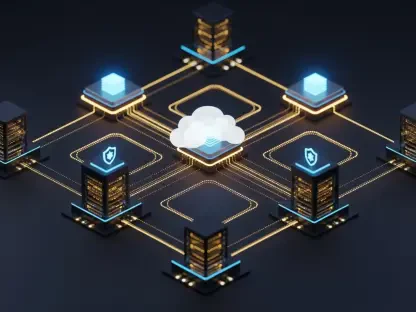
This is really the heart of why the new v0 is so powerful for businesses. The platform’s foundation on the Vercel core cloud platform means security isn’t an afterthought; it’s baked in. You can configure the environment to meet common compliance needs right from the start. A crucial piece of this is the secure integrations. When you connect to enterprise systems like Snowflake or AWS, you’re not just opening a simple data pipe. These are secure connections designed to protect sensitive information, which is paramount when you’re building custom reporting tools or automating processes triggered by proprietary data. This prevents common vulnerabilities like data leakage or unauthorized access, giving IT and security teams the confidence that these rapidly developed internal tools adhere to their strict governance policies.
The new Git panel is designed to empower non-engineers to ship production code. Could you detail how this workflow operates through branches and pull requests, and what safeguards are in place to ensure code quality is maintained when non-technical team members contribute?
It’s a really elegant solution to a traditionally complex problem. Let’s say a team member from marketing wants to tweak the copy on a new landing page generated by v0. Instead of filing a ticket, they can use the new Git panel to create a new branch directly from their chat session with the AI. This isolates their changes safely away from the main production code. When they’re happy with the result, they can open a pull request right from that panel. This action automatically notifies the engineering team. The engineers can then review the AI-generated code, run automated tests, and ensure everything meets quality standards before merging it into the main branch and deploying. This workflow provides the perfect balance: it empowers non-engineers to contribute directly while maintaining the rigorous, engineer-led review process that is essential for code quality and stability.
A new sandbox-based runtime can import any GitHub repo and its configurations. How does generating code in this “real environment” differ from previous AI demo tools, and what has been the measurable impact on development speed for early adopters?
The difference is night and day. Previous AI tools would generate code in a vacuum, a sterile environment that didn’t reflect the complexities of your actual project. The new sandbox-based runtime changes this completely by importing your team’s GitHub repo and automatically pulling in all the necessary environment variables and configurations from Vercel. This means every line of code generated by a prompt is created within a context that mirrors your real production setup. It’s not a demo; it’s production-ready code that lives in your actual repository from the moment it’s created. For early adopters, this has been a massive accelerator. It eliminates the entire, often painful, step of translating a prototype into functional code that works with your existing infrastructure, dramatically cutting down the time from idea to deployment.
Looking ahead, the platform will enable developers to build and deploy end-to-end agentic workflows. What does a practical “agentic workflow” look like in this context, and what are the key steps for deploying one using Vercel’s self-driving infrastructure?
An agentic workflow is essentially an autonomous, AI-powered process. A practical example would be an agent that monitors customer support tickets for recurring issues. When it identifies a pattern, it could automatically generate a draft for a new FAQ article, create a new branch in the codebase with the proposed content, open a pull request for human review, and upon approval, deploy the update to the help center—all without direct human intervention at each step. To deploy this using Vercel’s self-driving infrastructure, a developer would use v0 to build the logic for this agent, including the AI models needed for analysis and content generation. Then, they would deploy this entire workflow onto the Vercel platform, which handles the scaling, security, and operational overhead, allowing the agent to run autonomously and efficiently.
What is your forecast for the future of AI-assisted, “vibe-based” development in the enterprise?
My forecast is that this will become the standard, not the exception, for a significant portion of application development within the next few years. The friction between a business idea and a functional, secure application is dissolving rapidly. We’re moving away from rigid, multi-page specification documents and toward a more fluid, conversational, and iterative process. As these platforms prove their ability to generate secure, high-quality, and maintainable code that integrates seamlessly with existing enterprise workflows, the C-suite will see this not just as a developer productivity tool, but as a core driver of business agility. The future is one where the speed of innovation is limited only by the clarity of the “vibe” you can describe.