
The relentless sprawl of modern digital infrastructure has reached a breaking point where human operators can no longer keep pace with the sheer velocity of data generated by enterprise-scale artificial intelligence. This systemic crisis of complexity has prompted the launch of MyDecisive, a startup that has officially emerged from stealth with $12 million in fresh capital to fundamentally redefine how production environments are managed. Led by serial entrepreneur Ari Zilka, the firm is moving away from the era of human-monitored dashboards, favoring a world where systems are inherently autonomous and self-healing. By focusing on the 2023-founded entity’s mission, the market is seeing a strategic pivot toward localized telemetry that preserves data integrity while removing the latency issues that plague cloud-first monitoring strategies.
Reimagining the Edge: Ari Zilka’s $12M Departure From Traditional DevOps
Serial entrepreneur Ari Zilka has returned to the enterprise IT arena with a clear mandate to solve the operational friction that currently cripples large-scale deployments. The $12 million funding round serves as a catalyst for a platform designed to shift the burden of infrastructure maintenance from overworked engineers to intelligent software layers. This capital injection allows MyDecisive to scale its vision of a self-operating cloud, where the underlying architecture anticipates failures before they result in costly downtime.
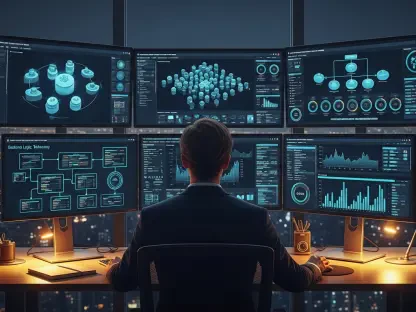
The shift from traditional monitoring is not merely a change in tooling but a fundamental rethinking of the relationship between the human operator and the machine. Instead of expecting engineers to monitor colorful charts throughout the day, the startup advocates for a system that handles the mundane tasks of remediation automatically. This approach marks a significant departure from the status quo, signaling the end of the manual oversight era for complex IT systems that require near-instantaneous response times to maintain health.
Why Current Monitoring Solutions Fail Under the Weight of AI Workloads
Traditional monitoring solutions are buckling under the immense “data gravity” created by high-velocity AI workloads, where the cost of streaming logs to third-party services often exceeds the value of the insights gained. When petabytes of data are generated every hour, the act of moving that information to a centralized dashboard introduces unsustainable latency and astronomical egress fees. This creates a massive bottleneck where critical errors are frequently buried under a mountain of noise, leading to what many engineers describe as debilitating dashboard fatigue.
Furthermore, the inability of legacy DevOps tools to keep pace with the rapid deployment of AI applications has created a dangerous gap in enterprise visibility. High-velocity deployments require real-time feedback loops that current centralized systems cannot provide without significant lag. Consequently, IT operations must now align more closely with FinOps to manage the soaring compute demands that threaten to erode corporate profit margins if left unchecked by automated governance.
The Mechanics of Autonomous Management: Integrating SmartHub and Octant
At the heart of this technological shift is the integration of SmartHub and Octant, a dual-layered architecture that balances open-source flexibility with enterprise-grade security. SmartHub acts as the architectural base, utilizing an open-source Kubernetes and OpenTelemetry foundation to process telemetry data directly at the edge. By analyzing performance traces close to their source, engineering teams can maintain complete control over their data sovereignty while avoiding the risks of data exposure in transit.
Octant serves as the commercial suite that sits atop this foundation, introducing sophisticated enterprise governance and automated cloud autoscaling. This layer bridges the gap between conventional workloads and AI-heavy production environments within a single, cohesive interface. It allows for a standardized approach to security and compliance, ensuring that as an organization grows, its infrastructure management remains both robust and manageable across diverse hybrid cloud landscapes.
Industry Validation: Transitioning From Observability to Algorithmic Governance
Industry leaders are increasingly vocal about the need for a transition from simple observability to comprehensive algorithmic governance. Strategic perspectives from Copper Sky Capital highlight that traditional monitoring is no longer sufficient for maintaining enterprise stability in an age of automated scaling. Instead, the market is moving toward systems that offer actionability rather than just visibility, allowing the software to take the lead in maintaining system health without constant human prompting.
Similarly, Intelli Platforms emphasizes the necessity of bulletproof production environments that offer precise cost control and predictability. Major players in financial services, healthcare, and telecommunications are already utilizing autonomous runbooks to safeguard their digital assets against unexpected outages. These success stories validate the idea that human intervention should be the last resort, not the primary method of maintaining operational continuity in a high-stakes environment.
A Practical Roadmap for Reducing Operational Overhead by 90%
The deployment of automated runbooks enabled organizations to resolve complex incidents before any human intervention was required, effectively reducing the need for constant manual oversight. By implementing in-situ telemetry processing, companies slashed data egress fees and third-party monitoring expenses, creating a more sustainable financial model for their infrastructure. This unified approach to DevOps and FinOps allowed for a holistic view of health and spend, proving that a flexible, dual-layered framework was the only viable path for scaling enterprise AI adoption.
Scaling these operations required a roadmap that focused on long-term efficiency rather than short-term fixes. Enterprises that adopted these autonomous systems reported significant drops in operational overhead, with some reaching nearly a 90% reduction in total costs. Ultimately, the transition to self-healing infrastructure provided the necessary stability for businesses to innovate without the fear of system failure or runaway expenses. This transformation secured the foundation for a future where technical debt no longer dictated the pace of digital progress.