
The systemic consolidation of the modern software development lifecycle into a handful of cloud-based Git providers has created a precarious single point of failure for the global digital economy. As organizations moved away from managing their own hardware, they embraced the convenience of centralized platforms, yet this shift often ignored the hidden risks of massive interdependence.
Today, the marketing promises of absolute reliability are increasingly colliding with a reality where service volatility is no longer an anomaly but an expected operational hurdle. This landscape demands a reassessment of how businesses protect their most valuable intellectual property from the whims of a third-party provider whose internal stability is out of their direct control.
The Fragile State of the Global Cloud DevOps Ecosystem
Modern Git hosting services have evolved from simple version control repositories into the backbone of the software supply chain, managing everything from source code to complex deployment pipelines. This dominance gives a few market players immense power over global development velocity, creating a situation where their operational integrity dictates the success of millions of other businesses.
However, the gap between the perceived security of these platforms and their actual performance metrics continues to widen as infrastructure complexity outpaced traditional maintenance capabilities. Reliance on these outsourced environments has reached a critical mass, leaving the industry vulnerable to systemic failures that can halt innovation across entire sectors without any warning or recourse.
Analyzing the Surge in Operational Instability and Market Shifts
Instability is no longer just an occasional glitch but a growing trend that is reshaping how companies view their cloud dependencies. The increase in service disruptions suggests that even the most robust platforms are struggling to keep pace with the sheer volume of global traffic and the sophistication of modern threats.
This shift in market perception is forcing a move away from blind trust in “perfect uptime” toward a more skeptical, risk-aware approach. Organizations are beginning to realize that the convenience of the cloud does not equate to a guarantee of availability, particularly when the underlying infrastructure is subject to the same failures as any other system.
Emergent Threat Vectors: Destabilizing Professional CI/CD Pipelines
Sophisticated cyberattacks, often enhanced by artificial intelligence, are now targeting the very foundations of the DevOps pipeline to maximize disruption. These AI-augmented threats can identify vulnerabilities in platform configurations faster than human teams can patch them, leading to prolonged outages that affect thousands of tenants at once.
Moreover, the rapid scaling of automation has inadvertently increased the risk of flawed deployment scripts that can trigger cascading failures across distributed systems. State-sponsored actors have also focused their attention on centralized hosting services, recognizing them as high-value targets that can be used to destabilize a nation’s digital infrastructure.
Quantifying the Downtime Crisis: Current Industry Performance Metrics
Statistical analysis of current performance data reveals a staggering 69% increase in DevOps outages recorded during the most recent annual cycle. This surge translated into roughly 9,000 hours of operational instability, which drastically impeded global development schedules and delayed product launches for enterprises of all sizes.
Forward-looking projections indicate that without a fundamental change in how these platforms are managed and backed up, this volatility will likely persist as a defining characteristic of the cloud era. The frequency of critical incidents has reached a point where disaster recovery benchmarks are no longer optional but a baseline requirement for every enterprise.
Navigating the High-Stakes Vulnerabilities of Provider Dependency
The Shared Responsibility Model remains one of the most misunderstood aspects of cloud contracts, often leaving businesses with a dangerous protection gap. While the provider ensures the platform is accessible, the legal and operational burden of protecting the data itself falls squarely on the customer.
When an outage occurs, the financial hemorrhaging begins immediately, with average costs exceeding $300,000 for every hour of downtime. This paralyzing effect is compounded by the loss of developer productivity and the potential for missed delivery milestones that can lead to long-term reputational damage.
Strengthening Compliance in an Era of Tightening Digital Resilience Mandates
Strengthening compliance with digital resilience mandates like NIS2, DORA, and SOC2 is now a priority for any organization operating in a regulated market. These frameworks demand that businesses have verifiable plans for data recoverability and business continuity that go beyond simple platform uptime.
Failing to demonstrate these capabilities during a catastrophic service interruption can result in severe legal consequences and massive financial penalties. Therefore, establishing standardized security measures that bridge the gap between platform availability and actual data recovery is an essential component of modern corporate governance.
Strategic Evolution Toward Sovereign Data Management and Technical Autonomy
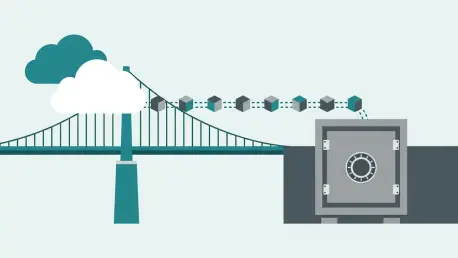
Leveraging professional backup solutions is the most effective way to establish a truly sovereign data ecosystem that functions independently of any single provider. This technical autonomy allows businesses to maintain a 1:1 copy of their repositories and metadata, ensuring that development can continue even if the primary cloud service remains offline.
The rise of cross-platform mobility has further empowered organizations to migrate their entire codebase between competitors using automated mapping tools. This innovation in data portability is a direct disruptor to traditional cloud provider lock-in, as it allows for a seamless transition to hybrid or on-premises environments where organizations have maximum control.
Securing the Software Supply Chain Through Proactive Data Governance
The necessity of active data sovereignty became undeniable as organizations shifted away from passive reliance on third-party cloud stability. By prioritizing redundant development lifecycles, technical leaders effectively mitigated the risks of ransomware and infrastructure failure before they could impact the bottom line.
It was determined that the only way to safeguard the future of software delivery was through the implementation of technical autonomy. Investing in these sovereign management practices ensured that the software supply chain remained resilient against the escalating frequency of cloud-based outages and evolving cyber threats.