
The rapid erosion of manual coding as the primary barrier to software creation has forced a total revaluation of what it actually means to be a professional engineer in a world saturated by autonomous intelligence. As the industry moves further away from the era of handcrafted syntax, the tools used to build digital products are undergoing a metamorphosis. The traditional editor is no longer a canvas for text but is becoming a high-level cockpit for the management of complex, multi-agent systems.
The Great Decoupling of Software Development and Manual Syntax
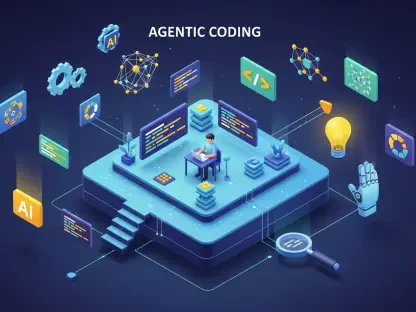
The software industry is witnessing a fundamental shift as the traditional Integrated Development Environment transitions from a simple text editor to a strategic oversight platform. This evolution is driven by the rise of autonomous AI agents capable of handling nearly the entire production cycle, moving the primary task of a developer away from manual line-by-line coding toward systemic guidance. As major market players push the boundaries of agentic capabilities, the significance of the human role is being redefined from a technician of syntax to a curator of complex digital ecosystems.
This decoupling signifies that the mechanical act of writing code is becoming a secondary skill compared to the ability to supervise and verify automated outputs. High-level engineers now spend more time reviewing logic flows and architectural integrity than debugging semicolon errors or memory leaks. This transition is not merely a change in workflow but a structural reorganization of labor where the human remains the ultimate arbiter of intent while the AI handles the exhausting labor of implementation.
Analyzing the Shift Toward Agentic Orchestration and Rapid Production
The Rise of Org Code and Organizational Architecture as the New Standard
One of the most significant trends is the transition from writing functional code to designing what experts call Org Code, where developers replicate corporate hierarchies within AI agent networks. These structures can mirror the rigid chains of command found in traditional firms or the more fluid, web-based communication styles of modern startups. These agentic organizations are entirely software-defined, allowing for the versioning, forking, and sharing of entire digital workforces as if they were simple script files.
The value in this new market lies in the arrangement of authority and the specific communication protocols established between different AI units. By defining how agents report to one another and how they resolve internal conflicts, architects create a resilient framework for production. This behavior reflects a broader shift where the engineering focus moves to the high-level orchestration of these digital employees, ensuring that the collective output aligns with the broader goals of the enterprise.
Quantifying the Compression of Software Engineering Timelines
Current performance indicators reveal a radical acceleration in development speed that was previously considered impossible. Industry data suggests that tasks which once required a full engineering team an entire year to complete can now be executed by coordinated agent fleets in a single hour. This compression has fundamentally changed the economics of software, as the cost of generating code approaches zero, making the speed of iteration the primary competitive advantage for modern firms.
As code production becomes instantaneous, the business value of engineering is migrating rapidly toward the management layer. The massive surge in parallel workflows created by these agents has generated a demand for a sophisticated command center capable of tracking hundreds of simultaneous processes. Without this oversight, the sheer volume of code being generated could easily overwhelm traditional quality control mechanisms, leading to a bottleneck at the point of human review.
Navigating the Technical and Cognitive Hurdles of Agent Management
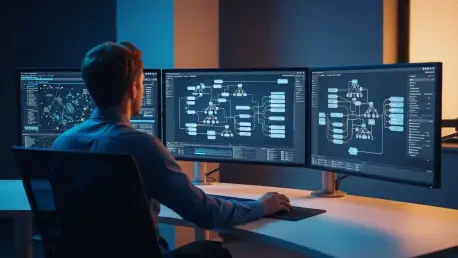
As developers transition to managing fleets of AI agents, they face significant obstacles related to cognitive overhead and the limitations of legacy infrastructure. The industry is currently struggling with the lack of tools specifically designed for high-level orchestration, often relying on outdated methods like terminal multiplexers to monitor multiple active processes. These workarounds are proving inadequate for the scale of modern development, where a single architect might oversee dozens of agents working across different modules simultaneously.
Overcoming these challenges requires the development of new interfaces that provide real-time visibility into agent statuses and tool usage across multiple screens. The ability to toggle between active and idle units without losing system coherence is a technical necessity that has yet to be fully realized in mainstream tools. Until these management platforms catch up with the capabilities of the agents themselves, engineers will continue to face a fragmented view of their own production environments.
Establishing Governance and Security for Autonomous AI Workforces
The transition to agent-led development introduces a complex regulatory landscape focused on the accountability and security of autonomous systems. As these agentic organizations become more portable and easily replicated, new standards for compliance and safety must be established to prevent the misuse of automated fleets. Ensuring that these systems adhere to industry-wide security measures is essential, particularly when AI agents are granted the authority to modify production environments and handle sensitive data without direct human intervention.
Governance frameworks are evolving to require strict audit trails for every action taken by an autonomous agent. This transparency is necessary not only for security but also for debugging the organizational logic that governs the fleet. As agents take on more responsibility, the legal and ethical implications of their outputs become the responsibility of the system architect, who must ensure that the digital workforce operates within the boundaries of both corporate policy and international law.
The Future of the Software Architect as a Fleet Manager
Looking ahead, the role of the software engineer will fully transform into that of a systems architect or fleet manager. Innovation will focus on the creation of a sophisticated management layer that treats AI agents as modular components of a global digital workforce. Potential market disruptors include platforms that allow for the seamless forking of entire corporate structures, enabling rapid scaling of software solutions influenced by global economic conditions and the decreasing cost of intelligence.
The focus will eventually shift toward the optimization of these agent networks to maximize efficiency and reduce redundant computation. Software architecture will no longer be about the relationship between data structures, but about the relationship between intelligent entities. This evolution suggests that the most successful engineers will be those who can design the most effective social and professional structures for their AI teams to inhabit.
Synthesis of the New Paradigm in Software Engineering Infrastructure
The reimagining of the development environment as a command center marked a pivotal moment where the human element focused on hierarchy and organizational design rather than execution. To remain competitive, organizations invested in the infrastructure necessary to coordinate autonomous teams and managed the shift toward software-defined organizational code. The ultimate prospect for the industry resided in the effective orchestration of these systems, which turned the irony of AI-driven production into a new frontier for innovation. These advancements established a foundation where the management of digital intelligence became the core competency of the modern enterprise. Progress in this field eventually required a total departure from the text-based interfaces of the past, as firms prioritized the high-level control of agentic behavior over the manual manipulation of codebases. Success was determined by how well a firm could deploy and govern its automated workforce in an increasingly volatile market.