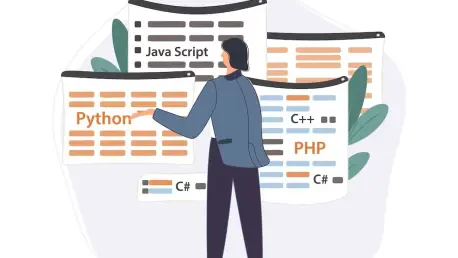

The relentless forward march of technology suggests a digital graveyard filled with obsolete code, yet the ghosts of programming’s past continue to operate the machinery of the modern world with surprising vigor. In an industry defined by its insatiable appetite for the next disruptive innovation, a peculiar reality persists: the foundational systems governing global finance, national defense, and critical scientific research often run on languages conceived when computers filled entire rooms. This is not an oversight or a failure to modernize, but a testament to a different set of engineering principles, where stability outweighs novelty and pragmatism triumphs over passing trends. The story of their survival is a crucial lesson in economic sense, risk management, and the surprising resilience of well-designed technology.
The Glitch in the Hype Cycle Why Yesterdays Code Still Runs the World
In the fast-paced world of software development, the prevailing philosophy often suggests that newer is inherently better. Developers are constantly encouraged to adopt the latest frameworks, libraries, and languages that promise increased productivity and more elegant solutions. Yet, a closer look at industry metrics reveals a counternarrative that challenges this assumption. Languages born in the mid-20th century, such as Ada and C, have not only persisted but have also shown surprising resurgences in programming popularity indexes. This phenomenon is not a fleeting trend driven by nostalgia; it is a clear indicator that a significant portion of the digital infrastructure relies on technology that has been tested and proven over decades.
This endurance directly confronts the tech industry’s obsession with a perpetual hype cycle. While headlines may focus on the latest advancements in machine learning or the newest JavaScript framework, the silent, uninterrupted operation of global banking systems, air traffic control networks, and advanced scientific modeling depends on code written long before the modern internet existed. The persistence of these languages represents a glitch in the expected narrative of obsolescence, forcing a reevaluation of what truly constitutes value in software engineering. Their continued use underscores a fundamental truth: in high-stakes environments, reliability and predictability are far more valuable currencies than novelty.
Beyond Nostalgia The Billion Dollar Dilemma of Legacy Systems
The decision to maintain decades-old codebases is often rooted in a fundamental difference between the operational models of nimble startups and established “megacorps.” A startup, fueled by venture capital and a high-risk tolerance, might reasonably choose to build its entire platform on a trendy, unproven technology stack, effectively burning through its seed round in pursuit of a competitive edge. For large, multinational corporations in sectors like finance, insurance, and logistics, however, the calculus is entirely different. Their operations are built on vast, complex systems that have been refined over generations of development, representing billions of dollars in investment and intellectual property.
For these organizations, maintaining a time-tested codebase is not a sign of stagnation but a deliberate and pragmatic business decision. These legacy systems are not merely functional; they are highly optimized, thoroughly debugged assets that continue to generate real dividends. The notion of replacing them wholesale with a new language or architecture introduces an almost incalculable level of risk. Such a project would involve immense cost, years of development, and the high probability of introducing subtle, critical bugs into a previously stable environment. Consequently, the smarter financial and engineering choice is often to leverage and incrementally modernize these existing assets rather than discard them. This transforms the conversation from a historical curiosity into a crucial issue of economic prudence and sound engineering practice.
The Three Pillars of Persistence What Keeps Old Languages Alive
One of the core arguments for the preservation of older code is deceptively simple: software logic does not wear out or rot over time. Unlike physical machinery, a perfectly debugged algorithm will perform its function with the same precision on its ten-thousandth execution as it did on its first. The immense risk and cost associated with replacing these systems often outweigh any perceived benefits offered by the latest syntactic sugar or a new programming paradigm. Introducing a new codebase means introducing a new universe of potential errors, many of which may only surface under specific, hard-to-replicate conditions. This principle of “if it ain’t broke, don’t rewrite it” is the bedrock of legacy system maintenance. A prime case study is COBOL, the language that has served as the backbone of global finance and insurance since 1959. For the institutions that rely on it, where the stability of transactions is non-negotiable, the proven reliability of its code is an asset that cannot be easily replaced.
Beyond general stability, many older languages have secured their longevity by dominating a specific, high-value niche. This specialization creates a permanent and unwavering demand that insulates them from the shifting trends of general-purpose programming. Fortran, for instance, remains a dominant force in the hard sciences and high-performance computing. Its syntax was designed from the ground up for numerical computation, making it the ideal tool for complex simulations in fields like weather forecasting and fluid dynamics. Similarly, Ada has carved out an essential role in high-integrity systems where failure could be catastrophic. Born from a U.S. Department of Defense initiative, it is the language of choice for mission-critical software in the defense and aerospace industries, from flight control systems to satellite operations. In these domains, the language is not just a tool but an integral part of a rigorous engineering discipline.
Furthermore, the notion that these languages are static relics is a pervasive myth. In reality, they have undergone consistent evolution, receiving a fresh coat of paint through regular updates that incorporate modern features. This process of evolution, not stagnation, allows them to remain relevant and usable in a contemporary development environment. For example, modern COBOL standards have introduced object-oriented extensions, while the Ada 2022 standard includes sophisticated structures for creating stable, bug-free parallel operations. This continuous modernization is supported by a robust ecosystem of modern compilers, like GnuCOBOL and Intel Fortran, and integrated development environments (IDEs) such as Delphi for Pascal, ensuring that developers can work with these venerable languages using the same principles and tools they would apply to any other modern tech stack.
From the Trenches Evidence and Anecdotes of Enduring Relevance
The influence of older languages often extends far beyond their own direct usage, most notably through their syntax. The C-style syntax, with its use of curly braces and familiar control structures, continues to sail on in a multitude of modern languages. Its direct descendants—C, C++, C#, and Objective-C—form a powerful family of related but distinct languages. Moreover, its influence is so profound that even unrelated languages like Java adopted a syntax that is heavily derived from it. While the underlying code is not interoperable, the immense and unwavering popularity of the C-style syntax itself has created a shared vocabulary for millions of developers, ensuring its core concepts remain perpetually at the forefront of software development.
A programming language is more than just its syntax; its true power often lies in its ecosystem. Massive, community-driven repositories provide a library of pre-written code that can solve a vast array of common problems, saving developers countless hours of work. The Comprehensive Perl Archive Network (CPAN) stands as a monumental example, offering over 220,000 modules that keep the language powerful and practical for its dedicated user base. While newer languages may have taken over some of its former territory, Perl’s concise syntax and the unparalleled breadth of CPAN ensure it remains a formidable tool for system administration and text processing, as reflected in its recent surge within the Tiobe popularity index as of 2025.
Beyond the hard data and technical specifications lies a human element rooted in experience and, admittedly, a touch of nostalgia. Many veteran programmers recall with fondness the lightning-fast compilation of tools like Turbo Pascal, a stark contrast to the experience of waiting for some endless React build cycle to finish. This is not merely a sentimental longing for simpler times but a reflection of a tangible engineering reality: older, more focused tools were often incredibly efficient at their designated tasks. Pascal, originally created as a teaching language, continues to exist in modern forms, with compilers like Delphi still promising to build applications significantly faster than many contemporary alternatives, proving that the lessons from the past still hold value today.
The Legacy Playbook Practical Strategies for an Aging Tech Stack
The spirit of maintaining older code is not exclusive to languages from the 20th century; it is a discipline actively practiced within modern development communities. The Python ecosystem, for instance, embodies this principle through the widespread use of virtual environments. Because new versions of Python often introduce breaking changes, developers routinely use tools like “venvs” to lock in ancient versions of the language and its libraries. These environments function as digital time capsules, allowing legacy applications to continue running faithfully without modification. This practice demonstrates that supporting older code is not an arcane art but a standard, professional strategy for ensuring long-term stability and backward compatibility.
Another powerful strategy for leveraging older technology is to bridge the gap between traditional logic and modern services. Languages like Visual Basic excel in this role, empowering users to combine simple, time-tested programming constructs with the immense capabilities of the contemporary cloud. A developer can use straightforward loops and if-then-else statements to orchestrate complex workflows that interact with modern databases, third-party APIs, and even large language models. This hybridization turns a seemingly dated language into a potent tool for automation and integration, proving that its value lies not in competing with modern frameworks but in complementing them.
Ultimately, the enduring relevance of these languages calls for a fundamental shift in mindset for both developers and businesses. Instead of viewing legacy systems as a form of technical debt that must be eliminated at all costs, it is more productive to see them as stable, valuable assets. The optimal playbook is not one of wholesale replacement but of strategic maintenance, modernization, and integration. By appreciating the proven reliability of these systems and finding innovative ways to connect them to new technologies, organizations can leverage their most dependable assets while still embracing the future.
The exploration of these digital mainstays revealed that their longevity was not an accident but a direct result of pragmatic engineering, sound economic reasoning, and a commitment to continuous evolution. The persistence of languages from COBOL to C was not a failure to innovate but a success in building systems so reliable and so deeply embedded in critical infrastructure that replacing them would be an act of profound disruption. As technology continues to accelerate, the principles these languages championed—stability over hype, specialization where needed, and evolution over revolution—provided an enduring blueprint for constructing the resilient and dependable systems that society will rely on for decades to come.