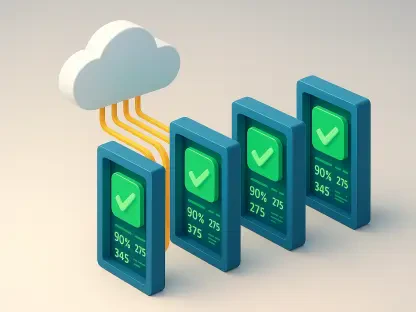

Organizations currently face a complex paradox where the pursuit of aggressive fiscal growth must align with increasingly stringent global environmental standards and carbon footprint transparency requirements. This duality has accelerated the transition from traditional on-premise server rooms to sophisticated cloud environments that support distributed workforces. For technology leaders, the primary driver remains the bottom line, yet the secondary benefit of reduced greenhouse gas emissions is becoming a critical metric for investor relations and regulatory compliance. Shifting to a cloud-first strategy allows a company to dismantle the energy-intensive physical offices that once served as central hubs. Instead of maintaining climate-controlled rooms for racks of underutilized servers, businesses now leverage the massive economies of scale offered by hyper-scale providers who optimize every watt of power consumed for computation and storage across specialized facilities.
Operational Efficiency and Financial Stewardship
Strategic Capital Allocation: From Fixed to Variable Costs
Moving to cloud-based environments significantly alters the financial landscape of a corporation by converting unpredictable capital expenditures into manageable, recurring operational costs that scale with actual usage. In the current economic climate of 2026, companies often find that maintaining local data centers requires constant hardware refreshes and specialized staff, which bloats the annual budget without providing a competitive advantage. Cloud providers offer high-density computing environments where resources are shared among thousands of tenants, drastically lowering the cost per unit of compute power for everyone involved. This consolidation eliminates the financial waste associated with “zombie servers”—hardware that remains powered on but performs no useful work—which historically accounted for much of IT spending. By migrating to the cloud, remote teams ensure they only pay for the exact bandwidth and processing power needed to facilitate their specific projects.
Resource Management: Automation for Distributed Teams
The agility provided by software-as-a-service platforms further enhances cost savings by automating many administrative tasks that previously required manual intervention and high labor costs. Distributed teams can deploy sophisticated development environments or customer service tools in minutes rather than weeks, bypassing traditional procurement cycles that often resulted in over-purchasing hardware. Modern cloud-native tools provide deep visibility into spending patterns, allowing finance departments to pinpoint inefficiencies and adjust resource allocation in real-time based on fluctuating demand. This level of granularity ensures that financial resources are directed toward innovation rather than infrastructure maintenance, which is essential for a lean operational profile. Consequently, the cloud functions as a financial stabilizer that protects the enterprise from the volatility of hardware markets and the high overhead of physical workspace maintenance.
Environmental Integrity through Technological Innovation
Infrastructure Optimization: Decarbonizing the Digital Supply Chain
Environmental impact is no longer a peripheral concern for major corporations but a core component of digital strategy as carbon pricing and green reporting become standard across most jurisdictions. Transitioning to a distributed model powered by the cloud inherently reduces the total carbon output of an organization by eliminating the daily commute and the energy requirements of large-scale office buildings. Research indicates that modern hyper-scale data centers are significantly more energy-efficient than typical corporate server rooms due to advanced cooling technologies and custom hardware that maximizes performance per watt. Many of these facilities are now powered by 100 percent renewable energy sources through long-term power purchase agreements that stabilize the green energy market. This shift allows remote teams to benefit from a decarbonized supply chain without having to invest directly in infrastructure, making sustainability an accessible goal for any business.
Strategic Implementation: Long-Term Benefits of Cloud Adoption
In light of these developments, forward-thinking organizations recognized that the integration of cloud technology was the only viable path to achieving long-term sustainability goals while simultaneously improving the bottom line. Decision-makers implemented rigorous audits of their digital footprints to identify opportunities for migrating legacy systems to more efficient, carbon-neutral environments. It became clear that the most successful teams were those that treated their cloud migration as a continuous optimization process, constantly refining their workloads to minimize both costs and carbon output. Leaders prioritized the selection of cloud partners based on their transparency regarding energy sources, turning green credentials into a primary procurement criterion. This strategic alignment between environmental responsibility and financial discipline ensured that businesses remained resilient. Ultimately, the adoption of a cloud-first architecture proved to be a transformative decision for the enterprise.