
The evolution of digital labor has reached a critical juncture where the distinction between chatting with a machine and delegating complex enterprise operations has finally dissolved into a unified agentic ecosystem. OpenAI has fundamentally redirected its strategic focus from the creation of simple conversational chatbots toward the deployment of “agentic” solutions capable of autonomous task execution. This pivot addresses a mounting demand within the corporate sector for technology that does not merely provide information but actively performs work within the existing software stacks used by global enterprises.
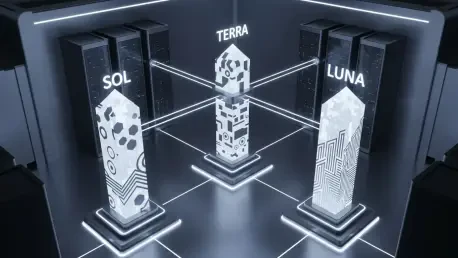
This new ecosystem revolves around the integration of specific platforms and high-performance models designed to operate as a cohesive unit. At the center of this transformation is ChatGPT Work, a platform engineered to interact directly with third-party tools such as Microsoft 365, Google Drive, Slack, and Notion. Supporting this platform is the GPT-5.6 model family, which includes three specialized tiers: Sol, Terra, and Luna. This structure allows organizations to move away from a one-size-fits-all approach, focusing instead on a “performance per dollar” metric that ensures every computational cycle contributes directly to business value.
The shift is particularly relevant as modern corporations look to optimize their internal workflows without adding to the administrative burden of their human staff. By transitioning AI from a reactive chat interface to an active participant in business processes, OpenAI is attempting to solve the fragmentation problem where data is often trapped within separate applications. These tools are no longer being evaluated solely on their linguistic fluency but on their ability to manage a project from inception to completion across various digital environments.
Comparative Analysis of Functional Architecture and Performance
Autonomous Agency vs. Raw Model Intelligence
The primary distinction between ChatGPT Work and the GPT-5.6 family lies in their functional roles within the enterprise. ChatGPT Work serves as the orchestrator, acting as the interface between the user’s intent and the vast array of available software tools. While the underlying models provide the intelligence, the platform itself manages the logistics of multi-step projects. For example, if a user needs to pull data from multiple spreadsheets to draft a series of Slack messages, ChatGPT Work handles the navigation between Google Drive and the messaging platform, ensuring the data remains consistent throughout the process.
In contrast, GPT-5.6 acts as the computational engine that powers these interactions. The transition from individual prompting to complex workflow delegation means that the model is no longer just answering questions; it is executing long-running tasks. This includes high-level operations such as financial modeling and website creation, where the AI must maintain a coherent logic over extended periods. The synergy between the orchestrator and the engine allows for a level of autonomy that was previously unattainable, moving the needle from simple text generation to complete digital employment.
The Economics of Intelligence: Tiered Modeling and Pricing
OpenAI has structured the GPT-5.6 family into three distinct tiers to address the varying economic needs of modern businesses. The flagship model, Sol, is designed for frontier reasoning and the most demanding professional tasks. Terra serves as the mainstream corporate workhorse, balancing high-level capabilities with more sustainable operational costs for daily business functions. For high-volume, low-cost operations where speed is the priority, Luna provides a streamlined alternative. This tiered approach is specifically designed to target and eliminate the “bill shock” that many companies encountered during earlier stages of AI adoption.
The financial metrics associated with these models reflect a strategic move toward predictable enterprise spending. Sol is priced at $5 per million input tokens and $30 per million output tokens, establishing a clear cost-to-value ratio for high-stakes reasoning tasks. By offering these specific tiers, OpenAI allows companies to route their workloads based on the complexity of the task at hand. This granularity ensures that a company is not paying for frontier-level reasoning when a simpler task, such as basic data entry or high-volume customer support, could be handled more efficiently by the Luna model.
Technical Benchmarks and Specialized Operational Modes
Technical performance is further enhanced through specialized operational modes known as “Max Mode” and “Ultra Mode.” Max Mode is dedicated to deep logic, allocating significant compute resources to solve intricate problems that require extensive reasoning. Conversely, Ultra Mode utilizes a new architectural approach where four AI agents are coordinated in parallel. This mode prioritizes the speed and strength of results over token conservation, making it ideal for the most demanding real-time workflows that require rapid coordination across different agentic roles.
Standardized scoring reinforces the dominance of these models in the professional sphere. GPT-5.6 Sol achieved a notable score of 53.6 on the “Agents’ Last Exam,” a benchmark specifically designed to measure an AI’s ability to handle long-running, complex tasks without human intervention. Additionally, it secured a score of 80 on the Artificial Analysis Coding Agent Index. These benchmarks are significant because they highlight the model’s ability to produce high-quality, actionable output while consuming fewer tokens than previous versions, indicating a higher level of “intelligence density.”
Implementation Obstacles and Security Considerations
Moving AI into a defensive “blue teaming” role has required extensive cybersecurity safeguards. OpenAI conducted over 700,000 GPU hours of automated red-team evaluations to identify and mitigate potential vulnerabilities before the global release. The effectiveness of these measures is visible in the model’s performance on ExploitBench, where it achieved a score of 73.5%. This capability allows the model to assist in secure code reviews and threat modeling, providing a layer of protection for enterprises as they integrate these agents deeper into their internal systems.
However, the practical implementation of these tools presents challenges regarding governance and data privacy. Granting autonomous agents access to sensitive internal file systems within Microsoft 365 or Google Drive requires a robust security framework that many organizations are still building. Maintaining control over what an agent can see and do remains a top priority for CIOs who must balance the desire for productivity with the necessity of data sovereignty. The complexity of cross-application orchestration demands a high degree of transparency to ensure that the AI does not deviate from its intended mission.
Strategic Guidance for Corporate AI Adoption
The analysis demonstrated that the transition from experimental AI to production-grade workloads required a fundamental change in how corporations viewed digital labor. Organizations successfully navigated this shift by focusing on the intersection of autonomy and economic efficiency. The evidence showed that the most effective implementations utilized the tiered model structure to optimize their technology spend, ensuring that the cost of intelligence remained aligned with the value of the output. This approach mitigated the risks of overspending while maximizing the reach of AI across different departments.
Workload routing emerged as a critical strategy for maintaining operational balance within the enterprise. Companies that adopted Luna for high-speed, high-volume tasks and reserved Sol for high-stakes professional reasoning achieved a more sustainable return on investment. The decision between implementing ChatGPT Work as a comprehensive digital employee or utilizing specific GPT-5.6 API tiers depended largely on the existing technical infrastructure and the specific needs of the business. Ultimately, the adoption of these tools signaled a mature phase of integration where AI became a permanent and predictable component of the global workforce.