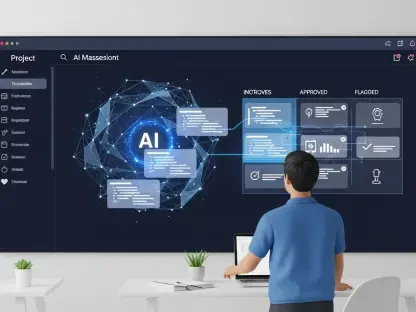

In a climate where many industrial companies are tightening their belts, Anand Naidu, our resident development expert, offers a counter-narrative of strategic growth. We sat down with him to discuss why manufacturers are now prioritizing resilient, long-term platforms over short-term cuts, a trend underscored by impressive cloud adoption and a strategic pivot toward AI-driven operations. Our conversation explores the structural shift to SaaS, the drivers behind remarkable customer retention, and how targeted acquisitions are shaping the future of industrial software.
With many manufacturers facing economic uncertainty, what specific outcomes are they demanding from new IT investments? Can you describe the shift from short-term cost-cutting to prioritizing platforms that offer long-term operational resilience and a clear, measurable return on investment?
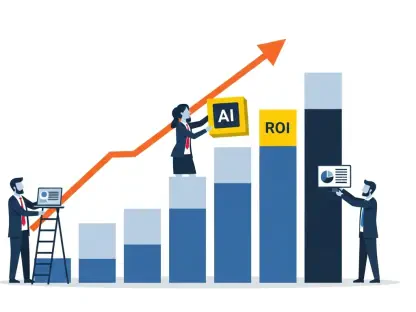
There’s a palpable shift in the conversations we’re having. A few years ago, the focus might have been on a quick, one-off project to reduce an immediate cost. Now, with all the volatility in the market, leaders are asking much deeper questions. They’re not just looking for savings; they’re looking for survival and scalability. They want to know, “How will this platform help us withstand the next supply chain disruption? How will it enable us to scale up or pivot without a massive reinvestment?” The demand is for operational resilience—a system that is foundational, not experimental. They are moving past the hesitation and investing in platforms that offer a very clear, measurable return by making their entire operation more robust and adaptable for the long haul.
With cloud bookings growing 30% and recurring revenue now at 74% of total, what is accelerating this structural shift to SaaS among industrial companies? Can you detail the process and typical timeline for migrating a long-standing, on-premises customer to a subscription-based cloud model?
That 30% growth in cloud bookings isn’t just a number; it’s a clear signal that the industrial mid-market has reached a tipping point. The caution is giving way to conviction. We’ve seen our recurring revenue jump from 50% to 74% since 2021, which shows this isn’t a fad—it’s a fundamental change in how our customers want to operate. Migrating a long-standing customer is a delicate process, built on trust. It’s not about flipping a switch. It begins with mapping their current on-premises workflows and showing them a clear path to a more agile SaaS model. We work hand-in-hand with their teams to ensure business continuity, often phasing the migration. The timeline varies, but the core objective is to transform their relationship with technology from a static, license-heavy model to a dynamic, subscription-based partnership that evolves with their business.
A 114% net revenue retention rate suggests customers are expanding their investment significantly. What specific cloud modules or services are they adding, and how does your product roadmap align with their growing operational scope? Please provide a specific example of this expansion in action.
A 114% NRR is incredibly affirming because it proves we are not just keeping customers happy; we’re growing with them as essential partners. This kind of expansion doesn’t happen by accident. A typical journey starts with a company implementing our core cloud ERP. Once they see the stability and efficiency gains, their confidence skyrockets. Soon, they are coming to us to solve adjacent problems. For example, they might add a specialized analytics module to get deeper insights into production efficiency or a supply chain visibility tool. Our roadmap is built on this exact feedback loop. We see where our most successful customers are expanding their operational scope, and we build or acquire the capabilities to meet them there. That high retention rate tells us our product direction is strongly aligned with their real-world needs.
Your strategy involves evolving beyond traditional ERP into a fully AI-enabled platform. How do you position AI as a core layer rather than an add-on, and what practical steps are involved in combining in-house development with capabilities gained through targeted acquisitions to achieve this?
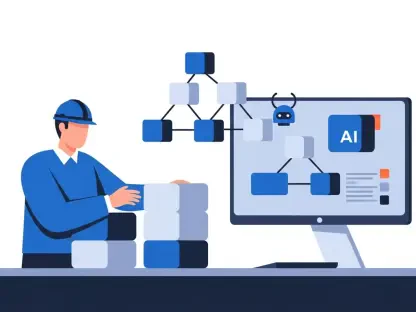
The very concept of ERP as just a system of record is becoming obsolete. We see AI as the central nervous system of a modern industrial operation, not just a fancy feature you bolt on. For us, positioning it as a core layer means embedding intelligence into every process—from predictive maintenance alerts in the factory to intelligent forecasting in the back office. Our approach is two-pronged. First, our in-house teams are focused on building the foundational AI framework that unifies our entire ecosystem of services. Second, we strategically acquire companies with deep, proven AI capabilities in specific areas. This isn’t just about buying technology; it’s about buying expertise and accelerating our roadmap, ensuring the AI we deliver is practical, powerful, and seamlessly integrated from day one.
Recent acquisitions added over €100 million in revenue and strengthened vertical expertise. Can you explain the strategy behind this purpose-built expansion? Please share an example of how integrating a company like TARGIT or Orgadata deepened analytics capabilities for a specific industrial sector.
Our M&A strategy is surgical. We are not interested in broad consolidation; we’re focused on what we call purpose-built expansion. That €100 million in added revenue is a result of acquiring companies that are leaders in their specific industrial domains. Take TARGIT, for example. We didn’t just acquire a business intelligence tool; we integrated a team with decades of experience in creating analytics solutions specifically for manufacturers. This allows us to offer our customers in that sector incredibly rich, out-of-the-box dashboards and decision-support systems that understand their unique KPIs. Similarly, integrating a specialist like Orgadata brings deep domain knowledge that we can then leverage across our entire platform, making it smarter and more valuable for everyone. It’s about adding vertical depth, not just horizontal scale.
What is your forecast for the industrial mid-market in the next 18-24 months?
My forecast is that the trend toward selective, outcome-driven investment will intensify. The days of speculative IT projects are over. In the next 18-24 months, industrial mid-market companies will double down on platforms that deliver demonstrable resilience and intelligence. We’ll see an acceleration of cloud migration as businesses demand more flexibility to navigate economic pressures. The winners will be vendors who can prove their value not just with a good sales pitch, but with hard data showing how their platform directly improves operational efficiency and provides a clear competitive edge. Intelligence will become the new currency, and platforms that have AI at their core will become the foundational pillars for the next generation of industry leaders.