
The promise of rapid digital transformation through cloud-based enterprise resource planning systems has increasingly collided with a harsh operational reality that threatens to overwhelm even the most sophisticated IT departments across the globe. Recent industry data indicates that while the frequency of software updates from major cloud providers has accelerated to provide new features and security patches, the internal capacity of organizations to absorb these changes remains dangerously static. This growing discrepancy, often referred to as a cloud velocity crisis, creates a bottleneck where innovation is stalled by the sheer weight of maintenance and validation requirements. Instead of focusing on strategic growth or market differentiation, technical teams find themselves perpetually reacting to a never-ending cycle of minor upgrades and configuration adjustments. This situation is further exacerbated by the complex web of interconnected applications that define modern business environments, making every small update a potential risk to core operations. Achieving a balance between speed and stability is now the primary challenge for leadership teams attempting to realize the full value of their cloud investments without sacrificing reliability.
Managing the Financial and Operational Toll of Modern Infrastructure
The Financial Strain of Multi-Cloud Integration Sprawl
Economic data from recent industry research suggests that 61% of technology leaders now identify integration as their most significant expense, often eclipsing the costs associated with testing or general system support. As enterprises moved away from monolithic on-premise architectures toward diverse multi-cloud environments, the sheer volume of connections between various platforms created what experts call integration sprawl. These connections, once viewed as simple data bridges, have evolved into permanent operational burdens that require constant monitoring and frequent troubleshooting to prevent systemic failures. The financial drain associated with maintaining these digital threads has become a primary obstacle to achieving the expected return on investment from cloud migrations. Managing such a landscape requires a level of oversight that many firms were not prepared for when they initially adopted best-of-breed software strategies. Consequently, the focus has shifted from mere connectivity to the sustainable governance of a highly fragmented technology ecosystem that demands continuous attention and capital.
Overcoming the Limitations of Manual Configuration Management
The sheer pace of innovation from software-as-a-service providers has led to a situation where over 40% of organizations admit they are no longer able to keep up with standard release cycles. When a provider pushes a major update, the internal burden of configuring new features and verifying that they do not break existing customizations often proves to be a major hurdle for more than half of all surveyed enterprises. This resource imbalance creates a precarious environment where technical debt accumulates rapidly because teams simply lack the bandwidth to implement every new capability offered. As a result, many businesses find themselves stuck on older versions of cloud software or using only a fraction of the features they are paying for, which nullifies the agility that cloud computing was supposed to provide. To bridge this gap, organizations must reconsider how they allocate human capital toward the repetitive tasks of software validation and configuration management. Without a fundamental change in how updates are handled, the gap between available technology and actual business utility will only continue to widen.
Building a Resilient Infrastructure for Continuous Delivery
Addressing Production Failures Through Intelligent Automation
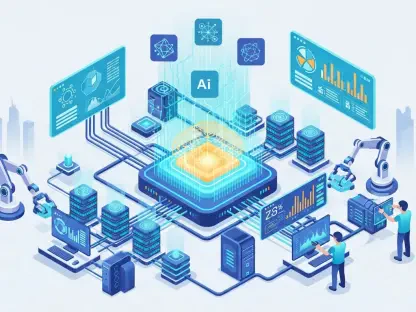
In response to the productivity gap, a clear strategic shift is occurring as approximately 80% of enterprise leaders express a strong interest in adopting advanced automation and agentic artificial intelligence. Unlike traditional automation, which follows rigid scripts, agentic AI has the capacity to understand context and make informed decisions during the testing and integration processes. This technology offers a promising solution to the resource constraints that have historically forced companies to rely on expensive external consultants for routine maintenance. By deploying intelligent agents that can autonomously identify potential points of failure and suggest remediation steps, organizations can drastically reduce the time and cost associated with every new software release. This shift towards more intelligent systems marks the beginning of a new era in application lifecycle management where human intervention is reserved for high-level strategic decision-making rather than repetitive manual tasks. The adoption of such technologies is no longer a luxury but a necessity for firms looking to stay competitive in a landscape defined by constant technological evolution.
Strategic Shifts Toward Proactive Lifecycle Management
The organizations that successfully navigated the cloud velocity crisis took decisive steps to modernize their approach to application lifecycle management through the adoption of autonomous technologies. They recognized that the traditional reliance on manual testing and external consultancy was no longer a viable path forward in an environment where updates arrived weekly rather than annually. These leaders invested in agentic AI and continuous validation tools that allowed their systems to adapt to changes with minimal human intervention, thereby safeguarding their business continuity. By refocusing their IT resources on strategic innovation rather than routine maintenance, these firms achieved a level of operational agility that was previously unattainable. They also prioritized the training of their internal teams to manage these new intelligent systems, ensuring that the human element remained central to the overall digital strategy. In the end, the solution to the velocity crisis was found not in slowing down the pace of change, but in building the sophisticated infrastructure necessary to manage that change at scale.