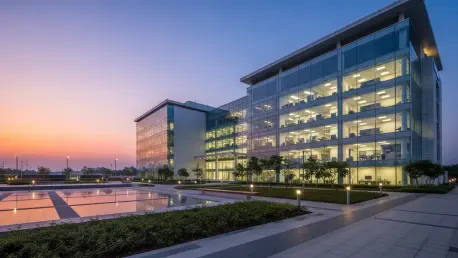

The landscape of enterprise resource planning is undergoing a seismic shift as companies prioritize localized engineering expertise over simple administrative outsourcing. Acumatica recently inaugurated its Global Capability Center in the high-tech Nanakramguda district of Hyderabad, India, marking a pivotal transition in its international development strategy. This facility launched with a foundational team of thirty highly skilled professionals, but the roadmap indicates a rapid acceleration in hiring to meet the mounting demand for cloud-based business solutions. By establishing this hub, the organization has signaled a departure from traditional expansion methods, opting instead to embed its core innovation engine within one of the world’s most dense technical ecosystems. This move is not merely about physical presence; it represents a commitment to scaling the underlying architecture of its platform to support a more complex global economy that requires constant adaptation.
Transitioning from Outsourcing to Global Value Integration
Historically, many software firms treated international offices as auxiliary support branches intended primarily for cost mitigation, yet the Hyderabad center operates under a fundamentally different philosophy known as global value. This approach elevates the India-based workforce to a direct peer status with established engineering units in the United States and Europe, fostering a culture of shared ownership and collaborative problem-solving. Instead of handling overflow tasks or basic maintenance, the team in Hyderabad is tasked with driving core product development and high-level architectural design. Such a structure ensures that every engineer, regardless of geography, contributes to the primary intellectual property of the organization. This parity is crucial for maintaining a unified vision across the product roadmap, allowing the company to leverage unique regional insights while ensuring that the final software remains a cohesive and powerful tool for diverse markets.
The selection of the Nanakramguda district serves as a strategic maneuver to place the organization at the heart of India’s Silicon Valley, where the proximity to other tech giants creates a competitive but fertile environment for innovation. Accessing the top-tier talent in this region allows for a more aggressive pursuit of technical milestones that would be difficult to achieve within a more centralized or limited geographic framework. By positioning the Hyderabad hub as a center of engineering excellence, the company effectively doubles down on its ability to handle complex coding requirements and system integrations. This commitment to local high-value hiring ensures that the facility evolves into a multi-disciplinary pillar capable of influencing the entire lifecycle of the software. Over time, the integration of these specialized skill sets will likely redefine how the company balances its global workload, moving from a model of regional dependence to one of distributed strength.
Advancing the Technical Roadmap: AI and Automation
As enterprise software becomes increasingly reliant on predictive analytics and intelligent processing, the Hyderabad hub is positioned to spearhead the integration of advanced artificial intelligence and machine learning into the cloud ERP suite. The technical requirements for modern business platforms have moved far beyond simple record-keeping, now demanding automated workflows and deep data insights that can identify market trends in real-time. Engineers at the new facility are focused on building these sophisticated, industry-specific features, ensuring that the software can meet the needs of mid-market companies looking for enterprise-grade tools at a manageable price. By utilizing the dense pool of local talent specializing in data science and algorithmic development, the organization can shorten the development cycle for these critical updates. This focus on high-impact technology ensures that the platform remains at the forefront of the industry, offering users high-level automation.
Operational resilience is further enhanced through a distributed development model that utilizes the Hyderabad center to facilitate a “follow-the-sun” engineering cycle across multiple time zones. This structure links the new facility with existing offices in North America, Serbia, and Sri Lanka, creating a continuous workflow where development never truly stops. When the workday ends in one region, the responsibility for ongoing projects and security monitoring transitions to the next hub, significantly reducing the latency associated with global software production. This seamless handoff is particularly vital for delivering urgent security patches and platform enhancements that protect businesses from evolving digital threats. The ability to maintain a twenty-four-hour innovation cycle provides a distinct competitive advantage, as it allows the company to respond to customer feedback and market changes with speed. Consequently, the Hyderabad hub serves as a critical link in a global chain that prioritizes uptime and security.
Strategic Scaling: Building a Sustainable Future Hub
To navigate the complexities of rapid international expansion, the organization has established a strategic partnership with Summit Consulting Services to oversee talent acquisition and operational management. This collaboration provides a structured framework for scaling the Hyderabad facility from a specialized engineering group into a mature, multi-functional organization. The initial focus on technical development is merely the first phase of a broader plan to incorporate marketing, customer success, and sales operations within the same regional ecosystem. By building this comprehensive infrastructure, the company ensures that its growth is not just rapid but also sustainable and deeply integrated into the local market. This approach allows for a more holistic management of the customer journey, as regional support teams can work in close proximity to the engineers who built the tools they are supporting. The resulting synergy between departments is expected to improve internal efficiencies and create a more responsive environment.
The establishment of the Hyderabad Global Capability Center proved that successful international expansion required a shift from transactional outsourcing to deep intellectual integration. By treating the India-based team as essential architects of the company’s future, the organization moved toward a more resilient and innovative operational model. Future considerations for enterprise software leaders focused on creating similar centers of excellence that prioritized high-value engineering over simple cost reduction. Organizations looking to scale were required to ensure that their global units possessed the autonomy and technical resources to drive core product development rather than just providing regional support. Building these multi-disciplinary hubs necessitated a long-term commitment to local partnerships and professional development, which ultimately paid dividends in the form of faster product releases and more robust software architectures. Leaders viewed this move as a blueprint for balancing global reach with specialized expertise.