
The most sophisticated enterprise resource planning systems meticulously log every transaction and data point, yet they often leave human teams to drown in the very operational complexities they were meant to simplify. For decades, the promise of enterprise software has been to create a single source of truth, but this has inadvertently created a new bottleneck: the immense manual effort required to translate data into action. This gap between information and execution, particularly within the fragmented world of procurement, has become a critical drag on efficiency, leaving companies vulnerable in an era of constant supply chain volatility. Now, a new class of technology, agentic artificial intelligence, is emerging not to offer better dashboards, but to finally do the work.
Your ERP Tracks Everything But Who Does the Actual Work
Enterprise Resource Planning (ERP) systems stand as the central nervous system for modern manufacturing and distribution companies, housing vast amounts of critical data on inventory, orders, and finances. These platforms are indispensable for maintaining a record of what has happened and the current state of operations. However, their primary function is to track and report, not to act. They generate purchase requisitions but do not engage with suppliers; they flag potential delays but do not proactively chase updates or resolve discrepancies.
This functional limitation leaves a significant operational void that is filled by human capital. Procurement teams, for example, spend countless hours manually executing the tasks that ERP systems merely prompt. They are tasked with navigating a labyrinth of supplier portals, managing an endless stream of email communications, and reconciling information across disparate spreadsheets. This repetitive, low-value work consumes the majority of their time, diverting focus from strategic activities like negotiating better terms or identifying alternative sourcing options that could build resilience and reduce costs.
The Dawn of a New Paradigm From Systems of Insight to Systems of Action
For the past two decades, the focus of enterprise technology has been on creating “systems of insight.” The goal was to provide executives and managers with increasingly sophisticated analytics, dashboards, and reports to enhance decision-making. While valuable, this approach still relied on humans to interpret the data and then manually implement the necessary actions. The result was often a delay between insight and execution, a period where opportunities were missed and problems escalated.
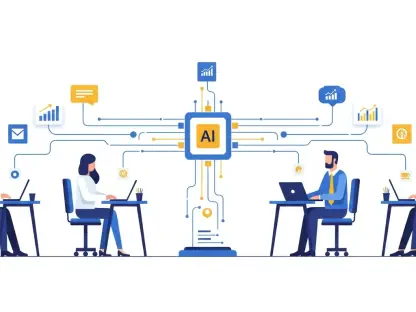
The emergence of agentic AI marks a fundamental pivot toward “systems of action.” Instead of just presenting information, this new generation of AI is designed to autonomously execute tasks within existing workflows. These AI agents function as a digital workforce, integrating directly with a company’s ERP, email, and other communication channels to perform operational duties. This shift represents not just an evolution of automation but a redefinition of the relationship between technology and human workers, where software becomes an active participant in business operations rather than a passive repository of data.
How Agentic AI Is Tackling Procurements Most Manual Workflows
In procurement, the application of agentic AI is proving to be transformative. Didero, a New York-based technology startup, has developed a platform that deploys intelligent agents to take over the most labor-intensive aspects of the procurement cycle. These agents begin by building a deep contextual understanding of the operational environment, analyzing product catalogs, supplier communication histories, pricing structures, and order data. This allows them to operate with a level of awareness previously only achievable by experienced human professionals.
Once integrated, the agents autonomously manage the day-to-day execution of procurement tasks. They handle routine supplier communications, track order confirmations, conduct automated follow-ups on shipments, and manage exceptions without human intervention. According to Tim Spencer, Co-Founder and CEO of Didero, this frees procurement teams from reactive, administrative burdens, enabling them to concentrate on strategic decision-making. As Stephen Sharr, VP of Procurement at Footprint, noted, Didero’s agents began autonomously executing “mission-critical procurement tasks for us within weeks,” highlighting the solution’s unprecedented speed and impact.
The Markets Verdict A 30 Million Vote of Confidence and Rapid Customer Adoption
The significant market appetite for such solutions was validated by Didero’s recent $30 million Series A funding round. The investment, co-led by venture capital firms Chemistry and Headline with participation from Microsoft’s M12 Venture Fund, signals strong confidence from the investor community in agentic AI’s potential to become a foundational layer for industrial enterprises. This level of financial backing is a testament to the technology’s perceived ability to solve long-standing operational inefficiencies at scale.
What has particularly impressed investors and customers alike is the platform’s rapid time-to-value. Unlike traditional enterprise software projects that can take years to implement, Didero’s solution demonstrates a tangible impact on key performance indicators within weeks. This is reflected in its remarkable customer growth; founded in late 2023, the company onboarded over 30 customers in a short period, an adoption rate rarely seen in the cautious enterprise sector. Taylor Brandt of Headline praised the company’s unprecedented “deployment velocity and customer feedback,” suggesting the market has reached a turning point in its acceptance of AI-driven operational execution.
Beyond Procurement The Strategic Roadmap for an Autonomous Supply Chain
With its new capital, Didero is set to scale its product development and go-to-market functions to meet escalating demand. The company’s immediate focus is on deepening its capabilities within procurement, but its long-term vision extends across the entire supply chain. The underlying agentic AI model is designed to be extensible, with a strategic roadmap that includes moving into adjacent functions such as sourcing, logistics coordination, and payments.
This vision points toward a future where a network of interconnected AI agents manages the end-to-end execution of supply chain operations, all while under human oversight. Such a system would not replace existing ERPs but rather serve as a dynamic, autonomous execution layer that works in concert with them. The rise of platforms like Didero has suggested that the next frontier of competitive advantage will be defined not by who has the best data, but by who can act on that data most effectively and autonomously. This shift from passive analysis to active execution represented a new chapter in enterprise automation, one where the promise of a truly intelligent and responsive supply chain finally came within reach.