
Anand Naidu is a cornerstone of the modern development community, bringing a wealth of experience in both frontend and backend engineering to the table. As a specialist in AI-driven development lifecycles, he has witnessed firsthand the transition from manual coding to the sophisticated agentic workflows that define the current landscape in 2026. Today, we sit down with him to discuss how engineering leaders are finally bridging the gap between raw AI potential and enterprise-scale execution, moving beyond isolated prompts toward a fully coordinated, autonomous system.
Considering that nearly 94% of engineering leaders are now leveraging AI, why do you think only a mere 6% have managed to build the systems necessary to scale it across the entire software development lifecycle?
The discrepancy really boils down to the difference between individual excitement and enterprise-grade infrastructure. Many teams jumped in with one-off prompts and isolated chat sessions, feeling the initial rush of generating a quick snippet of code, but they soon realized that these ad hoc moments do not translate to a reliable, governed pipeline. In my experience, the biggest bottleneck isn’t the intelligence of the models themselves—it’s the missing organizational context that makes that intelligence useful in a real-world setting. Without a shared system of record like Jira to coordinate these agents, you are essentially letting a genius intern loose without a map, a mentor, or a clear set of requirements. It is incredibly frustrating for leaders to see the potential for speed but lack the governance to ensure that what the AI produces actually aligns with the broader delivery goals of the business.
How does the introduction of tools like Code Context and the Teamwork Graph change the way agents understand the institutional knowledge that human developers often take for granted?
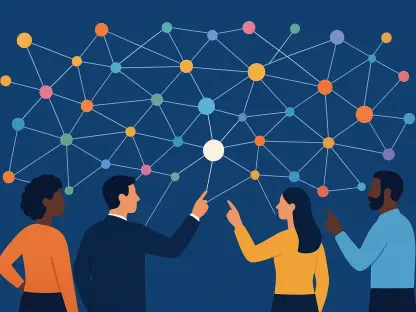
This is where the magic happens because it moves us away from generic outputs toward hyper-relevant engineering that understands the specific “why” behind the code. By grounding agents in the Teamwork Graph, we are essentially giving them a brain that can scan multi-repository codebases and understand architectural feasibility before a single line is written. I have seen agents struggle in the past because they didn’t understand the long-term roadmap or the specific standards of a project, leading to “hallucinations” that looked like functional code but failed to meet the actual requirements. Now, with Agent Context Controls, platform teams can curate exactly what information—from Confluence spaces to Jira architectural decisions—an agent can access. It feels much more secure and deliberate, ensuring the output respects our established standards and project history rather than just guessing based on generic training data.
With the move toward autonomous agent loops that scan backlogs and open pull requests, how do you see the daily role of a human developer evolving?
We are moving toward a reality where the “to-do” list starts to clear itself, which is a massive weight off any developer’s shoulders. These agent loops in Jira are designed to scan for well-defined, unassigned tasks and then delegate them to a coding agent that handles the execution, testing, and the opening of a pull request directly. For a developer, the sensory experience shifts from the grind of repetitive syntax and boilerplate setup to the high-level strategic oversight of a reviewer and architect. You are no longer stuck in the weeds of trivial bug triage; instead, you are using tools like AI review to flag issues against organizational standards before anything ever hits production. It creates a parallel processing environment where humans provide the creative spark and final approval, while the agents handle the high-volume, predictable heavy lifting.
Engineering leaders often struggle to prove the ROI of AI tools; how do new measurement capabilities like DX for Agentic Development help close the loop between observation and governance?
For the longest time, the impact of AI was a bit of a black box, but these new measurement frameworks change the conversation entirely by providing hard, empirical data. Recent analysis has shown that teams whose AI tools leverage the most context are shipping roughly 64% more per developer, which is a staggering figure for any CTO to present to a board. This isn’t just about raw speed; it’s about the “Agent Experience” and understanding which models fit which specific tasks, from vetting backlog ideas to root-cause discovery. Using the Jira Agent Usage Dashboard, a manager can correlate a specific agent session to a work item, making the entire autonomous process accountable and auditable for the first time. It replaces the “gut feeling” of AI progress with a clear map of throughput, quality, and adoption that proves the business value of human-agent collaboration.
What is your forecast for the future of AI-native software development lifecycles?
I believe we are entering an era where the distinction between writing code and orchestrating code will vanish entirely for the majority of the workforce. By the end of this year and heading into 2027, the standard will be an “always-on” development cycle where the backlog is a living entity that agents continuously groom, execute, and test in the background. We will see a shift where the vast majority of routine maintenance and bug triage is handled autonomously, leaving human engineers to focus on the 10% of problems that require deep empathy, complex negotiation, and cross-functional innovation. The Teamwork Graph will become the central nervous system of every successful technology company, and those who do not have these coordinated systems in place will simply find themselves unable to compete with the 64% efficiency gains we are already seeing today. It is a thrilling time to be an engineer because the tools are finally catching up to our imaginations, allowing us to build faster than ever before.