
The era of staring at a blinking cursor while manually architecting complex database schemas and CSS flexbox layouts has rapidly transitioned into a relic of a slower, more deliberate professional past. As of 2026, the arrival of Claude Code signifies more than just an incremental update to integrated development environments; it marks a fundamental shift in how software is conceived and executed. This tool does not merely suggest the next line of code but functions as a proactive agent capable of managing the entire lifecycle of a feature. By understanding the intent behind a prompt, it navigates the friction between high-level architectural requirements and the granular reality of syntax and deployment.
The Emergence of Agentic AI in Software Development
The transition from simple autocomplete features to fully autonomous coding agents has redefined the expectations of the modern engineering team. Traditional tools acted as sophisticated dictionaries, offering word-level completion based on statistical probability. In contrast, agentic AI operates on the principle of reasoning-driven execution. Claude Code emerged in a landscape where developers were increasingly burdened by the sheer volume of boilerplate required for modern web frameworks, providing a system that understands the context of a specific repository rather than just a general knowledge base of programming languages.
This shift matters because it alleviates the cognitive load of syntax and allows engineers to focus on system design and business logic. While previous iterations of AI required a human to copy and paste snippets back and forth, the current iteration interacts directly with the file system and terminal. This creates a cohesive environment where the AI is an active participant in the development loop, bridging the gap between a conceptual idea and a functional application.
Core Capabilities and Technical Infrastructure
Autonomous Logic Execution and Debugging
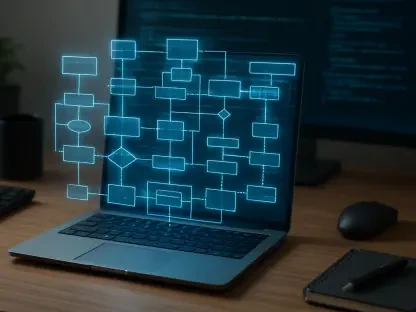
A defining technical characteristic of this technology is its ability to perform autonomous logic execution. When tasked with a problem, the agent does not simply generate a block of code and hope for the best; it initiates a cycle of writing, testing, and self-correction. If a unit test fails, the agent analyzes the stack trace and iterates on the solution until the logic holds. This internal feedback loop is a unique departure from competitors that rely on the user to provide the error logs, making Claude Code a more self-sufficient partner in the debugging process.
Seamless Full-Stack Integration
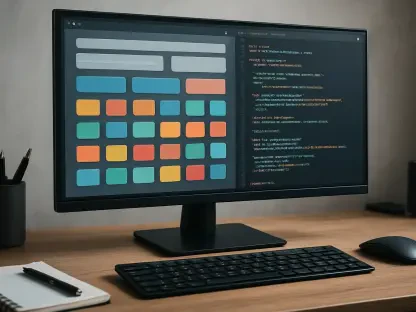
Beyond isolated functions, the infrastructure supports deep integration across the entire stack, from relational databases to intricate user interface components. The tool handles the heavy lifting of state management and API orchestration with a level of precision that reduces common human errors, such as race conditions or type mismatches. In practical usage, this means a developer can describe a complex dashboard, and the AI will configure the backend schema while simultaneously styling the frontend, ensuring that data flows correctly from the server to the client without manual intervention.
Current Trends: The Shift Toward Declarative Engineering
The industry is currently witnessing a move away from imperative “how-to” coding toward a declarative model where the objective is the primary input. In this new paradigm, the engineer acts as a supervisor, defining the “what” while the agent determines the most efficient path to achievement. This transition suggests that manual coding is becoming a niche skill, reserved for low-level optimizations or legacy maintenance, while the standard requirement for new projects is high-level orchestration.
This behavior change is profound because it democratizes the ability to build complex software. However, it also creates a significant gap between senior architects who understand the underlying principles and a new generation of developers who may never need to write a manual loop. The focus of the profession is shifting from mastery of syntax to the mastery of intent and verification.
Real-World Applications and Rapid Prototyping
The speed at which MVPs can be deployed has reached a point where 48-hour development cycles are now a standard reality for agile teams. Projects that once stalled at the 70% completion mark—often due to the tedious nature of finalizing edge cases and deployment configurations—are now being pushed to production in record time. This acceleration is particularly evident in the startup sector, where the ability to test a hypothesis in a live environment within days instead of months provides a massive competitive advantage.
Case studies have shown that long-abandoned side projects are being revived and completed through the use of these autonomous agents. By removing the “boring” parts of programming, the technology allows creators to maintain momentum and see their visions through to the end. This capability has fundamentally changed the economics of software creation, lowering the barrier to entry while simultaneously raising the ceiling for what a single individual can accomplish.
Technical Barriers and the Psychological Toll
Despite the efficiency, the technology faces hurdles such as context window constraints and the complex legal landscape of code provenance. While the AI can handle massive amounts of data, the “reasoning” still occasionally struggles with very large, fragmented monolithic codebases where dependencies are not clearly defined. There is also the regulatory concern regarding the origin of the logic it produces, which remains a point of contention for enterprise-level adoption in highly sensitive sectors.
Furthermore, many developers are reporting a phenomenon described as a “hole in the soul,” where the loss of the “flow state” leads to a decrease in professional satisfaction. The meditative process of solving a difficult puzzle is replaced by the rapid-fire validation of AI-generated solutions. While productivity has skyrocketed, the emotional connection to the craft of coding has undeniably thinned, as the struggle that once defined the profession is systematically removed.
The Future of the Programming Profession
Looking ahead, the programming profession will likely continue its transition into an automated utility. From 2026 to 2029, we expect to see even greater breakthroughs in the reasoning capabilities of these models, particularly in their ability to handle long-term project planning and proactive security auditing. This will necessitate a total overhaul of the education system, as the traditional focus on learning specific language features becomes secondary to learning system architecture and AI oversight.
The hiring landscape will also shift toward evaluating an engineer’s ability to direct agents and audit complex outputs. The most valuable developers will be those who can navigate the ethical and structural implications of AI-driven systems rather than those who can simply write code the fastest. As the utility of software becomes more accessible, the value will migrate toward the creative and strategic insights that guide the technology.
Conclusion: Balancing Efficiency and Artistry
The deployment of Claude Code throughout the industry proved to be a watershed moment that permanently altered the trajectory of software engineering. It was evident that the gains in productivity and the ability to rapidly prototype complex systems provided an undeniable advantage in a fast-moving market. The tool successfully bridged the gap between human creativity and technical execution, allowing for a level of output that was previously considered impossible for small teams or solo developers.
Moving forward, the primary challenge shifted from how to write code to how to maintain the artistic integrity of the work in an automated environment. Organizations that thrived were those that embraced the efficiency of AI while finding new ways to foster the intellectual engagement of their staff. While the nostalgic era of manual programming became a memory, the new landscape offered a pragmatic path toward more robust and accessible technology. Ultimately, the industry moved toward a future where the human role was elevated from a laborer in the digital mines to an architect of global-scale systems.