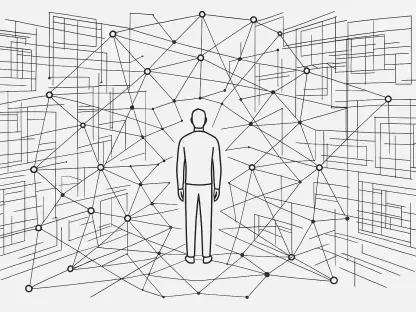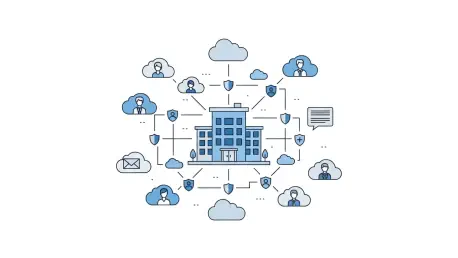

The rapid migration of critical business operations to a decentralized cloud model has fundamentally altered the concept of a secure network boundary by introducing thousands of invisible touchpoints. This transition toward Software-as-a-Service (SaaS) ecosystems allowed companies to scale rapidly, but it also created a substantial disconnect between the deployment of new tools and the enforcement of necessary security controls. As of 2026, the reliance on specialized third-party platforms has introduced a myriad of unmanaged identities that operate outside the traditional sphere of IT visibility. The resulting trust gap is not merely a technical oversight but a systemic vulnerability that cybercriminals are actively exploiting through sophisticated social engineering and lateral movement techniques. To maintain operational integrity, modern enterprises must now confront the reality that their attack surface is no longer defined by physical infrastructure but by the permissions assigned to every user, bot, and integrated application.
Identity Governance: Managing the Surge of Unmanaged Profiles
The Proliferation of Guest Accounts and Vendor Access
The sheer volume of guest accounts created for short-term projects and external consultants often dwarfs the number of internal employees, creating a massive management burden for security teams. These temporary identities frequently receive excessive permissions to ensure that vendors can complete their tasks without technical friction, yet they are rarely reviewed once a project reaches its conclusion. This practice creates a substantial backlog of high-privilege accounts that remain active within the cloud environment long after the original business need has expired. In many instances, the automated systems used to onboard employees do not extend to external partners, leading to a fragmented identity landscape where security gaps are easily overlooked. When external users retain access to internal documents and communication channels, the likelihood of data leakage increases significantly, as these accounts are seldom protected by the same rigorous monitoring standards.
Mitigating the Risk of Dormant and Orphaned Profiles
Beyond the immediate risk of unauthorized access, the lack of coordination between project managers and IT departments regarding the status of external contractors exacerbates the identity governance crisis. Organizations often fail to establish a standardized deprovisioning process that triggers automatically when a contract ends or a partnership dissolves. Consequently, many SaaS platforms end up populated with hundreds of “ghost” accounts that serve as potential entry points for malicious actors seeking a low-resistance path into the corporate network. These dormant identities are particularly dangerous because they often bypass standard anomaly detection systems that focus on active employee behavior. If an attacker compromises the credentials of a former vendor, they can operate with a high degree of legitimacy, accessing sensitive datasets and exfiltrating information without raising immediate red flags. Strengthening the security posture requires a shift toward granular control over the lifecycle of every identity.
Authentication Strategies: Overcoming Modern Access Vulnerabilities
Addressing the Persistence of OAuth Tokens and MFA Gaps
Many organizations mistakenly assume that basic multi-factor authentication is a universal safeguard, yet a significant portion of SaaS configurations still lack consistent enforcement across all user roles. Even when multi-factor authentication is active, the integration of third-party applications through OAuth tokens introduces a persistent vulnerability that remains even after password changes. These tokens facilitate seamless communication between different cloud services without requiring repetitive logins, but they also offer a “silent” backdoor for attackers who manage to hijack an active session. Because an OAuth token can remain valid for extended periods, a compromised integration can grant a threat actor indefinite access to corporate data while remaining completely undetected by traditional perimeter defenses. This technical loophole highlights the need for more frequent token rotation policies and a more aggressive approach to auditing the permissions granted to third-party integrations.
Establishing Resilient Identity Governance Frameworks
The most effective response to the widening SaaS trust gap involved the implementation of automated identity governance and continuous lifecycle management across all cloud environments. Leading organizations transitioned to a model where every identity, whether human or non-human, was subjected to rigorous, real-time monitoring and strict “least privilege” access protocols. This strategy successfully eliminated the risks associated with dormant accounts and unrevoked file-sharing links by ensuring that permissions were automatically rescinded the moment they were no longer required. Furthermore, the adoption of centralized visibility platforms allowed security teams to audit third-party integrations and OAuth tokens with greater precision, effectively closing the “silent” backdoors that had previously gone unnoticed. By prioritizing a unified approach to identity security, businesses moved beyond reactive firefighting and established a resilient framework that anticipated emerging threats. These proactive steps proved essential.