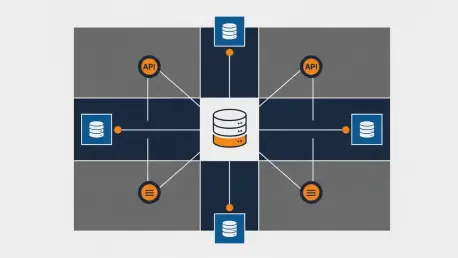

The integration of generative artificial intelligence directly into the core engine of SQL Server 2025 has fundamentally transformed how enterprises interact with their structured and unstructured datasets. While traditional databases served primarily as static repositories, the current architectural shift allows for native vector processing and direct communication with large language models through specialized stored procedures. This newfound capability introduces a sophisticated vector for data exfiltration that many security protocols are not yet equipped to handle effectively. When an administrator enables external service calls, they unknowingly open a direct conduit between the protected database environment and third-party cloud endpoints. The primary concern lies in the obfuscation of sensitive information within outbound API payloads. These packets often bypass traditional inspection tools designed for standard SQL traffic. As these systems become more autonomous, the boundary between data retrieval and data departure blurs significantly.
The Mechanics: External Communication Channels
Modern data exfiltration within SQL Server 2025 often leverages the built-in extensibility features that were originally designed to enhance developer productivity and real-time data enrichment. The most prominent of these tools is the enhanced execution of external REST endpoint calls, which allows the database engine to send JSON-formatted data directly to external APIs without leaving the T-SQL environment. An attacker who gains even limited access to a database with these permissions can craft malicious queries that bundle sensitive table records into the body of an outbound request directed at a rogue server. Because this traffic is typically encrypted via HTTPS and directed toward trusted cloud provider ranges, perimeter defenses often fail to categorize these packets as unauthorized data transfers. The ability to chain these calls within triggers means that exfiltration can occur silently in small batches, mimicking legitimate traffic patterns to avoid detection by anomaly-based monitoring systems.
Security vulnerabilities are further exacerbated by the way SQL Server 2025 manages identities and credentials for these outbound AI-driven operations. Database-scoped credentials are frequently configured with overly permissive access to ensure that automated functions do not fail during peak processing times, providing a lucrative target for lateral movement. If a service principal associated with the database engine is compromised, an adversary can redirect the flow of information to an endpoint under their control while maintaining the appearance of a standard AI inference call. This risk is not merely theoretical, as the complexity of auditing dynamic JSON payloads in real-time presents a significant challenge for legacy security information and event management systems. The transition to AI-integrated databases has necessitated a total reevaluation of egress filtering strategies, yet many organizations continue to rely on antiquated port-blocking methods that fail against these modern application-layer threats.
Semantic Risks: Addressing Prompt Injection and Metadata Leaks
Beyond the direct calls to external APIs, the introduction of vector search capabilities and semantic indexing within SQL Server 2025 introduces a more abstract form of data leakage. Vector embeddings represent data as high-dimensional numerical arrays, which, while not human-readable, can be reverse-engineered or exploited to reconstruct sensitive information about the original records. When these embeddings are shared across distributed environments or sent to external vector databases for indexing, the underlying metadata often carries more context than realized. A sophisticated actor can use prompt injection techniques against the internal AI components to force the system to return hidden data structures or system-level information that was never intended for exposure. Because the database now processes natural language inputs, the attack surface has expanded to include linguistic manipulation, where a query can trick the model into revealing its internal training data or the contents of adjacent tables.
In the wake of these emerging threats, the industry was forced to adopt a zero-trust architecture specifically tailored for database-to-AI communications. Organizations that successfully navigated these challenges implemented rigorous content inspection and redaction layers that scanned every outbound JSON payload for sensitive patterns before the data ever reached a network gateway. They also moved toward deploying localized, small language models within isolated containers to minimize the need for external REST calls, thereby closing the most prominent exfiltration route. The development of differential privacy techniques for vector embeddings ensured that even if a vector database was compromised, the source data remained mathematically protected from reconstruction attempts. Proactive measures, combined with advanced auditing tools that tracked the semantic intent of queries, transformed the database from a potential liability into a secure hub for intelligent operations.