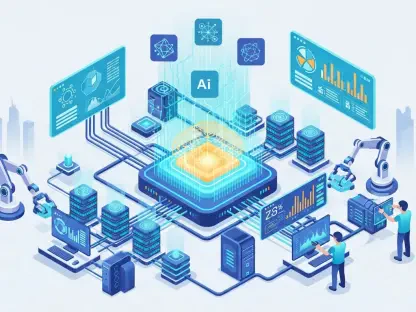

The global financial ecosystem currently functions as a digital-first environment where a single line of faulty code can trigger systemic instability and erode decades of institutional trust within minutes. Software reliability in this high-stakes landscape no longer serves as just a technical requirement but acts as the primary foundation for institutional reputation and financial stability. As modern banking architectures become increasingly interconnected, the complexity of managing these systems has surpassed the capacity of traditional manual oversight. This reality has forced a fundamental reevaluation of how quality is ensured, moving beyond the era of rigid scripts toward a more fluid and intelligent model of operational integrity.
The shift from manual scripts to cognitive interaction represents a profound evolution in the software development lifecycle. Rather than relying on static test plans, organizations are adopting AI-augmented Quality Assurance frameworks that utilize what are known as test conversations. This methodology allows for a more dynamic exploration of software behavior, where the interaction between human intelligence and machine learning models surfaces nuances that traditional automation often overlooks. Consequently, the role of the engineer is transitioning from a builder of fixed tests to a curator of intelligent queries that probe the limits of system resilience.
Strategic discipline in structuring these interactions, commonly referred to as prompt engineering, has emerged as a mandatory core competency for modern financial software engineers. It involves the meticulous crafting of inputs to ensure that generative models produce accurate, context-aware, and secure outputs. In the context of banking, where precision is paramount, a poorly constructed prompt can lead to catastrophic oversights. Therefore, mastery over the way artificial intelligence is directed has become as critical as the ability to write executable code itself.
Major market players, including global investment banks and disruptive fintech firms, are already integrating Large Language Models into their primary DevOps pipelines. This technological shift is not limited to simple automation but extends to complex problem-solving and architectural analysis. By embedding cognitive tools directly into the development workflow, these institutions are reducing the lag between code creation and quality verification. The result is a more agile response to market demands without the historical trade-off between speed and security.
The Paradigm Shift in Testing Methodologies and Market Growth
Dynamic Interrogation and the Rise of the Strategic Orchestrator
The current approach to software validation treats artificial intelligence through the lens of the junior tester model. In this framework, the machine is viewed as a highly capable but literal-minded assistant that requires expert human steering to generate production-ready artifacts. The human expert serves as a strategic orchestrator, defining the boundaries and objectives while the machine handles the voluminous task of scenario generation. This partnership ensures that the speed of AI is always anchored by the seasoned judgment of a subject matter expert who understands the broader business context.
Evolution in consumer expectations continues to accelerate this transformation. Today’s users demand 24/7 seamless mobile banking experiences with zero downtime, which necessitates much faster and more comprehensive testing cycles than were previously possible. Traditional QA methods simply cannot keep pace with the continuous deployment schedules required to maintain a competitive edge. AI-driven interrogation provides the necessary throughput to validate complex digital journeys across thousands of device and network combinations in real-time.
Furthermore, there is a distinct move from mere code coverage to risk-weighted analysis. Instead of trying to test every possible line of code with equal intensity, engineers are leveraging AI to identify and surface hidden unhappy paths and complex edge cases. These vulnerabilities often exist within payment processing modules or multi-currency account management systems where logic can become convoluted. By focusing on these high-risk areas, banks can ensure that their most critical financial engines remain robust under extreme or unusual conditions.
Market Projections and the Economics of AI-Driven QA
Measuring success in this new era involves a different set of performance indicators. Organizations now prioritize reduced time-to-market and increased defect detection rates as the primary metrics for AI integration success. Moreover, a significant reduction in the cost-per-test has been observed as generative models take over the heavy lifting of script maintenance and data generation. These economic gains allow financial institutions to reallocate budgets toward innovation rather than repetitive maintenance tasks.
Growth forecasts for financial AI tools indicate a massive surge in targeted investment through the late 2020s. Specifically, tools designed for banking compliance and software integrity are seeing the highest adoption rates as the industry seeks to automate the verification of complex regulatory requirements. This trend reflects a broader recognition that manual compliance checks are no longer sustainable in a global market defined by rapid regulatory shifts. Investment is flowing toward platforms that can autonomously interpret new laws and update test suites accordingly.
The return on investment for prompt engineering mastery is becoming increasingly evident as human talent shifts from manual execution to high-level risk strategy. By empowering engineers to focus on the most difficult architectural challenges, banks are seeing a long-term financial benefit in the form of fewer production incidents and lower technical debt. This strategic shift essentially converts the QA department from a cost center into a value-added asset that proactively secures the bank’s digital infrastructure.
Overcoming Complexity and Technical Debt in Financial Systems
Navigating the integration of modern AI with legacy systems remains one of the most significant hurdles in the industry. Many institutions still rely on decades-old mainframe architectures that were never designed for the era of cloud computing or cognitive automation. Prompt engineering provides a vital bridge in this scenario, allowing engineers to translate modern requirements into queries that can analyze and validate the behavior of archaic code bases. This capability prevents the need for risky and expensive wholesale replacements of core systems.
Mitigating AI hallucinations in financial logic is another critical priority. Because generative models can sometimes produce confident but incorrect results, banks are implementing rigorous human-in-the-loop verification processes. Every AI-generated test case or code snippet must be validated against strict mathematical and business rules before it is allowed into a production environment. This layered approach ensures that the creative potential of AI is tempered by the absolute precision required in financial accounting and transaction processing.
Data privacy concerns also demand sophisticated prompting techniques to maintain security during the testing phase. Rather than using sensitive customer information, engineers use AI to generate synthetic, non-sensitive test data that mirrors the complexity of real-world banking transactions. These prompts are designed to create datasets that include realistic noise, edge cases, and corrupted inputs without exposing any proprietary or personal data. This allows for thorough stress testing while remaining fully compliant with global privacy standards.
The Regulatory Landscape and the Mandate for Resilience
Compliance with the Digital Operational Resilience Act and other global frameworks has made prompt engineering an essential tool for evidence-based engineering. These regulations require institutions to demonstrate that their systems can withstand significant operational disruptions. By using AI to simulate a vast array of failure scenarios, banks can provide the comprehensive documentation and proof of testing that regulators now demand. This proactive stance significantly reduces the risk of non-compliance penalties and operational failures.
Standardizing audit trails has become more manageable through the use of AI-driven reporting tools. These systems can distill technical testing data into business-centric reports that satisfy both internal boards of directors and external regulatory bodies. Using prompts to generate these summaries ensures that the language is consistent, professional, and focused on the most relevant risk indicators. This transparency is crucial for maintaining the trust of stakeholders who require a clear understanding of the bank’s technical health.
Security measures in AI interaction are also being tightened to prevent the accidental exposure of proprietary logic. Protocols for secure prompting are being established to ensure that engineers do not inadvertently share sensitive data structures with external AI models. This involves the use of private, ring-fenced environment and strict guidelines on what information can be included in a prompt. Maintaining this boundary is essential for protecting the intellectual property that gives a bank its competitive advantage.
The Future of Quality Engineering in the Financial Sector
The industry is moving toward a state of predictive quality assurance. This involves transitioning from reactive testing, which identifies bugs after they are written, to proactive risk forecasting. By training AI on historical failure data, banks can predict where new code is most likely to break before the first test is even run. This allows development teams to address vulnerabilities during the design phase, drastically reducing the cost and complexity of bug fixes later in the cycle.
Autonomous test lifecycle management represents the next frontier in this evolution. In the coming years, self-healing test scripts and AI agents will likely manage the entire quality flow with minimal human supervision. These systems will be capable of detecting changes in the software environment and automatically adjusting test parameters to maintain coverage. This level of autonomy will allow human engineers to step back from the minutiae of execution and focus entirely on high-level system architecture and long-term resilience strategy.
The evolving skill set of finance professionals now requires a unique blend of deep domain expertise and sophisticated AI interrogation skills. Successful quality engineers must think like a banker, code like a developer, and communicate with AI like a master strategist. This multidisciplinary approach is becoming the new standard for excellence in the global financial infrastructure. As the technology continues to mature, the ability to direct machine intelligence will be the primary factor that separates leading institutions from those that struggle to adapt.
Harmonizing Human Judgment with Machine Speed
The integration of advanced prompting techniques ultimately served to amplify human intellect rather than replace it within the banking sector. Financial institutions that prioritized the development of internal core capabilities achieved a significant advantage by focusing on clarity, precision, and structural reuse in their AI interactions. This approach ensured that the speed of generative tools was always aligned with the rigorous standards of financial integrity. By treating AI as a collaborative partner, organizations were able to reach levels of software resilience that were previously considered unattainable through manual efforts alone.
Strategic recommendations for the future involved a commitment to continuous learning and the establishment of robust governance over all AI-driven processes. Leaders in the field moved beyond the initial excitement of automation to build sustainable frameworks where machine output was consistently vetted by experienced human judgment. This balanced methodology allowed for the rapid deployment of innovative services without compromising the security of the global financial infrastructure. The focus shifted toward creating a culture where technological tools were viewed as extensions of professional expertise rather than standalone solutions.
Mastery of prompt power became the definitive benchmark for excellence, ensuring that the digital foundations of modern banking remained secure against an ever-evolving landscape of risks. Organizations that successfully synthesized machine speed with human oversight realized substantial improvements in operational stability and customer trust. Moving forward, the industry was encouraged to maintain this equilibrium, treating every technological advancement as an opportunity to refine the human element of risk management. The final outcome of this transition was a financial sector better equipped to handle the complexities of a global, interconnected economy.