
Modern cybersecurity professionals are increasingly finding that the sheer volume of telemetry produced by disconnected scanners has transformed their primary duty from defense to complex data management. As organizations push code at rates that were unimaginable just a few years ago, the traditional reliance on siloed tools like Static Analysis Security Testing (SAST) and Software Composition Analysis (SCA) has led to an unsustainable burden of manual triage. Application Security Posture Management (ASPM) has emerged as a critical architectural response to this fragmentation. This technology does not merely aggregate data but attempts to synthesize a comprehensive understanding of risk by correlating insights across the entire development lifecycle, from the initial line of code to the active runtime environment.
The evolution of ASPM reflects a broader shift toward centralized governance in the software development lifecycle. In the current landscape, security is no longer a final checkpoint but an integrated layer of the engineering process. By providing a unified dashboard that tracks vulnerabilities across distributed teams, ASPM allows security leaders to move beyond reactive fire-fighting. It establishes a strategic framework where automated policy enforcement and risk-based prioritization become the standard. This review explores how ASPM serves as the necessary connective tissue in the modern security ecosystem, ensuring that rapid innovation does not come at the expense of structural integrity.
Introduction to ASPM in the Modern Security Ecosystem
Application Security Posture Management has matured into a strategic imperative for organizations navigating the complexities of cloud-native development. Historically, security teams struggled with “alert fatigue,” a phenomenon where thousands of notifications from various scanning tools overwhelmed the capacity for meaningful remediation. ASPM solves this by providing a single source of truth that consolidates these disparate signals. It allows organizations to move away from a “scan-and-patch” mentality toward a more holistic view of their security health, where the focus is on the overall posture rather than individual, isolated flaws.
In the context of 2026, the technology has transcended its origins as a simple reporting layer. It now functions as a command center for DevSecOps, enabling a more fluid collaboration between developers and security engineers. By automating the correlation of vulnerabilities with their specific business contexts, ASPM ensures that security measures are proportional to the actual risks faced by the application. This systemic approach is essential for maintaining trust in digital services that are subject to constant updates and a rapidly evolving threat landscape.
Core Components and Technical Architecture
The Security Graph and Asset Correlation
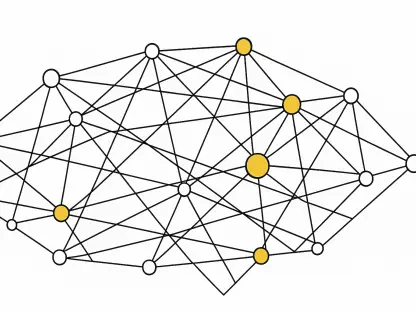
At the heart of a high-performing ASPM platform lies the Security Graph, a sophisticated relational engine that maps the complex dependencies of modern software. Unlike a traditional flat database, a graph structure allows for “code-to-cloud” correlation, which is the ability to trace a vulnerability from a specific repository through the CI/CD pipeline and into a live production container. This capability is unique because it provides the context required to understand the blast radius of a potential exploit. If a flaw is detected in a library, the graph can instantly identify every active workload currently utilizing that specific version, allowing for a surgical response.
Furthermore, asset correlation addresses the persistent problem of naming inconsistencies across different security tools. One scanner might identify a container by its image ID, while another refers to the repository name. The ASPM layer acts as a deduplication engine, merging these disparate identifiers into a single logical entity. This normalization ensures that the security team is looking at one unified record for every asset, which significantly reduces the administrative overhead associated with manual data reconciliation. It transforms raw telemetry into actionable intelligence, making the security posture visible and manageable.
Unified Data Ingestion and Normalization
For ASPM to be truly effective, it must operate as an open ecosystem that integrates with an organization’s existing investments rather than forcing a complete replacement of legacy tools. This is achieved through robust integration networks that ingest data from third-party scanners and internal proprietary scripts. A critical technical enabler in this process is the adoption of the Static Analysis Results Interchange Format (SARIF). By utilizing this JSON-based standard, ASPM platforms can normalize data from diverse sources into a consistent structure, regardless of whether the original tool was designed for secrets scanning, infrastructure as code, or traditional static analysis.
This normalization process is more than a simple data translation; it involves the re-calibration of severity scales and the enrichment of findings with environmental context. When data is ingested, the ASPM platform can apply a uniform risk-scoring logic across all findings, ensuring that a “critical” alert from one tool is evaluated with the same rigor as a “high” alert from another. This consistency is vital for building automated remediation workflows that developers can trust. Without this level of technical cohesion, the resulting security posture would remain a fragmented collection of guesses rather than a reliable roadmap for defense.
The Influence of Artificial Intelligence on Threat Dynamics
The integration of artificial intelligence into the development process has fundamentally altered the tempo of cybersecurity. In 2026, generative AI and agentic development tools allow engineers to produce code at machine speed, which inadvertently expands the attack surface faster than human teams can audit. Consequently, the window of opportunity to remediate a vulnerability has shrunk from days to minutes. ASPM has evolved to meet this challenge by incorporating its own AI-driven insights, which can autonomously analyze patterns of risk and predict potential exploit paths before they are leveraged by adversaries.
This shift in threat dynamics means that static, periodic scanning is no longer sufficient for maintaining a secure posture. Modern ASPM platforms use continuous monitoring and real-time data correlation to keep pace with automated exploit generation. By identifying “reachable” vulnerabilities—those that are not only present in the code but are also exposed to the internet or have access to sensitive data—ASPM allows teams to focus their limited resources on the most pressing threats. This proactive stance is the only way to counter the speed and scale of AI-assisted cyberattacks in the current technological era.
Real-World Applications and Sector Deployment
In sectors like Fintech and E-commerce, where digital agility is a competitive advantage, ASPM has become a foundational component of the production pipeline. These industries manage high-traffic applications that are constant targets for sophisticated attacks. By deploying ASPM, these organizations can implement “Coverage Mapping,” an auditing technique that ensures every single repository and container image is subject to the required security checks. This eliminates the “shadow IT” problem where small, internal tools or legacy repositories might otherwise go unscanned, creating a potential backdoor into the broader enterprise network.
Moreover, the technology is being used to streamline compliance in highly regulated environments. ASPM platforms can automatically generate reports that demonstrate adherence to security standards across hundreds of distributed development teams. Instead of conducting time-consuming manual audits, security leaders can use the ASPM dashboard to provide real-time evidence of their security posture to stakeholders and regulators. This application not only improves security but also reduces the friction between the security department and the rest of the business, fostering a culture of transparency and accountability.
Technical Hurdles and Market Obstacles
Despite the clear advantages, the implementation of ASPM is not without its technical hurdles. One of the primary obstacles is the complexity of data normalization in environments that use dozens of different security vendors. Each vendor often employs proprietary logic for assessing risk, and reconciling these differences without losing critical detail is a significant challenge. Furthermore, there is a persistent market obstacle known as “vulnerability fatigue,” where the sheer quantity of identified issues can lead to paralysis within development teams. ASPM must continue to refine its prioritization algorithms to ensure that the “noise” does not drown out the truly critical signals.
Another trade-off involves the integration overhead required to set up a comprehensive ASPM environment. While the goal is to provide a unified view, the initial effort to connect every repository, cloud account, and scanning tool can be substantial. Organizations must balance the desire for total visibility with the practical realities of resource allocation. However, the current trend is toward more automated, “out-of-the-box” connectors that reduce this friction. As the technology matures, the focus is shifting from simple connectivity to the quality of the insights provided, ensuring that the platform adds more value than it consumes in maintenance.
Future Trajectory and Long-Term Impact
The trajectory of Application Security Posture Management points toward a future characterized by autonomous remediation and self-healing systems. We are moving into a period where the platform will not only identify a risk but also suggest or even automatically apply an AI-generated fix that has been pre-validated for the specific environment. This will shift the role of the security professional from a manual reviewer to an orchestrator of automated defenses. In the long term, ASPM is likely to merge with cloud security posture management to create a singular, unified discipline that covers the entire digital footprint of an organization.
This consolidation will have a profound impact on how risk is perceived and managed at the board level. Security will no longer be seen as an isolated technical concern but as a measurable component of business operational health. By providing clear, data-driven metrics on security posture, ASPM allows organizations to make more informed decisions about their digital transformations. The technology will eventually become the central nervous system of the enterprise, ensuring that security is a dynamic, self-correcting process that evolves in tandem with the software it protects.
Summary and Overall Assessment
The review of Application Security Posture Management confirmed that the technology has successfully transitioned from a niche aggregation tool to an essential strategic framework. It was observed that by centralizing findings and providing code-to-cloud context, ASPM addressed the critical gaps left by traditional, siloed security scanners. The investigation demonstrated that the primary value of the technology lay in its ability to normalize complex data and prioritize remediation efforts based on actual environmental risk rather than theoretical severity.
The findings suggested that while integration hurdles remained, the overall impact on the speed and reliability of security operations was significant. The transition to AI-accelerated development necessitated a more sophisticated approach to visibility, which ASPM provided through its innovative use of the Security Graph. In the end, the technology established itself as a mandatory component for any organization that sought to maintain security integrity in an increasingly complex and automated digital landscape. It provided a clear, actionable roadmap that bridged the gap between development innovation and operational security.