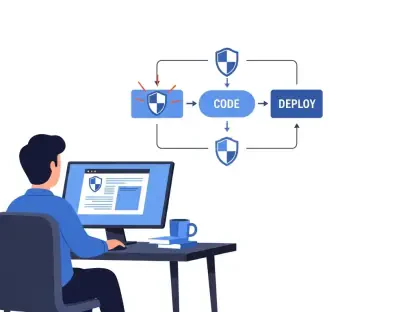

The days when financial institutions could satisfy regulators with meticulously documented but untested contingency plans are rapidly drawing to a close, replaced by a new era of supervisory scrutiny focused squarely on demonstrable operational resilience. A significant and globally coordinated shift in financial supervision is underway, moving the industry away from a traditional, compliance-based approach centered on theoretical controls. In its place, regulators now demand tangible, evidence-based assurance that firms can maintain the continuity of their critical business services even when faced with severe operational disruptions. This fundamental change places Quality Assurance and testing functions directly under the supervisory microscope, transforming them from back-office support roles into central pillars of a firm’s stability and regulatory standing.
The New Regulatory Frontier: From Compliance Checks to Demonstrable Stability
Across the world’s primary financial hubs, a consistent message is emerging. Supervisory bodies in the European Union, the United Kingdom, and key Asian markets are converging on a new paradigm that prioritizes proven stability over procedural box-ticking. This evolution in oversight reflects the growing complexity and interconnectedness of the modern financial system, where a single point of failure can have cascading systemic consequences. The focus is no longer on whether a firm has a recovery plan on file, but whether that plan has been rigorously tested and proven to work under realistic stress conditions.
This demand for evidence-based assurance represents a profound challenge to established industry practices. Financial institutions are now required to provide concrete proof of their resilience, turning testing activities into a primary source of regulatory evidence. Instead of simply documenting controls, firms must demonstrate their effectiveness through comprehensive, realistic scenarios that simulate severe but plausible disruptions. This shift requires a cultural and operational pivot, compelling organizations to view resilience not as a static compliance exercise but as a dynamic, demonstrable capability that must be continually validated.
Consequently, the role of Quality Assurance is undergoing a radical transformation. Once confined to the later stages of the software development lifecycle and focused primarily on functional correctness, QA is now a central pillar of regulatory compliance and enterprise-wide risk management. The function is being elevated from a technical, back-office operation to a strategic one, tasked with providing the board and regulators with verifiable confidence in the firm’s ability to withstand operational shocks. This new mandate elevates QA’s importance, making it a critical component of firm-level stability.
The Ascent of Scenario Testing and its Market Implications
The Global Consensus: Redefining Resilience as a Dynamic Capability
A powerful global consensus on operational resilience is solidifying, driven by influential frameworks like the European Union’s Digital Operational Resilience Act (DORA), the Bank of England’s stringent regime, and the Central Bank of Ireland’s detailed guidance. These regulations, while jurisdictionally distinct, share a common philosophical core. They collectively define resilience not as the absence of incidents, but as the proven ability of an institution to withstand, respond to, adapt, and recover from disruptions while protecting consumers and preserving financial stability.
This redefinition establishes resilience as an ongoing, dynamic capability rather than a static state. The emphasis is on the entire lifecycle of an incident, from preparation and identification through to response and recovery. This perspective embeds testing and validation into every stage, demanding that firms prove their adaptive capacity in real time. The supervisory question has evolved from “What are your controls?” to “How do you prove your critical services will remain within impact tolerances during a major crisis?”
This pivot toward outcome-focused supervision is simultaneously creating new market drivers and opportunities. The heightened regulatory expectations are fueling demand for advanced QA practices, sophisticated testing tools, and specialized expertise. Firms that can offer robust chaos engineering platforms, cross-functional resilience testing services, and advanced test environment management are finding a receptive market. This trend is reshaping the technology vendor landscape and placing a premium on solutions that can deliver the quantifiable assurance regulators now require.
Quantifying Preparedness: The Data-Driven Mandate for QA
The new regulatory environment is characterized by an uncompromising demand for measurable, quantifiable evidence derived directly from testing activities. Vague assurances and qualitative assessments are no longer sufficient. Supervisors expect to see hard data that proves a firm’s resilience, including detailed test results, documented remediation plans for any identified weaknesses, and the specific outcomes of various failure scenarios.
These metrics are rapidly becoming key performance indicators for senior management, boards, and the supervisors who oversee them. The outputs of QA are no longer just technical artifacts for development teams; they are critical pieces of evidence that inform risk appetite, strategic investment, and regulatory reporting. The ability to translate complex test data into clear, concise, and defensible statements of resilience is becoming an essential skill for technology and risk leaders.
Looking forward, the data generated by advanced QA will play an even more crucial role in predictive risk management. By analyzing trends from sophisticated scenario tests, firms will be better able to forecast their ability to operate within established impact tolerances during future disruptions. This data-driven approach allows for a more proactive and intelligent approach to resilience, enabling institutions to validate their recovery strategies and identify potential vulnerabilities before they can be exploited by a real-world event.
Navigating the Complexities of Real-World Disruption Testing
The primary challenge for financial institutions now lies in a fundamental shift in mindset: moving from an obsession with preventing system failures to a focus on validating system behavior under failure conditions. This requires a departure from traditional testing methods, which often operate in sanitized, isolated environments. To meet regulatory expectations, testing must now authentically replicate the chaos and unpredictability of a genuine operational crisis, a task that is far from simple.
A significant hurdle is the complexity of interrogating real-world operational dependencies. Modern financial services are delivered through a sprawling, interconnected ecosystem of internal platforms, third-party vendors, complex data flows, and critical market infrastructures. A credible resilience test must account for these intricate relationships and assess how the failure of one component, whether internal or external, impacts the entire service chain. Simulating the failure of a key cloud provider or a critical data vendor, for instance, requires a level of coordination and technical sophistication far beyond standard application testing.
To overcome these obstacles, firms are adopting more advanced and aggressive testing strategies. Methodologies like chaos engineering, which involves proactively injecting failures into production or production-like systems, are gaining traction as a way to uncover hidden weaknesses. Moreover, organizations are establishing cross-functional resilience testing teams that bring together business operations, technology, risk, and vendor management to design and execute holistic scenarios. Building robust, high-fidelity test environments that can accurately mirror the production ecosystem is also a critical investment, providing a safe and effective arena to validate a firm’s response and recovery playbooks.
The Regulatory Mandate: Integrating QA into Governance and Risk Frameworks
Regulations like DORA explicitly mandate that ICT resilience can no longer be a siloed technical concern; it must be deeply integrated into a firm’s core governance and risk management structures. This requirement formalizes the connection between technology testing and board-level accountability. Operational resilience frameworks must now be woven into the fabric of the organization, with clear lines of ownership and reporting that extend from the engineering teams to the executive suite.
This integration has dramatically expanded the scope and ownership of the QA function. Testing responsibilities now extend across the entire technology ecosystem, well beyond in-house applications. QA teams are increasingly tasked with validating the resilience of services running on public and private clouds, assessing the continuity plans of critical third-party suppliers, and ensuring that data integrity is maintained across distributed platforms. This holistic view is essential for providing the comprehensive assurance that regulators demand.
The impact on industry practices is profound, necessitating a shift toward a truly end-to-end testing approach. This approach must provide clear, unambiguous assurance of a firm’s ability to meet its board-defined impact tolerances for each critical business service. Testing is no longer just about finding bugs; it is about validating business outcomes. The results of these comprehensive tests provide the definitive evidence that a firm not only has a plan but can execute it successfully when it matters most.
The Future of Finance: QA as a Strategic Pillar of Stability
As the digitization of financial services continues to accelerate, the strategic importance of testing and QA teams will only intensify. The increasing reliance on complex technologies, from artificial intelligence to distributed ledger systems, introduces new potential points of failure and expands the attack surface for operational disruptions. In this context, a mature and sophisticated QA function becomes a critical line of defense and a key enabler of sustainable innovation.
This evolving landscape brings with it a new set of requirements for QA professionals. They will be expected to design increasingly sophisticated test scenarios that reflect the nuances of real-world threats, from advanced persistent cyberattacks to widespread infrastructure outages. Furthermore, they will be responsible for validating highly complex recovery pathways that may involve activating backup sites, failing over to alternate providers, and orchestrating responses across dozens of internal and external teams. This requires a blend of deep technical skill, business acumen, and creative, adversarial thinking.
Ultimately, the QA function is poised to become a significant market disruptor and a decisive factor in safeguarding both firm-level and systemic financial stability. Institutions with demonstrably superior testing and resilience capabilities will gain a competitive advantage, earning the trust of customers, investors, and regulators alike. In the future of finance, a world-class QA organization will not be a cost center, but a strategic asset that underpins the long-term viability and integrity of the firm.
From Back Office to Boardroom: QA’s Ascendancy in the Resilience Era
The findings of this analysis confirmed that the global regulatory push toward demonstrable operational resilience had fundamentally transformed the role and perception of Quality Assurance. The consistent message from supervisory bodies worldwide had elevated scenario-driven, evidence-based testing from a technical discipline to a core component of corporate governance. The artifacts generated by QA activities—test results, remediation plans, and scenario outcomes—were no longer viewed as internal documents but as critical pieces of supervisory evidence.
This shift has propelled QA from a tactical, delivery-focused operation into a strategic function with accountability that reaches the board. The function’s evolution was driven by the non-negotiable demand for quantifiable proof that a firm could withstand severe but plausible disruptions. Financial institutions were therefore compelled to re-evaluate their investment in and organizational positioning of their QA capabilities.
To meet these ongoing regulatory demands and ensure long-term resilience, financial institutions have had to invest significantly in their testing infrastructure, methodologies, and talent. Elevating QA capabilities became a strategic imperative, not only for compliance but as a foundational element of sound risk management and sustainable business operations in an increasingly complex and uncertain world. The ascent of QA from the back office to the boardroom was a defining feature of this new era of financial stability.