
The pervasive integration of large language models into enterprise software engineering workflows has fundamentally accelerated the velocity of code production while simultaneously introducing a complex array of structural risks that traditional quality assurance protocols are ill-equipped to handle. As the industry moves further into 2026, the sheer volume of code generated by artificial intelligence has begun to outpace the human ability to verify it, creating a precarious environment where technical debt can accumulate at an exponential rate. While developers have embraced the convenience of automated suggestions, the underlying reality remains that these tools operate on statistical probability rather than a fundamental understanding of engineering principles. This disconnect often results in code that is syntactically perfect yet logically flawed or architecturally inconsistent with the broader ecosystem. Consequently, the reliance on generative tools without a robust, dedicated verification layer has transformed from a competitive advantage into a potential systemic liability for major organizations.
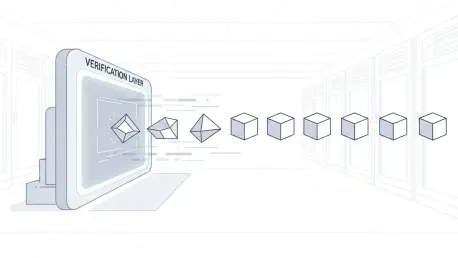
The current landscape of software development is characterized by a paradox where the tools meant to increase efficiency are also the primary drivers of subtle, hard-to-detect errors. These errors are not merely typos or syntax mistakes, which compilers easily catch, but are instead structural failures that manifest as duplicated logic, breaking changes in downstream dependencies, and a gradual drift away from established coding standards. When an engineer accepts a suggestion from an intelligent assistant, they are often reviewing a localized snippet of code that may not account for the intricate web of services and internal libraries that define a modern enterprise environment. This localized focus creates a “context vacuum” where code is technically functional in isolation but disruptive when integrated. Therefore, establishing a verification layer between the point of generation and the production environment is no longer an optional luxury but a non-negotiable requirement for maintaining the integrity and security of large-scale software systems.
1. Addressing the Structural Deficiencies of Automated Generation
The failure modes of code produced by artificial intelligence are distinctly different from the errors typically made by human developers, often manifesting as logic flaws that are difficult to identify during traditional peer reviews. Because these models are trained on massive datasets containing diverse coding styles and quality levels, they occasionally synthesize solutions that appear correct but contain hidden vulnerabilities or edge-case failures. For example, an automated tool might suggest an optimized sorting algorithm that works perfectly for standard inputs but fails to handle null values or specific character encoding issues unique to a company’s internal data. These structural gaps are often the result of the model prioritizing the most statistically likely continuation of a code block over the most robust engineering approach. This phenomenon forces engineering teams to deal with “phantom bugs” that only emerge under specific production loads, making the stabilization of the codebase a continuous and exhausting challenge.
Beyond isolated logic errors, the accumulation of automated code frequently leads to a phenomenon known as standards drift, where the unique architectural conventions of a specific team are slowly eroded by generic suggestions. Every enterprise has its own set of internal patterns, naming conventions, and preferred libraries that have been refined over years of development to ensure maintainability and performance. Generative models, however, tend to favor the most common patterns found in their training data, which may conflict with these specialized internal standards. Without a central gatekeeper to enforce these nuances, the codebase becomes a patchwork of inconsistent styles and redundant functions, where the same utility might be implemented in five different ways across different modules. This loss of structural coherence significantly increases the cognitive load on developers during maintenance and makes it nearly impossible to implement global changes or upgrades without triggering a cascade of unforeseen failures across the repository.
2. Understanding the Limitations of Token-Prediction Mechanisms
To effectively manage the output of modern development tools like Claude or GitHub Copilot, it is essential to recognize that these systems function as sophisticated token-prediction engines rather than reasoning entities. They operate by calculating the statistical probability of the next sequence of characters based on the context provided in the immediate vicinity of the cursor. While this allows for the rapid generation of boilerplate code and repetitive tasks, it lacks the cognitive depth required to understand the long-term implications of an architectural decision. The model does not “know” that a specific database query might cause a bottleneck during peak traffic or that a new API endpoint violates a security protocol established by the compliance team. It simply predicts what a developer is likely to type next, which is a fundamentally different process than the deliberate, goal-oriented reasoning that defines professional engineering.
This reliance on probability leads to a significant context gap, where the intelligent assistant struggles to integrate the specific nuances of an enterprise’s internal dependencies and long-standing team conventions. While a tool might have access to a few open files in the editor, it rarely possesses a holistic view of the millions of lines of code that comprise a large-scale enterprise application. Consequently, the suggestions it provides are often based on general best practices that may not apply to a highly specialized or legacy environment. This lack of systemic awareness results in code that is plausible but ultimately incorrect, as it may call deprecated functions, ignore specific error-handling wrappers, or bypass existing security middleware. The challenge for engineering leadership is to bridge this gap by implementing systems that can provide the missing context, ensuring that every piece of generated code is evaluated against the entire architectural map of the organization.
3. Analyzing the Three Critical Failures in Modern Review Cycles
One of the most pressing challenges in the 2026 development cycle is that the quantity of code being produced has far exceeded the speed at which humans can perform thorough manual reviews. When a developer can generate an entire feature branch in a fraction of the time it previously took, the resulting pull requests become larger and more frequent, overwhelming the peer review process. This pressure often leads to “rubber-stamping,” where reviewers scan for obvious syntax errors but fail to deeply analyze the logic or potential side effects of the changes. The speed of production has effectively broken the traditional human-in-the-loop safety mechanism, as the cognitive effort required to audit thousands of lines of automated code is simply too high for a manual process to remain effective. This throughput imbalance creates a bottleneck that either slows down the release cycle or allows low-quality code to slip into the main branch.
Another critical breakdown occurs in the loss of system-wide awareness, as automated tools and the developers using them focus on increasingly narrow snippets of functionality. Because generative AI often operates on a file-by-file or block-by-block basis, it fails to recognize how a seemingly minor change in a utility class might negatively impact a distant service in a different repository. This siloed approach to development is exacerbated by the fact that human reviewers are also limited by their own specialized knowledge and the specific scope of the pull request they are auditing. Without an automated verification layer that can trace dependencies across the entire infrastructure, these cross-component failures often go unnoticed until they reach production. Furthermore, the quiet degradation of coding rules continues as different tools and prompts produce inconsistent styles, leading to a fragmented codebase that resists unified maintenance and increases the difficulty of onboarding new engineers.
4. Evaluating Primary Risks Associated with AI-Generated Assets
The risks associated with integrating automated content into a professional repository are both varied and severe, ranging from simple logic mistakes to critical safety weaknesses. Logic errors are particularly insidious because the code often passes basic unit tests while failing in complex edge cases that the model did not account for during generation. For instance, an AI might generate a function for processing financial transactions that fails to account for currency rounding errors or specific regulatory requirements, leading to significant financial discrepancies. Additionally, the tendency of these models to hallucinate or reuse outdated patterns can result in redundant logic, where a developer unknowingly implements a feature that already exists within the internal library. This redundancy not only bloats the codebase but also makes future updates more difficult, as there are multiple versions of the same logic that must be kept in sync.
Structural inconsistency and compatibility breaks represent even greater threats to the long-term stability of an enterprise environment. When an automated tool suggests a shortcut that bypasses an established abstraction layer or introduces a circular dependency, it compromises the modularity of the system. These messy dependencies often remain hidden until a major update is attempted, at which point the entire system may become unstable. Furthermore, there is a significant risk of reintroducing safety weaknesses by using insecure patterns that were present in the model’s training data. For example, a model might suggest a SQL query that is vulnerable to injection attacks or a cryptographic implementation that uses a deprecated algorithm. Without a dedicated verification layer to intercept these patterns, the organization remains vulnerable to security breaches that are essentially “authored” by the very tools meant to improve productivity.
5. Reimagining the Software Development Life Cycle for the Machine Era
As organizations move toward a fully AI-enabled development flow, the traditional steps of the software development life cycle must be adapted to account for the unique characteristics of automated generation. The process now begins with project blueprinting, where developers leverage intelligent tools not just to write code, but to identify all affected systems and dependencies before a single line is changed. This stage is critical for ensuring that the proposed modification is architecturally sound and that the developer understands the potential downstream impacts. By using AI to map out the technical strategy, the team can avoid the “trial and error” approach that often characterizes unguided automated coding. This shift toward a more deliberate, design-first methodology ensures that the subsequent generation of code is grounded in a comprehensive understanding of the existing environment.
Once the blueprint is established, the developer moves to the building phase, utilizing automated tools to generate functionality based on these local requirements. However, the process does not end with the successful generation of a code block; instead, the submission for integration now requires a series of context-aware checks that look beyond the immediate change. Before a formal human review even begins, the code is subjected to a technical assessment where an automated system analyzes the change against the entire codebase. This system checks for breaking changes, ensures adherence to team-specific rules, and validates that no security vulnerabilities have been introduced. The developer then enters a rapid response cycle, receiving immediate, structured critiques and suggested fixes. This iterative process allows potential issues to be addressed early in the cycle, leading to a final result where the code is merged with high confidence and minimal risk to the production environment.
6. Defining the Stages of an Integrated AI-Native Workflow
In a high-performing environment, the pull request process has evolved into a sophisticated, multi-stage workflow designed to maximize both speed and safety. The first stage involves designing a strategy with intelligent support, where tools are used to visualize how a new feature will interface with existing microservices and data schemas. This ensures that the developer is not working in a vacuum and that the proposed architecture aligns with the organization’s long-term goals. Once the design is validated, the developer executes the coding phase via automation tools, using AI to implement the feature while maintaining a focus on the specific constraints identified during the design stage. This guided approach to generation significantly reduces the likelihood of structural errors and ensures that the output is tailored to the unique needs of the project.
Following the generation of code, the workflow transitions to environment-sensitive audits that are performed directly within the integrated development environment. These checks allow the developer to see in real-time how their changes affect related services, providing an immediate feedback loop that catches integration issues before the code is even committed. When the formal change request is finally initiated, an AI-driven review system is activated to analyze the entire history and established rules of the repository. This system provides rapid, organized critiques, categorizing identified problems by severity and offering specific guidance on how to rectify them. By the time the code reaches a human reviewer, the vast majority of technical and stylistic issues have already been resolved, allowing the human to focus on high-level logic and business alignment. The process concludes with a safe code merge, ensuring that the final product is both high-quality and fully compliant with organizational standards.
7. Establishing the Necessity of a Dedicated Verification Layer
The primary reason a dedicated verification layer is essential for modern enterprise engineering is the need to scale inspection throughput to match the increased volume of code production. Human reviewers are naturally limited by their cognitive capacity and time, making them a significant bottleneck in a high-velocity development environment. An automated verification layer can process thousands of lines of code in seconds, performing deep structural analysis and identifying patterns that a human might easily overlook. This allows the organization to maintain a high deployment frequency without sacrificing quality, as every single commit is subjected to the same rigorous level of scrutiny. By offloading the mechanical aspects of code review to an automated system, the engineering team can focus their energy on solving complex problems and designing innovative solutions.
Furthermore, a verification layer is critical for re-establishing codebase awareness in an era where development is increasingly fragmented. Unlike generation tools that often lack a holistic view, a dedicated audit system can be trained on the specific history, documentation, and architectural patterns of the entire organization. This allows it to act as a central gatekeeper, ensuring that every piece of code follows the same uniform quality protocols, regardless of whether it was written by a human or a machine. This system also provides nearly instant guidance to developers, reducing the phenomenon of “pull request rot” where changes sit unreviewed for days. By receiving feedback in minutes, developers can fix issues while the context of the task is still fresh in their minds, significantly improving the overall efficiency of the development cycle and ensuring that the codebase remains healthy and maintainable over the long term.
8. Prioritizing Sustainability Through Rigorous Auditing
The engineering community ultimately recognized that velocity without verification was a liability rather than a sustainable asset. They implemented centralized audit systems that functioned as the final gatekeeper for all automated output, ensuring that every line of code adhered to the highest organizational standards. This strategic shift allowed for a sustainable increase in deployment frequency while drastically reducing the time spent on debugging regression errors in production. Organizations that adopted these verification layers witnessed a significant reduction in technical debt, as the tools caught logic errors and structural inconsistencies before they could become embedded in the system. The transition proved that the real value of artificial intelligence lay not just in its ability to write code faster, but in the combination of machine speed and rigorous, context-aware auditing.
Developers who embraced these verification layers successfully shifted their focus from the minutiae of syntax correction to high-level architectural design. This transition fostered a culture where the long-term health of the software was prioritized over the short-term satisfaction of rapid commits. The industry eventually standardized these protocols, recognizing that maintaining a professional codebase required more than just faster production; it required a smarter way to validate the integrity of every single contribution. By treating verification as a core component of the development lifecycle, teams were able to navigate the complexities of the automated era with confidence. This approach ensured that as the volume of generated content continued to grow, the stability and security of the underlying systems remained uncompromised, setting a new benchmark for enterprise engineering excellence.